

S 5–8%, M 20–25%: Group T Shirt Sizing for Event Organizers
Start with this split for a mixed adult group: S 5–8%, M 20–25%, L 30–35%, XL 20–25%, 2XL 7–10%, 3XL+ 2–3%. Collect actual sizes from your roster whenever you can. If you can’t, apply that curve to your headcount and add a 5–10% buffer weighted toward M through XL. GirlsHappyHour.com’s size guide breaks this down further for women-focused events, where the curve shifts smaller.
TL;DR:
- Ordering should include a 5-10% buffer, with extras biased toward middle sizes (M to XL), to accommodate mistakes and last-minute additions.
- Collect actual sizes via a short form, asking for full name, preferred size, cut, fit preference, email, and response deadline to avoid common sizing errors.
- Use the supplier’s specific size chart based on chest measurements, not generic or self-reported sizes, and order samples to verify fit before bulk ordering.
- Adjust size curves based on group type, with smaller sizes for women-only events and larger sizes for sports and corporate groups; never combine youth and adult sizes.
- Confirm availability and pricing for extended sizes (2XL and above) upfront, and include them in initial orders to prevent surprises or extra costs later.
Table of Contents
- How Do You Convert Group T-Shirt Sizing Percentages Into Counts?
- What’s the Best Way to Collect Sizes From a Group?
- How Do You Measure for an Accurate T-Shirt Size Chart?
- Should You Adjust the Curve for Different Group Types?
- How Many Extra Shirts Should You Order?
- Unisex or Women’s Cut: Which Fits Your Group Better?
- What Does GirlsHappyHour.com Recommend for Women’s Group Tees?
- Does Fabric Stretch Change How a Shirt Fits Across Brands?
- How Does Fabric Choice Affect Sizing and Comfort?
- How Should You Handle Plus-Size or Extended Sizes in a Group Order?
- How Do You Accommodate Accessibility Needs in a Group Order?
- How Do You Communicate Sizing Clearly to Avoid Mistakes?
- What’s the Best Way to Handle Late Size Changes?
- An Organizer’s Take on Group Sizing
- Where to Find Matching Tees for Your Next Women’s Event
- Sources
- FAQ
How Do You Convert Group T-Shirt Sizing Percentages Into Counts?
The baseline curve above works for a general mixed adult group. Once you have a headcount, multiply each percentage by your total and round to the nearest whole shirt. A baseline percentage distribution centered on M/L is the standard fallback when a roster isn’t available, and it holds up across most corporate, community, and event groups.
Here’s how the math plays out at three common order sizes:
- Order of 50: S 3, M 12, L 17, XL 12, 2XL 4, 3XL+ 2
- Order of 100: S 6, M 23, L 32, XL 23, 2XL 9, 3XL+ 3
- Order of 400: S 26, M 92, L 130, XL 92, 2XL 36, 3XL+ 10
Rounding always creates a handful of leftover units once you tally the percentages. Push those extras into L and XL rather than splitting them evenly. Those two sizes carry the widest range of body types, so a spare L covers more people than a spare S or 3XL ever will. If your math leaves you one shirt short in a small category like 3XL+, round up rather than down. Missing a size entirely embarrasses one person; one extra shirt in inventory costs you almost nothing.
What’s the Best Way to Collect Sizes From a Group?
One short form beats a chain of group texts every time. Ask for exactly these fields, nothing more:
- Full name
- Preferred size (with the chart linked)
- Cut: unisex, women’s, or youth
- Fit preference: true to size or roomier
- Response deadline
Send the form once, then follow a fixed reminder schedule: initial request, a reminder at the one-week mark, another at three days out, then a hard close. Set a default size (usually M or L) for anyone who doesn’t respond by the deadline, and tell people that default up front so nobody’s surprised.
Google Forms handles this well for groups under a few hundred people. Embed the supplier’s size chart image directly in the form instead of linking it. Respondents who have to click away rarely come back to finish. For teams or wedding parties, assign one person as the size-collection admin so questions don’t scatter across five different group chats.
Pro Tip: Close the form 48 hours before you place the order, not the day of. That buffer gives you time to chase stragglers without delaying production.
How Do You Measure for an Accurate T-Shirt Size Chart?
Lay a shirt someone already owns and likes flat on a table, then measure armpit to armpit across the chest. Double that number for full chest circumference, and match it against the supplier’s chest-width column rather than guessing off a letter size. This armpit-to-armpit method is more reliable than self-reported sizes because people routinely misjudge their own letter size by one full step.
A basic unisex chart looks roughly like this:
| Chest width (flat, inches) | Fits chest range (inches) | Typical size |
|---|---|---|
| 18 | 36 | S |
| 20 | 40 | M |
| — | 44 | L |
| — | 48–50 | XL |
| 26 | 52 | 2XL |
Brand and blank manufacturer matter here. A Gildan medium and a Bella + Canvas medium can differ by an inch or more across the chest, so never assume charts are interchangeable between suppliers.
- Always send respondents the supplier’s own chart, not a generic one.
- Tell them explicitly which garment to measure (“a shirt that fits you well, not one that’s tight” or “your favorite oversized tee”).
- Note that unisex tees run true to men’s sizing and tend to feel roomier on women, which is why many women size down one letter or switch to a women’s cut for a closer fit.
Should You Adjust the Curve for Different Group Types?
Yes, and the adjustment depends entirely on who’s wearing the shirts. A curve built for a mixed corporate team will leave a bachelorette party swimming in fabric and leave a construction crew’s order short on 2XLs.
- Women-only events: Shift the curve smaller. Expect S 12–15%, M 30–35%, L 25–30%, XL 15–18%, 2XL 5–8%. Keep ladies cut as a separate order line rather than folding it into a unisex count.
- Youth and collegiate groups: Skew toward S and M, and expect a meaningful share of the group to request oversized fits on purpose. Order youth sizes as their own line rather than assuming a youth L equals an adult S.
- Sports, trades, and corporate crews: Skew toward L and XL, with a noticeably higher 2XL share than a general mixed group, often 10–15%.
- Public giveaways with no roster: Lean on a middle-heavy split around S 10%, M 25%, L 30%, XL 25%, 2XL 10%, since you’re sizing for an unknown crowd rather than known individuals.
Never combine youth and adult counts, or unisex and ladies counts, into one bucket. Someone who wears a unisex L may need a ladies XL for the same fit, and blending the lines guarantees mismatches on delivery day.
How Many Extra Shirts Should You Order?
Roster-based orders, where you collected actual sizes, need a smaller cushion than blind estimates. Add 5–10% overage and weight those extras toward the middle sizes, M through XL, where late additions and mistaken submissions tend to land.
- Small orders (under 30 shirts): Add 2–3 extras total, split between M and L.
- Large orders (100+): Use the percentage method rather than a flat number, and round up on M/L/XL.
- Public giveaways: Skew extras heavily toward L and XL, since you have no submitted sizes to correct for.
Before you commit to extended sizes like 2XL or 3XL+, confirm availability and pricing with your supplier. Many blanks carry a per-unit upcharge above XL, and some print shops limit design placement on those cuts. Check current event tee pricing before finalizing your quote so extended sizes don’t blow the budget.
Unisex or Women’s Cut: Which Fits Your Group Better?
Ladies cuts run narrower through the body and shorter in length than unisex tees, built on a different block entirely rather than a scaled-down men’s pattern. That’s why ladies cut needs its own line item on every order form and quote. Mixing ladies and unisex counts into a single size total is one of the fastest ways to end up with shirts nobody can wear.
Fabric matters just as much as cut. A 100% cotton tee shrinks more in the wash than a cotton-polyester blend, sometimes enough to drop a snug fit into “too small” after two washes. Pre-shrunk cotton and ring-spun blends hold their size better over a season of wear, which matters if your group plans to wear the shirt beyond a single event.
Pro Tip: Order samples in core sizes, S, M, L, and XL, before committing to anything over 25 shirts. Testing fit on real bodies before the bulk run catches sizing problems while they still cost you $20 instead of $2,000. Wash care also affects how long a print lasts, so review how to wash graphic tees by print type before the event, not after.
What Does GirlsHappyHour.com Recommend for Women’s Group Tees?
GirlsHappyHour.com specializes in tees for women’s group events, bachelorette weekends, girls’ trips, birthdays, and happy hour outings, and its sizing guidance reflects that focus. Ladies cuts fit closer to the body and run shorter, while unisex styles suit groups that want a relaxed, oversized look for photos. Inclusive sizing that spans S through 3XL matters more for these events than most, since bridal parties and friend groups rarely share one body type.
- Read the dedicated women’s t-shirt sizing guide for measurement charts specific to ladies cuts.
- Order a sample set in your group’s most common size range before finalizing quantities.
Does Fabric Stretch Change How a Shirt Fits Across Brands?
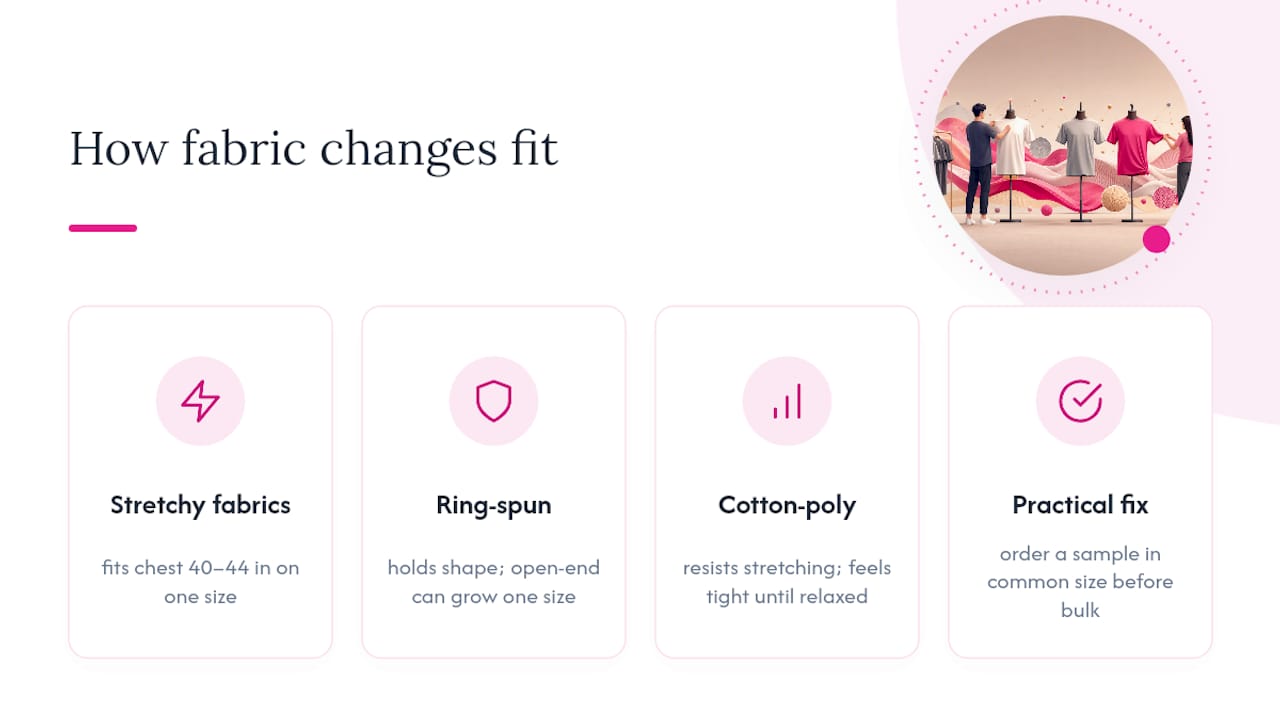
A size L from one blank manufacturer can fit like a size M from another, and stretch is a big part of why. Fabrics with added spandex or a looser knit stretch to accommodate a wider range of bodies, which is why some suppliers list a “fits chest 40 to 44 inches” range on a single labeled size while others list a tighter three-inch window.
Ring-spun cotton tends to hold its shape and size better than cheaper open-end cotton, which stretches out after a few wears and washes and can end up looking a full size larger by the end of the night. Cotton-poly blends behave differently again. The polyester content resists stretching but the shirt can feel tighter across the shoulders right out of the package before it relaxes with wear.
This is exactly why a size chart from one brand should never be applied to a different brand’s blank. If your supplier switches vendors between your last order and this one, ask for the updated chart rather than assuming last year’s numbers still apply. A group that ordered mediums from a heavyweight cotton tee last year may need to size up if this year’s shirt uses a lighter, less forgiving blend.
The practical fix is the same one that solves most sizing problems: order a sample in your group’s most common size before the bulk run goes to print. Fifteen minutes trying on one sample shirt prevents the multi-week wait for a reorder after 100 shirts arrive fitting wrong.
How Does Fabric Choice Affect Sizing and Comfort?
Material changes both how a shirt fits and how it feels against skin, and the two are more connected than most organizers assume. A heavyweight 100% cotton tee holds its printed size closely but runs warm, which matters if your event is an outdoor summer trip. A lighter cotton-poly blend breathes better and moves with the body, but it can feel closer to the skin at the same labeled size because the fabric has less structure.
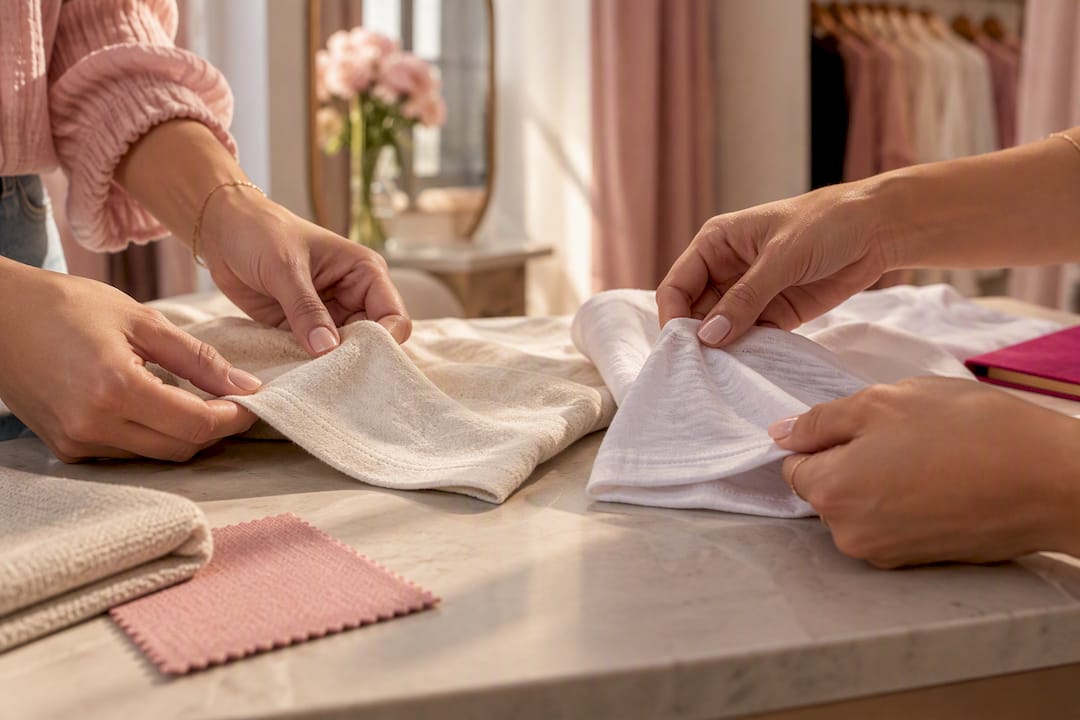
Tri-blend fabrics, cotton, polyester, and rayon combined, tend to run slightly smaller and feel noticeably softer, a common choice for events where photos matter and everyone wants the shirt to drape well rather than sit stiff. Moisture-wicking performance fabrics, more common in athletic team orders, often run true to size but fit closer through the torso by design.
Pre-shrunk treatment matters more than most people realize when they’re picking a material. A shirt labeled pre-shrunk has already gone through the shrinkage process in manufacturing, so the size on the label is close to the size you’ll get after washing. A shirt without that treatment can shrink another 3 to 5% in the first wash, enough to turn a comfortable fit into a tight one. If your group plans to wear the shirts multiple times, pre-shrunk cotton or a poly blend is the safer bet for keeping the original fit.
How Should You Handle Plus-Size or Extended Sizes in a Group Order?
Extended sizes, typically 2XL and up, need to be planned for from the start rather than added as an afterthought once orders come in. Many print suppliers charge a per-unit upcharge above a certain size, and some limit which designs or placements are available on the largest cuts, so confirm both before you promise anyone a shirt.
Build extended sizes into your initial collection form rather than treating them as a special request. Listing 2XL, 3XL, and beyond right alongside S through XL, with the same chart and the same process, normalizes the request and avoids anyone feeling singled out for needing a larger size.
Check your supplier’s actual chest-width numbers for extended sizes rather than assuming they scale evenly from the smaller sizes. Some brands add two inches per size step up through L, then jump three or four inches per step above that, so a 2XL might run larger relative to XL than XL runs relative to L. Order a sample in your largest commonly requested size, not just your most common size, if your group order includes several extended-size requests.
Budget matters here too. Extended-size upcharges can add a noticeable amount per shirt across a large order, so build that into your per-person cost estimate before you announce a flat price to the group. Nobody wants to explain a surprise price difference after the fact.
How Do You Accommodate Accessibility Needs in a Group Order?
Some members of your group may need adaptive fits, different closures, or specific fabric types for sensory or mobility reasons, and the standard collection form should leave room for that without singling anyone out. Add an open text field labeled “special requests or accommodations” to your size-collection form rather than a rigid checklist, so people can describe their own needs in their own words.
Sensory sensitivities are common enough to plan for directly. Tagless printed labels instead of sewn tags, and softer ring-spun cotton over stiffer blends, solve a real problem for people who find certain fabrics or tags uncomfortable against skin. If your supplier offers a tagless option, mention it as a standard choice in your form rather than something people have to request separately.
Mobility and dressing needs sometimes call for a looser or adjustable fit rather than a fitted cut. Building a “roomier fit” option into your fit-preference field, alongside “true to size,” gives people a low-friction way to signal that need without a separate conversation. Keep the request private by default. Route special requests to the one person managing the order rather than the group chat, so nobody has to explain a personal need in front of the whole group.
How Do You Communicate Sizing Clearly to Avoid Mistakes?
Most sizing errors trace back to unclear instructions rather than bad guesses. The fix is consistency: use the exact same chart, the exact same wording, and the exact same deadline every time you communicate with the group.
Send the size chart as an image embedded directly in your message or form, not as a link to click through. Repeat the deadline in every reminder, not just the first message, since people skim group chats and miss details after the first read. State the default size for non-responders up front, in writing, so nobody’s surprised when a late reply gets a size they didn’t choose.
Use the same term for “cut” every time, unisex, women’s, or youth, rather than switching between “regular” and “standard” and “normal.” Small wording shifts like that create real confusion in a group of 50 or more people reading quickly on their phones.
What’s the Best Way to Handle Late Size Changes?
Set one firm cutoff date and communicate it clearly, then hold to it. Most print suppliers need a locked size and quantity count before production starts, and changes after that point usually mean a separate small reorder rather than an edit to the existing one.
Build a small buffer into your original order specifically to absorb minor last-minute changes without a second order. It also gives you room to swap a mislabeled size after the fact without contacting the supplier again.
For changes that arrive after the cutoff, decide in advance whether the requester pays any reorder cost or upcharge, and say so plainly when you announce the deadline. That single sentence prevents an awkward conversation later.
An Organizer’s Take on Group Sizing
The most common mistake isn’t guessing wrong on sizes. It’s mixing unisex and women’s cuts into one count, or skipping the chart entirely and trusting everyone’s self-reported letter size. Collect sizes early, share the actual supplier chart every time, and order samples whenever the group or the brand is new to you. That habit alone prevents most of the reorders organizers dread.
— Stephen
Where to Find Matching Tees for Your Next Women’s Event
Tees are available for occasions such as bachelorette weekends, girls’ trips, birthdays, and happy hour nights out, printed to order in inclusive sizing from S to 3XL. Once you’ve settled on your curve and collected sizes, the next step is picking a design the whole group actually wants to wear in photos.
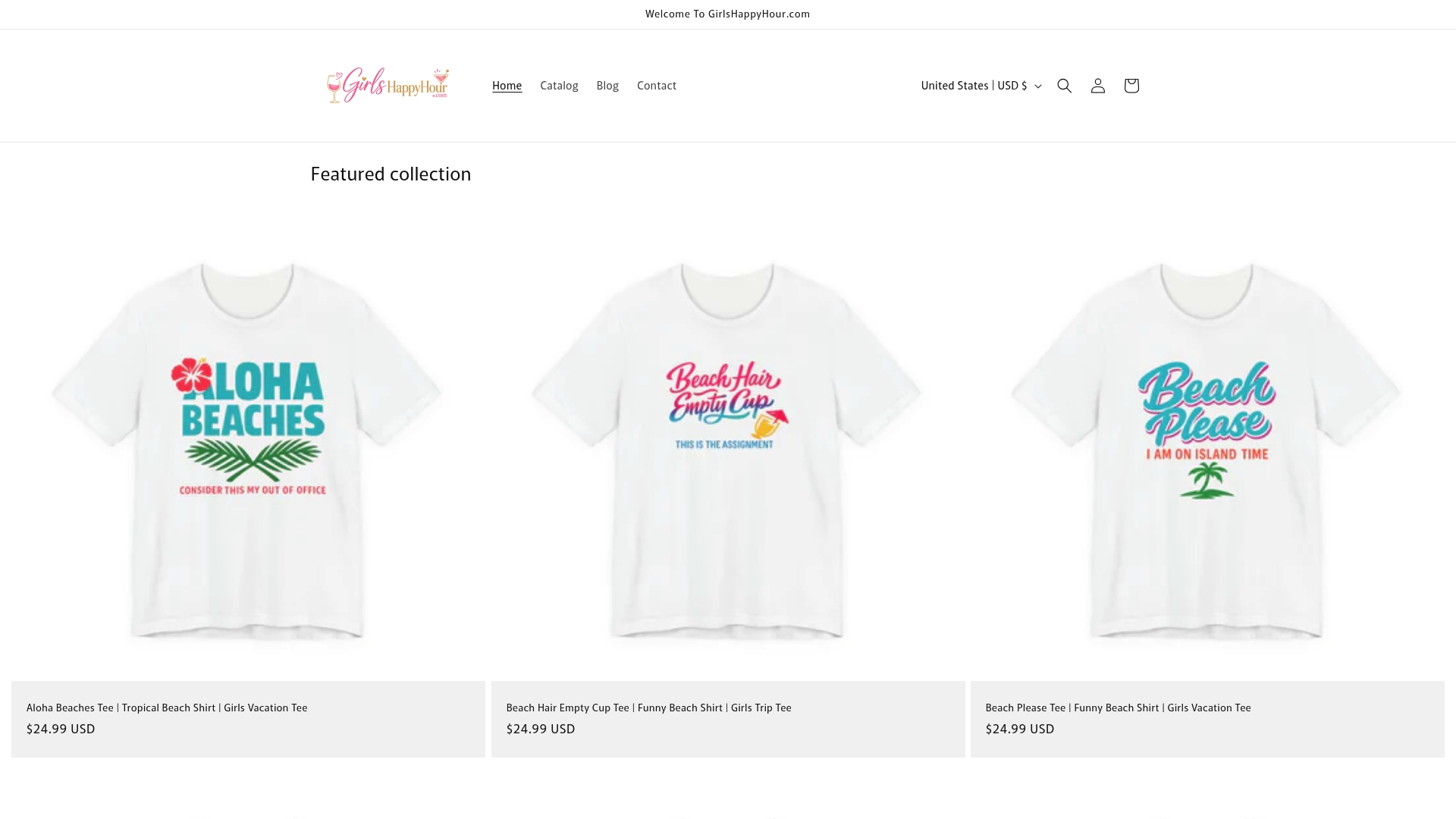
Start with the Girls Night Out Tees collection if you’re planning a standard group outing, or head to Bachelorette Party Shirts for a wedding weekend. Groups coordinating travel should look at Matching Girls Trip Shirts, which are built specifically for that kind of coordinated group photo. Browse a collection, pick a design, and apply the sizing curve from this guide to place your order with confidence.
Sources
- T-shirt size chart with measurement method
- How To Order The Right T-Shirt Sizes For Groups — data-driven sizing strategies
- T-Shirt Order Size Breakdown: How Many of Each Size to Order
- Group ordering guide — sizes & samples
FAQ
How Do I Order T-Shirt Sizes for a Large Group?
Collect actual sizes through a short form whenever possible, since it’s more accurate than any estimate. If a roster isn’t available, apply a baseline curve like S 5–8%, M 20–25%, L 30–35%, XL 20–25%, 2XL 7–10%, and add a 5–10% buffer weighted toward M through XL.
What Does “T-Shirt Sizing” Mean for a Group Order?
Group t-shirt sizing means estimating or collecting the right mix of sizes, S through 3XL or beyond, so a bulk order fits everyone without excess leftover stock. It relies on either direct size collection from each person or a percentage-based curve applied to the total headcount.
What Is the Standard T-Shirt Size Chart Based On?
A standard chart maps chest width, measured flat armpit to armpit and doubled, to a letter size like S, M, or L. The Wearlie size chart shows this conversion clearly, though exact chest ranges vary by brand, so always use the specific supplier’s chart rather than a generic one.
How Do I Order T-Shirts for a Group Event?
Set a deadline, share the supplier’s exact size chart, and collect responses through one short form with fields for name, size, cut, and fit preference. Add a small buffer of extras, biased toward L and XL, and order a sample set first if the group is larger than 25 people or you’re using a new brand.
Does Girlshappyhour Offer Inclusive Sizing for Group Orders?
Girlshappyhour prints its tees to order in the USA in sizes S through 3XL, which covers most group orders without needing a separate extended-size supplier. Check the size guide for chest measurements before placing a group order.