

How to Host a Wine Night at Home: 2026 Guide
A wine night at home is a casual, participatory tasting experience where guests sample a curated selection of wines in a relaxed setting, guided by a loose structure of themes, pairings, and conversation. You do not need a sommelier certification or a cellar full of expensive bottles to pull it off well. The key elements are simple: the right wines, a few good snacks, some basic supplies, and a hosting approach that keeps guests involved rather than just spectating. This guide covers everything you need to host wine night at home, from glassware to game ideas, so your next gathering feels effortless and genuinely fun.
How to host a wine night at home: what you need to get started
The supplies list for a home wine tasting is shorter than most people expect. Getting the setup right before guests arrive is what separates a smooth evening from a chaotic one.
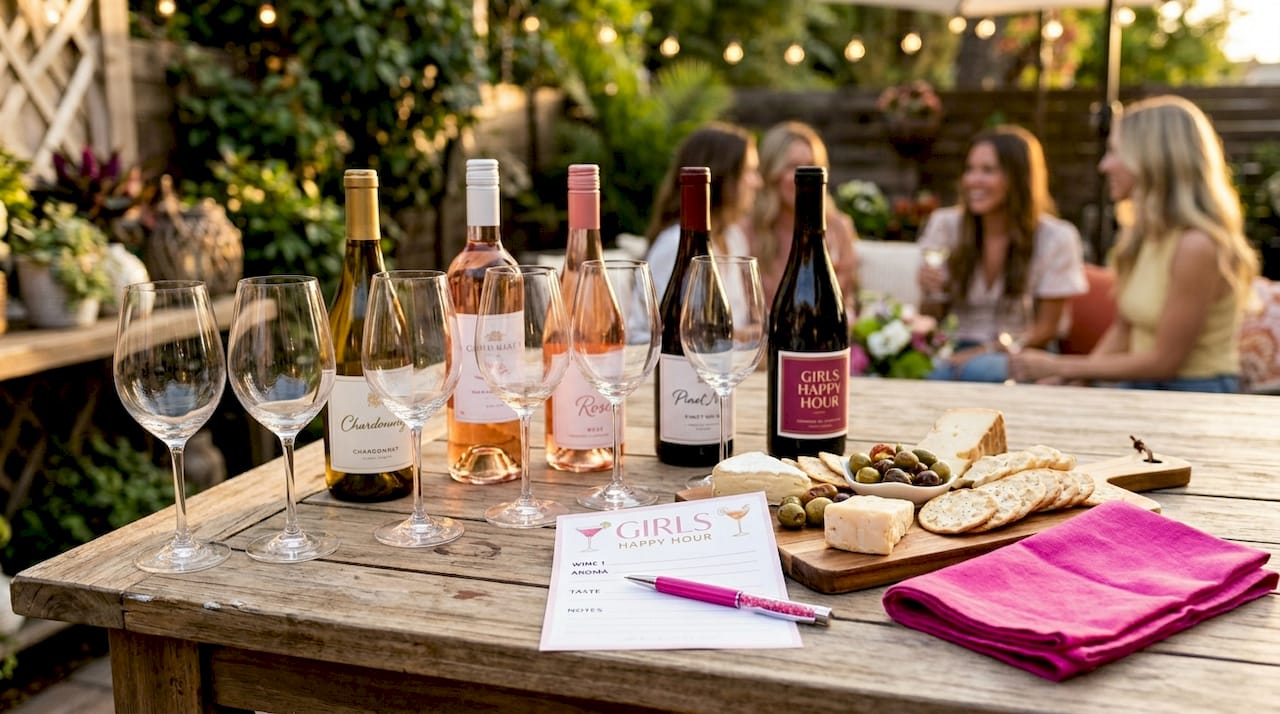
Glassware first. Universal-style wine glasses are the best choice for a home tasting. Matching glasses keep the experience consistent and prevent guests from second-guessing whether their glass shape is affecting what they taste. Different shapes can distort a wine’s expression, which creates uneven impressions across the group. Aim for one glass per wine per guest, or plan for guests to rinse between pours.
The supplies you actually need:
- Wine glasses (universal style, one per guest per wine or rinsing station)
- Spit or dump buckets (at least one per table or tasting station)
- Water pitchers and glasses for palate rinsing
- Plain crackers or sliced bread as palate cleansers
- Tasting notes cards and pens
- A wine opener and foil cutter
- Decorative labels or numbered tags for bottles if doing blind tasting
Quantities and pour math. A standard wine bottle holds roughly 24 to 25 ounces, which yields about 12 tasting pours at 2 ounces each. For six guests tasting six wines, you need six bottles minimum. Round up by one or two bottles to account for top-offs and spillage. This math keeps costs predictable and prevents running dry mid-tasting.
Pro Tip: Set up your bottles in tasting order before guests arrive and label each station with a number. This removes all decision-making during the event and keeps the flow moving.
| Supply | Quantity recommendation | Where to source |
|---|---|---|
| Universal wine glasses | 1 per guest per wine (or 1 with rinse station) | Target, IKEA, or local restaurant supply |
| Dump buckets | 1 per 4 guests | Kitchen store or repurpose a pitcher |
| Tasting notes cards | 1 set per guest | Print at home or buy from Etsy |
| Plain crackers or bread | 1 small basket per 4 guests | Any grocery store |
| Water glasses | 1 per guest | Match existing glassware |
What wines should you choose for a tasting flight?
The best wine nights at home use 4 to 8 wines. Fewer than four feels thin; more than eight leads to palate fatigue and guests who stop paying attention. The sweet spot is six wines for a two to three hour event.
Theme options that work well:
- Varietal showcase: Compare the same grape from different regions. Pinot Noir from Oregon, Burgundy, and California tells a clear story.
- Regional focus: All wines from one country or appellation. Italian whites, Spanish reds, or a Loire Valley flight all work.
- Price comparison: Mix budget and premium bottles in a blind format. Guests are often surprised by the results.
- Style contrast: Sparkling, white, rosé, and red in one flight for guests who want variety over depth.
Tasting order matters. Start with sparkling or light whites, move through fuller whites and rosés, then progress to lighter reds and finish with bold reds or dessert wines. This order prevents heavier wines from overwhelming your palate before you reach the lighter ones.
46% of consumers choose at-home gatherings primarily because of budget, and 28% plan to host more home events in 2026. This means budget-friendly wine selection is not a compromise. It is what most guests actually prefer. A $15 bottle in a well-structured flight often outperforms a $50 bottle served without context.
Pro Tip: Ask guests to each bring one bottle matching a theme you set in advance. This cuts your cost in half and gives everyone a personal stake in the tasting.
The “bring a bottle” format also generates natural conversation. Guests want to defend or explain their choice, which drives engagement without you having to facilitate every moment.
What food should you serve at a wine night?
Food at a wine tasting serves one purpose: support the wine without competing with it. The best pairings are simple, easy to source, and served in a way that keeps guests socializing rather than waiting on you.
Foods that work at every wine night:
- Soft cheeses (brie, camembert, chèvre) with white wines and light reds
- Hard cheeses (aged cheddar, manchego, parmesan) with bold reds
- Cured meats (prosciutto, salami, chorizo) with medium to full-bodied reds
- Nuts, olives, and cornichons as neutral fillers between pours
- Dark chocolate with Cabernet Sauvignon or Zinfandel
- Fresh fruit (grapes, sliced pear, apple) to reset the palate
Pairing logic in plain terms. Salty snacks cut through the bubbles in sparkling wine and make both taste cleaner. Creamy cheeses soften the acidity in Chardonnay and Sauvignon Blanc. Bold reds like Syrah or Malbec need something with fat or protein to balance their tannins. Avoid heavily spiced foods, very sweet desserts, and anything with strong vinegar during the tasting portion. These flavors distort how wine tastes and make even good bottles seem off.
Serving food family-style on shared platters keeps you out of the kitchen and present with your guests. Host isolation is one of the most common reasons wine nights feel stiff. When you are plating individual portions or running back and forth, guests feel like they are at a restaurant rather than a friend’s home. One large board per table, set before guests arrive, solves this entirely.
Pro Tip: Build your charcuterie board the night before and wrap it in plastic wrap. Pull it out 30 minutes before guests arrive so everything reaches room temperature. Cold cheese has almost no flavor.
A charcuterie and chaos energy is exactly the vibe that makes wine nights memorable. Imperfect boards with good variety beat perfectly arranged platters with three items every time.
Ambiance basics. Dim lighting, a low-volume playlist (jazz, acoustic, or lo-fi work well), and seating arranged in a circle or around a central table all signal that this is a relaxed, social event. Avoid heavy candles or diffusers near the tasting area. Strong scents interfere with aroma detection, which is a significant part of how wine is perceived.
How do you run the event from start to finish?
Structure is what turns a casual drinking session into an actual wine tasting. You do not need a rigid script, but a loose framework keeps the evening moving and prevents the common problem of guests losing interest after the third wine.
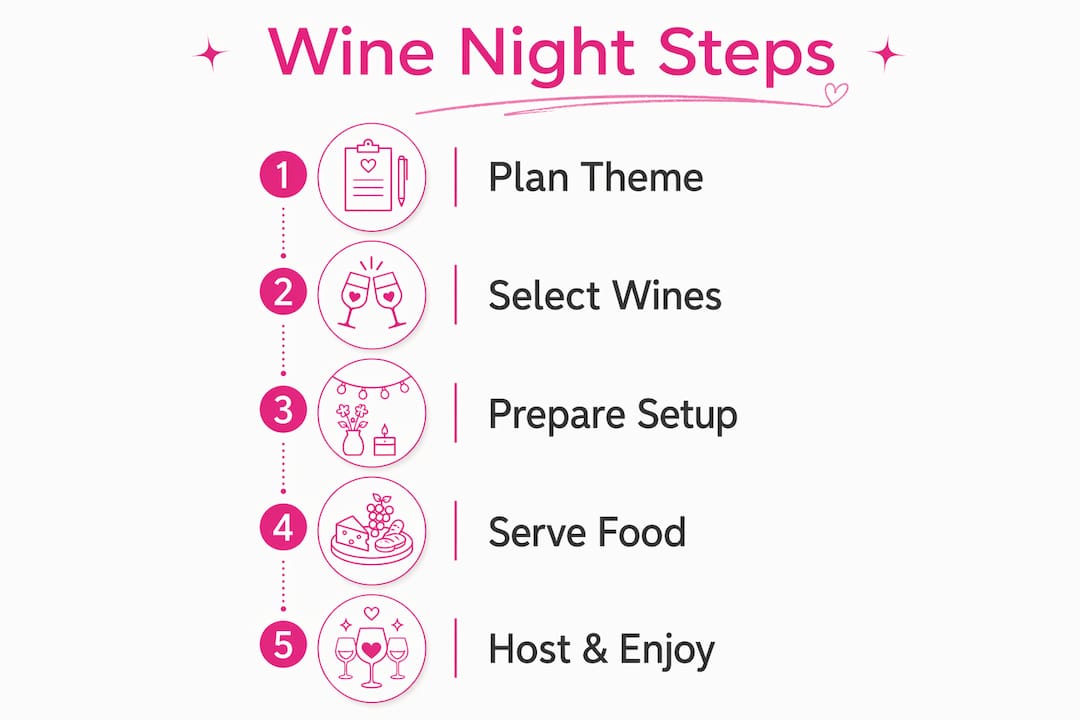
A step-by-step event flow:
- Welcome guests and explain the format in two sentences. “We’re tasting six wines tonight, lightest to boldest. There are tasting cards at each spot and a dump bucket if you want to pace yourself.”
- Pour the first wine and give guests two to three minutes to look, smell, and taste before opening discussion.
- Prompt the group with one question per wine. “What does this remind you of?” works better than technical prompts for mixed-knowledge groups.
- Tasting notes cards encourage guests to write impressions before the group discussion, which leads to richer conversation and prevents one vocal guest from anchoring everyone else’s opinion.
- After every two wines, take a five to ten minute break for snacks and free conversation.
- Reveal bottle labels (if blind tasting) after all wines are tasted and votes are cast.
- Close with a group vote for favorite wine and a quick discussion of surprises.
Pacing is the most underrated skill in hosting. A 2 to 3 hour event for six to eight wines works out to roughly 20 minutes per wine including discussion and breaks. That pace feels natural and prevents the evening from dragging or rushing.
Blind tasting vs. open bottles. Blind tasting creates a level playing field and heightens entertainment because guests guess without preconceptions. Wrap bottles in foil or paper bags and number them. Open bottle format is more relaxed and works better when guests want to learn about specific regions or producers. Both formats work. Choose based on your group’s interest level.
Games that add energy without requiring effort:
- Mystery bottle: one wine is not on the official list. Guests try to identify it.
- Cork numbers: each guest draws a number and “owns” that wine for the night, defending it in the final vote.
- Price guessing: guests rank wines by perceived price before the reveal.
Spit or dump buckets remove the social pressure to finish every glass. This matters more than most hosts realize. Guests who feel obligated to drink every pour lose their palate and their judgment by wine four. Buckets make the tasting more honest and more comfortable.
Pro Tip: Print a simple one-page “cheat sheet” for each guest with the wine names, regions, and grape varieties listed. This gives less experienced guests context without making anyone feel tested.
Key takeaways
A successful wine night at home requires simple preparation, a structured but relaxed format, and a host who stays present rather than disappearing into logistics.
| Point | Details |
|---|---|
| Pour size and quantity | Use 2 oz pours; one bottle yields 12 tasting pours for accurate supply planning. |
| Wine count sweet spot | Stick to 4 to 8 wines to prevent palate fatigue and maintain guest engagement. |
| Food serves the wine | Serve neutral, easy-to-source foods that support rather than compete with the tasting. |
| Structure drives enjoyment | A loose event flow with tasting cards, breaks, and a final vote keeps guests involved. |
| Host presence over perfection | Family-style food and blind tasting formats keep you present and guests relaxed. |
What I’ve learned from hosting wine nights that actually work
The best wine night I ever attended had $12 bottles and a handwritten tasting card. The worst had a $200 Burgundy and a host who spent the entire evening in the kitchen. That contrast taught me something that no wine guide spells out clearly: the format is the product, not the wine.
Most first-time hosts over-invest in the bottles and under-invest in the structure. They buy impressive labels, skip the tasting cards, skip the dump buckets, and then wonder why the evening felt flat by 9 PM. Effective wine nights focus on pacing with natural breaks rather than expensive wines or rigid presentation. That finding matches everything I have seen in practice.
The other thing worth saying directly: imperfection is an asset. When you apologize for the mismatched glasses or the board that looks a little chaotic, guests relax. They stop feeling like they are being entertained and start feeling like they are part of something. Host presence matters more than perfect presentation. Guests relax more when the host focuses on participation rather than performance.
Keep the guest list between six and ten people. Smaller groups allow everyone to speak during the tasting discussion. Larger groups split into side conversations and the tasting structure dissolves. Six is the number I come back to every time.
— Stephen
Wine night apparel from Girlshappyhour
If you are hosting a wine night, the right shirt does half the talking for you before you pour a single glass.
Girlshappyhour makes wine-themed tees built specifically for moments like this. The Girls Night Plans Optional Wine Required Tee is the kind of shirt that gets a comment from every guest who walks in. The Pinot Noir-mal Behavior Tee works as a party favor that guests actually keep. Both make great conversation starters and double as gifts for the wine lover in your group. Browse the full collection at Girlshappyhour for more options that fit the wine night vibe perfectly.
FAQ
What is a wine night at home?
A wine night at home is a casual social tasting event where guests sample a curated selection of wines, typically paired with food, in a relaxed home setting. It does not require formal training or expensive bottles to be enjoyable.
How many wines should you serve at a home tasting?
Four to eight wines is the standard range for a home wine tasting. Six wines over two to three hours gives guests enough variety without causing palate fatigue.
Do you need special glasses to host a wine tasting?
Universal-style wine glasses work best for home tastings because they keep the experience consistent across all guests. Specialized glass shapes are not necessary and can create confusion.
What food pairs well with a wine night?
Soft and hard cheeses, cured meats, plain crackers, olives, nuts, and dark chocolate are the most practical options. Avoid heavily spiced or very sweet foods during the tasting, as they distort how wine tastes.
Should you do a blind tasting or open bottles?
Blind tasting creates a level playing field and adds entertainment, especially for mixed-knowledge groups. Open bottles work better when guests want to learn about specific wines or regions. Both formats are valid depending on your group’s goals.
Recommended
- Girls Night Plans Optional Wine Required Tee | Girls Trip Shirt | Wine – GirlsHappyHour.com
- Save Water Drink Wine Tee | Vintage Wine Lover Shirt | Funny Wine Quot – GirlsHappyHour.com
- Time to Wine Down Tee | Funny Wine Pun Shirt | Happy Hour Womens Tee – GirlsHappyHour.com
- In My Tipsy Era Tee | Trendy Wine Lover Shirt | Funny Girls Night Tee – GirlsHappyHour.com