

The Role of Souvenir Shirts Explained for Every Occasion
Souvenir shirts are defined as wearable mementos that preserve shared experiences, cultural identity, and social belonging in a single garment. The role of souvenir shirts explained simply is this: they are not decoration. They are physical proof that something worth remembering happened. Research confirms that physical souvenirs act as external memory anchors, reducing the fear that intense experiences will fade. Girlshappyhour builds on this principle by designing shirts specifically for women’s social occasions, from girls’ trips to bachelorette weekends, where the memory is the whole point.
How souvenir shirts capture and extend memories of social occasions
Souvenir shirts function as what psychologists call “transitional objects,” physical items that preserve the emotional weight of an experience after it ends. A shirt from a bachelorette trip in Nashville carries the same psychological function as a child’s comfort blanket. It keeps the feeling accessible long after the moment has passed.
The fear of memory erasure is a documented driver of souvenir purchases. People buy shirts not because they need another top, but because they need proof. The shirt becomes an external hard drive for an experience the brain cannot fully store on its own.
Social occasions create this need most sharply. A girls’ night out, a wine weekend, or a divorce party generates intense shared emotion. That emotion needs somewhere to live. A shirt worn by every member of the group becomes a collective artifact, not just a personal one.
Here are the social contexts where souvenir shirt significance runs deepest:
- Bachelorette and bridal events: The shirt marks a transition. It separates “before” from “after” in a woman’s life.
- Girls’ trips and group travel: Matching shirts signal group identity and create a visual record of the trip.
- Milestone birthdays: A birthday shirt worn by the whole squad turns a single night into a documented event.
- Divorce and reinvention parties: These shirts reclaim identity. They mark the start of something, not just the end.
- Seasonal celebrations: Holiday brunch shirts and New Year’s Eve tops give recurring events a distinct, memorable identity.
Pro Tip: Choose a shirt design that references a specific inside joke or location from your event. Generic designs fade in memory; specific ones become stories you retell every time someone asks about the shirt.
From tourist kitsch to fashion’s front row: the cultural shift
The “I heart [city]” design originated in 1977 as a New York City tourism campaign. For decades, it sat firmly in the category of airport gift shop merchandise. That changed when Gen Z adopted it as a signal of authenticity and irony, wearing it not despite its tourist origins but because of them.
The cultural impact of souvenir shirts now extends well beyond tourism. The “I❤️NY” shirt, for example, has evolved into a symbol of political identity and city pride, worn at protests and community events as a statement of belonging. That shift from kitsch to cultural artifact happened because the design’s grammar is flexible. The “I [heart] [x]” formula allows anyone to remix its meaning.
“Tourist T-shirts are experiencing a renaissance where they express ‘main-character energy’ and nostalgia, worn with intentional style rather than as vacation clichés. Styling them with tailored pieces and treating them as curated outfits has redefined their fashion status in 2026.” — Elle India
Fashion’s adoption of the souvenir shirt format confirms that the category has matured. Runway collections have incorporated graphic tees styled with blazers, wide-leg trousers, and statement accessories. The shirt itself did not change. The context around it did.
What drives this resurgence among younger buyers:
- Irony as authenticity: Wearing something “uncool” on purpose signals confidence and self-awareness.
- Nostalgia as currency: Older designs carry emotional weight that new fast-fashion items cannot replicate.
- Flexibility of the format: Simple graphic grammar lets wearers personalize meaning without custom printing.
- Social media visibility: A distinctive shirt photographs well and generates conversation online.
The historical value of souvenir shirts lies in their adaptability. A design that started as city branding becomes a personal identity badge when the wearer assigns it new meaning.
What makes a souvenir shirt worth keeping for years?
The strongest souvenir shirts achieve emotional longevity by combining symbolic meaning with quality fabric and subtle design. Poor material or overly commercial designs often result in shirts becoming sleepwear or donations within a year. That outcome defeats the entire purpose.
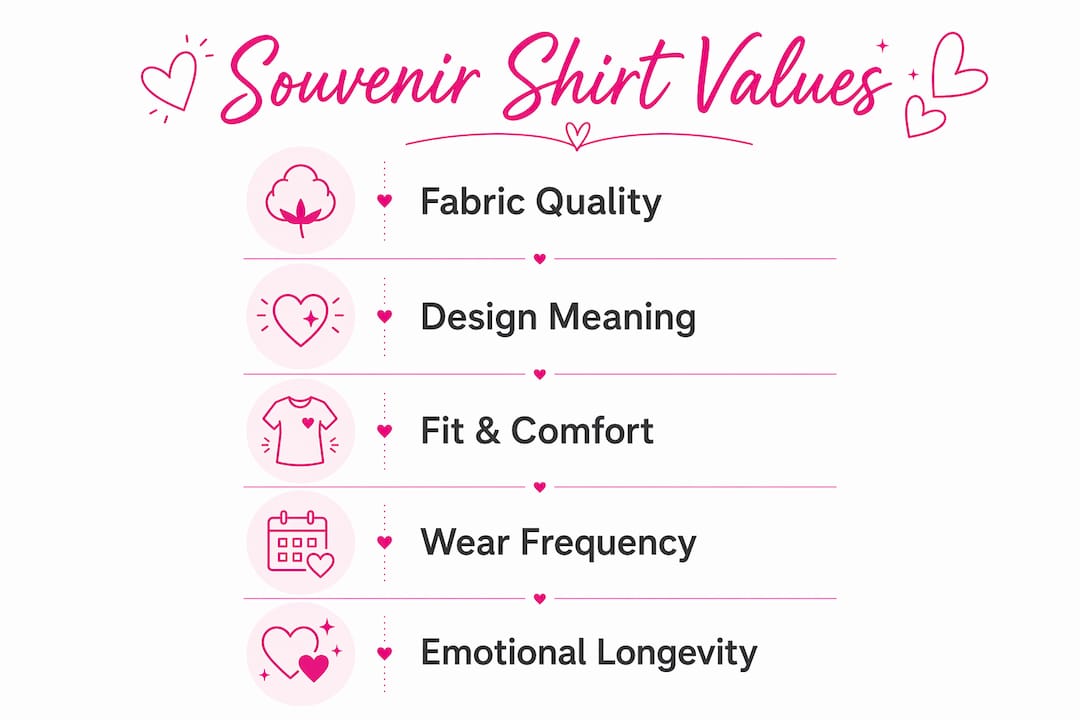
Fabric is the first filter. A shirt made from a stiff, synthetic blend gets worn once and forgotten. A soft cotton or cotton-blend shirt gets worn on lazy Sundays, on travel days, and whenever the wearer wants to feel connected to a specific memory. The physical comfort of the shirt directly extends its emotional life.
Design subtlety is the second factor. Loudly branded tourist shirts announce themselves before the wearer can tell the story. A shirt with a smaller graphic, a clever phrase, or a design that works as a standalone fashion piece invites conversation rather than demanding it.
Here is a ranked breakdown of what separates lasting souvenir shirts from discarded ones:
- Fabric quality: Natural fibers, especially cotton, wear better and feel better over time. Synthetic blends pill and fade faster.
- Design scale: Smaller, well-placed graphics age better than oversized chest prints that dominate the shirt.
- Color palette: Neutral or muted tones integrate into more outfits. Neon colors limit styling options.
- Phrase specificity: A shirt that references your actual group or event outlasts a generic “Vegas 2024” design.
- Fit: A shirt that fits well gets worn. A boxy, ill-fitting shirt gets donated.
| Design factor | Shirts that last | Shirts that get discarded |
|---|---|---|
| Fabric | Soft cotton or cotton blend | Stiff polyester or synthetic |
| Branding | Subtle, specific, story-driven | Loud, generic, tourist-forward |
| Color | Neutral or classic tones | Neon or trend-dependent colors |
| Fit | True to size, flattering cut | Oversized or poorly proportioned |
Personalized souvenirs reflecting identity maintain relevance for over three years, while loudly branded tourist items lose meaning quickly. That gap is not about price. It is about how well the design connects to a specific person’s story.
Pro Tip: Before ordering group shirts, ask: “Would I wear this on a regular Saturday?” If the answer is no, the design is working against you. The best event shirts double as everyday favorites.
How to wear souvenir shirts and keep the memory alive
A souvenir shirt worn only once defeats its own purpose. The goal is to build it into regular rotation so the memory it carries stays active. Styling modern tourist tees with polished or contrasting wardrobe pieces shifts the perception from casual keepsake to curated fashion statement.
The most effective styling approach treats the shirt as the focal point of the outfit, not an afterthought. Pair a graphic event tee with tailored trousers and loafers for a brunch look. Layer it under a blazer for an evening out. Tie it at the waist over a midi skirt for a summer event. Each new pairing creates a new context for the shirt and, by extension, for the memory it holds.
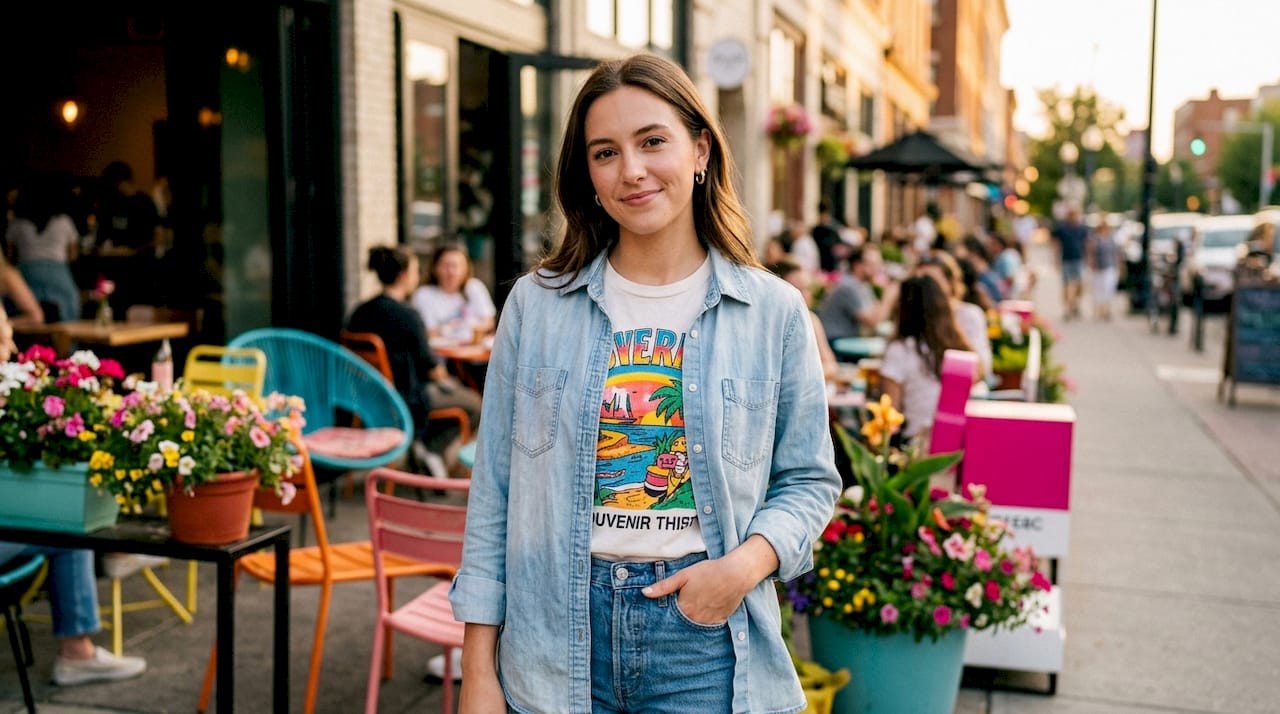
Wearing the shirt also creates social moments. When someone asks about it, you tell the story. That retelling reinforces the memory and extends the social experience of the original event. The shirt becomes a conversation starter that keeps the occasion alive in the present.
Practical ways to keep a souvenir shirt relevant over time:
- Rotate it seasonally: Pull it out for events that echo the original occasion. Wear your girls’ trip shirt to the next girls’ brunch.
- Style it differently each time: New pairings prevent the shirt from feeling like a costume.
- Photograph it in new contexts: A photo of the shirt in a new city or setting adds layers to its story.
- Gift a duplicate: Giving the same shirt to a friend who shared the experience doubles the memory’s reach.
For group outing shirts specifically, the social confidence that comes from wearing a shared design is part of the value. Walking into a venue as a group in matching shirts signals belonging before anyone says a word.
Pro Tip: Treat your event shirt like a denim jacket. The more you wear it, the better it looks and the richer the story it carries. Wash it on cold, hang it to dry, and it will last for years.
Key Takeaways
Souvenir shirts are the most durable form of social memory because they combine physical comfort, visual identity, and personal story into a single wearable object.
| Point | Details |
|---|---|
| Memory anchoring | Souvenir shirts act as physical memory anchors that reduce the fear of forgetting intense shared experiences. |
| Cultural evolution | The “I heart” format originated in 1977 and has since become a fashion and identity symbol embraced by Gen Z. |
| Design determines longevity | Soft fabric, subtle graphics, and specific phrases keep shirts in active rotation for three or more years. |
| Styling extends relevance | Pairing event shirts with tailored pieces shifts them from keepsakes to everyday fashion statements. |
| Social occasions drive significance | Bachelorette trips, girls’ nights, and milestone birthdays create the emotional intensity that makes souvenir shirts matter. |
Why souvenir shirts matter more than most people admit
I have spent years watching how women treat the shirts they buy for group events. The ones that get worn again and again share one quality: they feel like the group, not just the event. A shirt that captures an inside joke, a specific city, or a shared phrase becomes a shorthand for an entire relationship. That is not a small thing.
The fashion world caught up to what women already knew. Textile merchandise functions as a primary identity marker, not just a purchase. When a museum shop reports that textiles are among its most visible identity items, that confirms what anyone who has worn a meaningful shirt already feels. The shirt is the statement.
What I find most interesting is the shift from embarrassment to pride. A decade ago, wearing a tourist tee required a certain self-deprecating confidence. Now it signals exactly the opposite. Wearing a shirt from your girls’ trip to Savannah or your bachelorette weekend in Palm Springs says: “I was there, I belong to that group, and I am not hiding it.” That is a cultural shift worth paying attention to.
My honest advice: stop treating event shirts as throwaway purchases. Invest in the fabric, invest in the design, and wear the shirt on a regular Tuesday. The memory it carries deserves more than a single night out.
— Stephen
Shirts that celebrate the moments worth remembering
Girlshappyhour designs shirts specifically for the social occasions that create the strongest memories. Each design is built to be worn beyond the event itself, with phrases and graphics that hold up in everyday rotation.
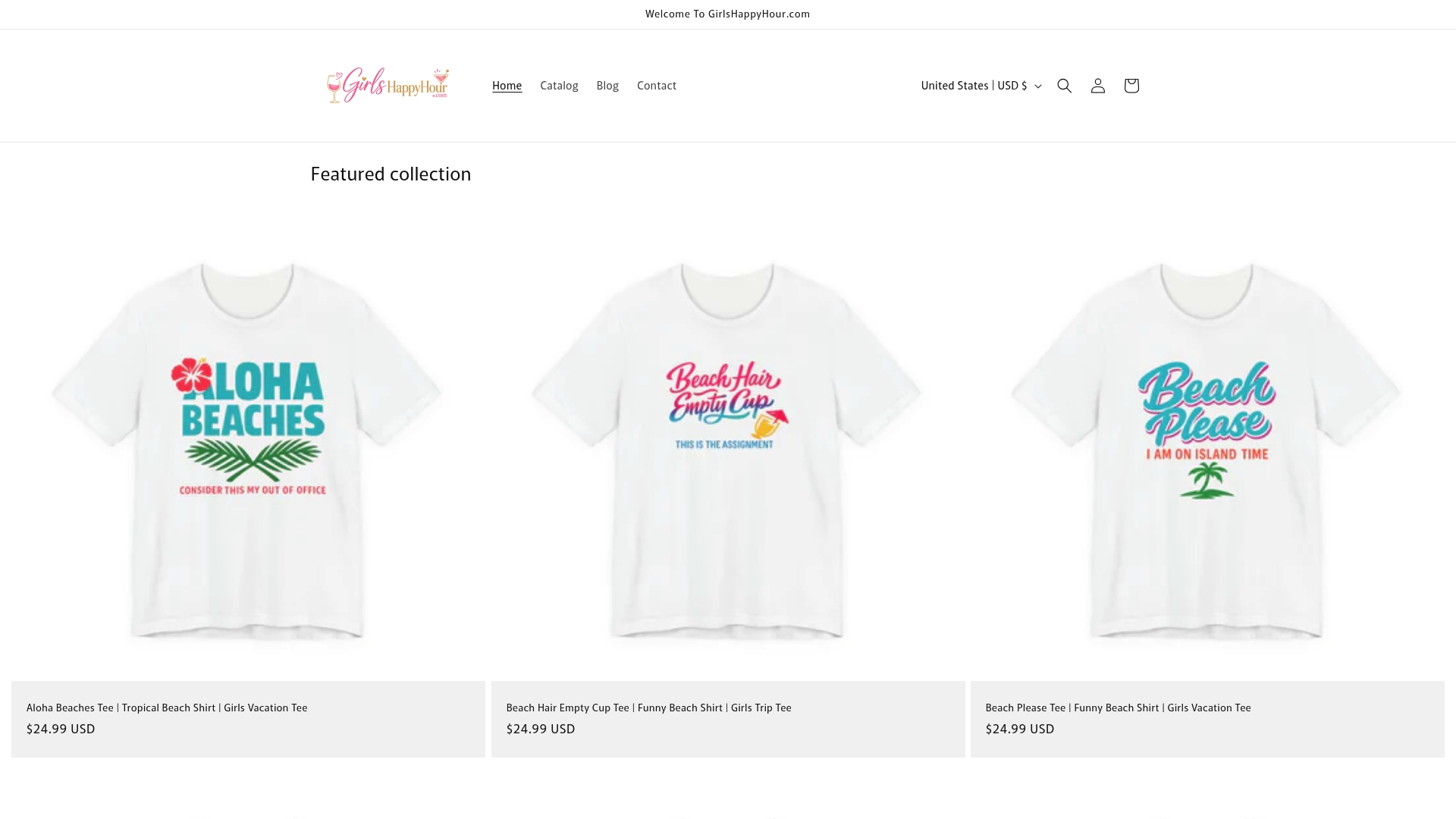
The Drink Till He’s Pretty Tee and the Bad Decisions, Great Stories Tee both capture the storytelling energy that makes a shirt worth keeping. For groups planning a girls’ night, a bachelorette trip, or a wine weekend, Girlshappyhour also offers squad matching shirt ideas that turn a single event into a lasting group identity. These are shirts built to be worn again, not folded into a drawer.
FAQ
What is the role of souvenir shirts in social occasions?
Souvenir shirts serve as wearable memory anchors that preserve the emotional experience of a shared event. They signal group identity and keep the social connection active long after the occasion ends.
Why are souvenir shirts popular with younger generations?
Gen Z adopted souvenir shirts as authenticity and irony statements, wearing classic tourist designs like “I heart [city]” to signal self-awareness and nostalgia. The format’s flexible graphic grammar allows personal meaning to be layered onto familiar designs.
How long do souvenir shirts typically stay relevant?
Personalized souvenir shirts made from quality materials and featuring specific, story-driven designs maintain relevance for over three years. Generic or loudly branded designs lose meaning much faster.
What design factors make a souvenir shirt worth keeping?
Soft natural fabric, subtle graphics, a specific phrase tied to the group or event, and a flattering fit are the four factors that determine whether a shirt stays in rotation or gets donated.
How do you style a souvenir shirt beyond the original event?
Pair the shirt with tailored trousers, a blazer, or a midi skirt to shift it from casual keepsake to a fashion-forward outfit. Rotating it seasonally and pairing it differently each time keeps the design fresh and the memory active.