

Why Coordinate Outfits for a Night Out with Friends
Coordinating outfits for a night out means selecting complementary clothing that creates a unified group look without everyone wearing identical pieces. This practice, known in fashion styling as “coordinated style personalities,” builds group confidence, produces better photos, and signals a shared identity before anyone says a word. The 60-30-10 color rule and the three-part statement formula are the two most cited techniques stylists use to achieve this balance. Girlshappyhour is built around exactly this kind of group style culture, from girls night out to bachelorette trips and wine nights.
Why coordinate outfits for a night out: the real benefits
Outfit coordination is defined as the deliberate selection of clothing across a group so that individual looks connect visually without being identical. The goal is unity, not uniformity. When a friend group coordinates, the result is a shared aesthetic that reads as intentional rather than accidental.
Group coordination directly boosts confidence. Coordinated style personalities reduce the stress of outfit decisions because each person knows how their look fits into the group picture. That clarity removes the last-minute panic of “does this work with what she’s wearing?”
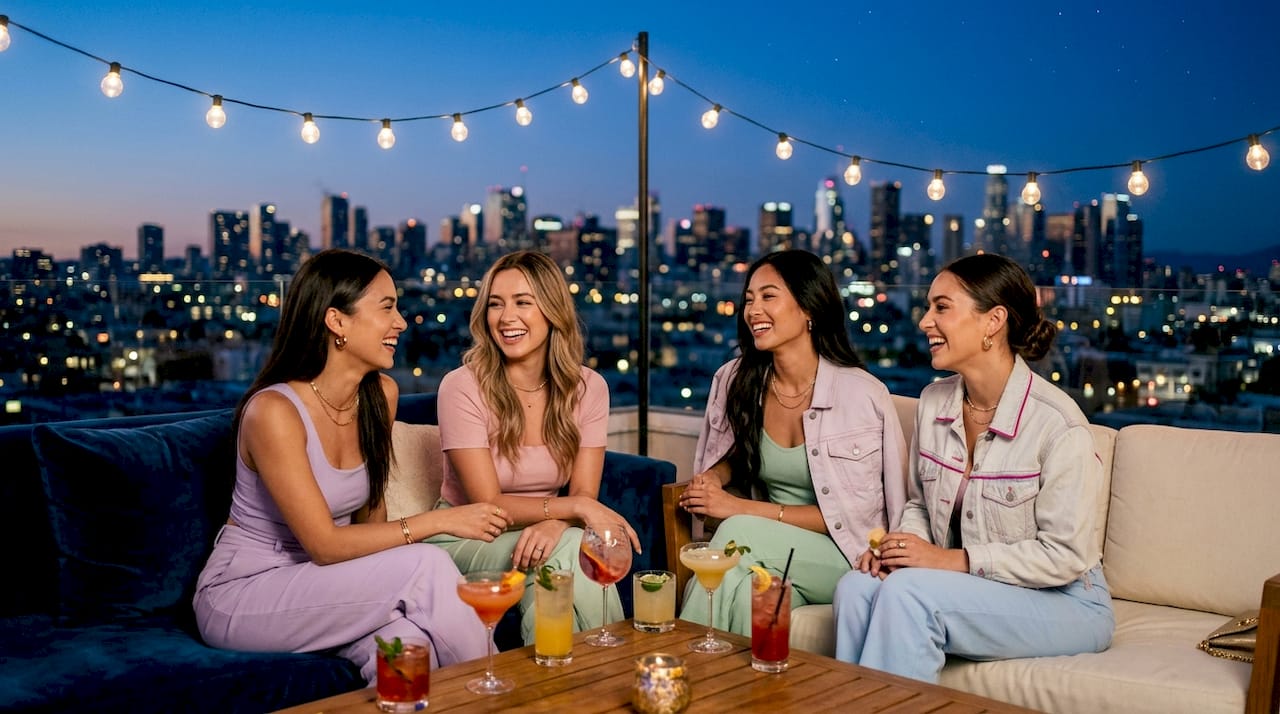
Photos are the second major reason. Deliberate outfit editing produces group shots that look naturally polished rather than forced. Matching dress levels, such as all smart casual or all cocktail, is the single biggest factor in how effortless a group photo appears.
Group identity is the third benefit, and it is often underestimated. A coordinated group signals belonging. Whether it is a matching color palette at a rooftop bar or coordinated graphic tees at a happy hour, the visual connection strengthens the group bond before the night even starts.
What are the key principles of coordinating outfits without looking like a costume?
The three-part formula is the foundation of successful coordination. One statement piece, a texture upgrade, and an intentional anchor give each person a distinct look that still connects to the group. The statement piece draws the eye, the texture upgrade adds depth, and the anchor ties the group together visually.
Stylists recommend limiting anchor pieces to four per group. More than that creates visual noise. Each friend picks her own statement piece within the shared color story, so the group looks curated, not costumed.
The 60-30-10 color rule for groups
The 60-30-10 color distribution assigns 60% of the group’s palette to a base neutral, 30% to a shared secondary tone, and 10% to accent colors. This structure creates harmony without requiring identical outfits. Analogous colors, those that sit next to each other on the color wheel, produce a more cohesive look than contrasting or clashing patterns.
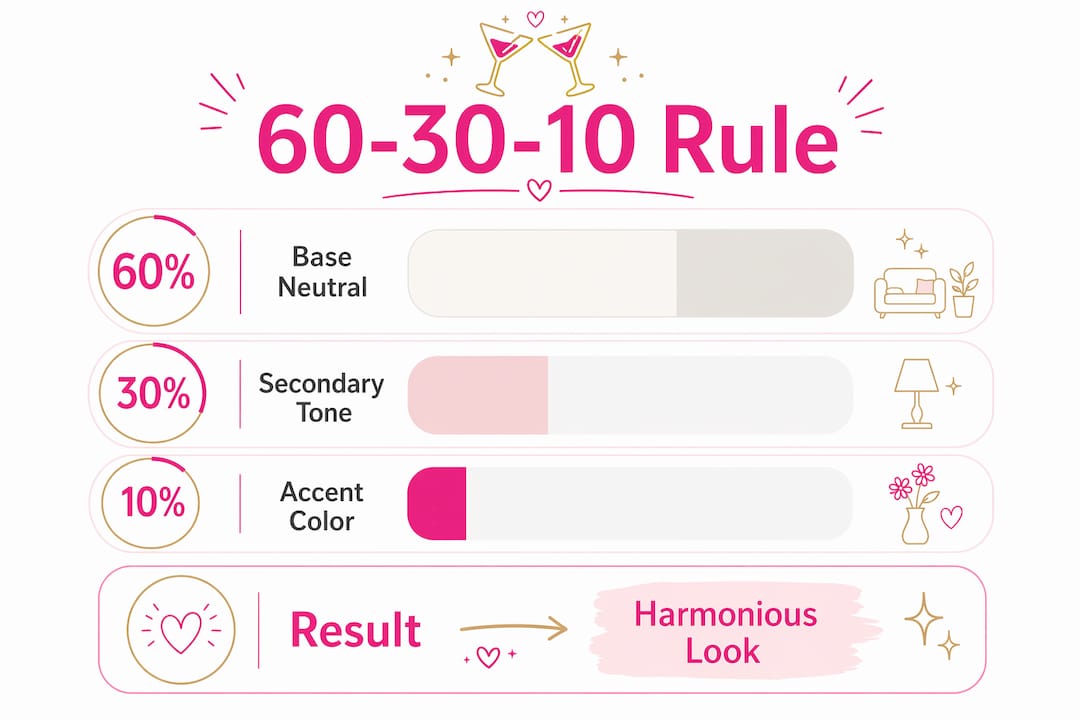
A practical example: the base neutral is black, the secondary tone is deep burgundy, and the accent is gold jewelry. Every friend can wear a different silhouette and still read as part of the same group.
Avoiding the costume effect
The costume effect happens when coordination becomes too literal. Identical dresses in the same color and cut cross the line from coordinated to uniformed. The fix is to share a theme, not a template. One friend wears a burgundy satin slip dress, another wears burgundy wide-leg trousers with a black top, and a third wears a black dress with a burgundy bag. Same palette, three distinct looks.
- Choose one shared element: color, fabric type, or accessory
- Let each person pick her own silhouette
- Avoid matching prints unless the event calls for it
- Keep accessories personal to reinforce individuality
Pro Tip: Have each friend identify her single best statement piece first, then build the group palette around what already exists in everyone’s closet. This prevents over-purchasing and keeps the look personal.
How to coordinate outfits according to the venue and event type
Matching outfit silhouettes to the venue reduces the risk of being overdressed or underdressed. A rooftop bar calls for a different level of polish than a dive bar trivia night, and the group’s coordination strategy should reflect that difference.
Venue type shapes fabric choice, silhouette, and formality level. Getting this right means the group looks confident and appropriate, not overdressed or out of place.
Venue-by-venue coordination guide
- Club or late-night bar: Bodycon silhouettes, satin, or sequin accents. Coordinate on fabric sheen and a shared dark base color.
- Dinner or wine bar: Midi dresses, tailored trousers, or blazers. Tailored trousers and midi dresses work as foundation pieces across multiple venue types.
- Rooftop or outdoor venue: Elevated casual. Coordinate on a color palette and let silhouettes vary freely.
- Multi-stop night: Choose a foundation piece that transitions well. A satin midi or a sharp blazer works from dinner to a bar without a costume change.
The foundation piece principle matters most for multi-stop nights. Outfit planning should start from base item comfort and venue appropriateness. High-maintenance clothing, such as a dress that requires constant adjusting, disrupts group energy by the second stop.
Pro Tip: Check the venue’s Instagram or Google photos before the night. Real customer photos show the actual dress level better than any website description.
What common coordination mistakes should you avoid?
The most common mistake is mismatched formality levels within the group. One friend in a cocktail dress and another in jeans creates visual disconnection, regardless of how well the colors match. Consistency in dress level is the single most important factor in making a group look coordinated.
The second mistake is ignoring comfort. Discomfort ruins outfit cohesion and group experience. A friend who spends the night pulling at her hem or limping in shoes she cannot walk in pulls the group’s energy down. The 2026 trend moves toward luxe fabrics like satin and lace precisely because they combine style with wearability.
- Avoid identical outfits unless the event specifically calls for it
- Do not mix formality levels across the group
- Skip high-maintenance fabrics that require constant attention
- Avoid clashing prints when coordinating on pattern
The fix for most mistakes is editing. Look at the group as a whole before leaving. If one person’s outfit reads as a different event entirely, swap one element, such as a jacket, a bag, or shoes, to bring the look back into the shared palette.
Pro Tip: Do a group video call the day before and have everyone show their full outfit. Catching a formality mismatch 24 hours early is far easier than fixing it in a parking lot.
How to practically plan and execute outfit coordination for your friend group
Start with a mood agreement. Before anyone pulls out a single item of clothing, the group needs to agree on a vibe: glam, casual chic, edgy, or classic. This one decision eliminates most coordination conflicts before they start. A girls night out planning guide can help the group align on both the event format and the style direction.
Share inspiration digitally. A shared Pinterest board or a group chat photo thread lets everyone see the direction before committing to an outfit. It also surfaces conflicts early, such as two friends planning the exact same dress.
Coordination elements and examples
| Coordination element | Example |
|---|---|
| Shared color palette | All black with one accent color each |
| Fabric theme | Satin or lace across all outfits |
| Silhouette family | All midi length, different styles |
| Accessory anchor | Same metallic tone in jewelry or bags |
| Statement graphic tee | Matching graphic tees in the same print, different bottoms |
Matching sets in luxe fabrics create cohesive group looks with minimal individual effort. A shared satin set or a coordinated blazer achieves the group look without requiring identical purchases. The key is agreeing on one or two coordination elements and letting individual style fill in the rest.
Accessories are the easiest coordination lever. Agreeing on a metallic tone, gold versus silver, or a shared bag style creates visual unity without touching anyone’s main outfit. This works especially well for groups with very different personal styles.
Key Takeaways
Coordinating outfits for a night out works best when the group shares a palette and dress level, not identical pieces.
| Point | Details |
|---|---|
| Use the 60-30-10 rule | Assign 60% base neutral, 30% secondary tone, and 10% accent across the group. |
| Match dress levels first | Consistent formality across the group matters more than matching colors. |
| Limit anchor pieces | Keep shared anchor items to four or fewer to avoid visual clutter. |
| Start with a vibe agreement | Agree on the event mood before selecting any individual outfits. |
| Comfort drives cohesion | Luxe fabrics like satin and lace keep the group looking polished all night. |
What I have learned from watching groups get coordination right and wrong
The groups that look best in photos are never the ones who tried hardest to match. They are the ones who agreed on a direction and then trusted each person to interpret it. That distinction matters more than any color rule or styling formula.
The biggest coordination failure I see is when one person in the group treats the night as a solo fashion moment. She picks an outfit that is stunning on its own but reads as a completely different event from what everyone else is wearing. The result is a group photo where the eye goes straight to the mismatch, not to the group. Coordination is not about suppressing individual style. It is about channeling it toward a shared outcome.
The practical lesson is this: agree on one element, not five. One shared color, one fabric family, or one accessory rule is enough. Groups that try to coordinate on color, silhouette, fabric, and accessories simultaneously end up looking more like a costume than a crew. Simplicity is the actual secret.
The confidence boost that comes from a well-coordinated group is real and measurable in how the night goes. When everyone feels like they belong in the same picture, the group moves differently. They take up space, they stay together, and they have more fun. That is the real reason to coordinate outfits for a night out. It is not about the photos. The photos are just proof.
— Stephen
Girlshappyhour graphic tees that pull a group look together
A coordinated group look does not always require a full outfit overhaul. Sometimes one shared piece does the work.
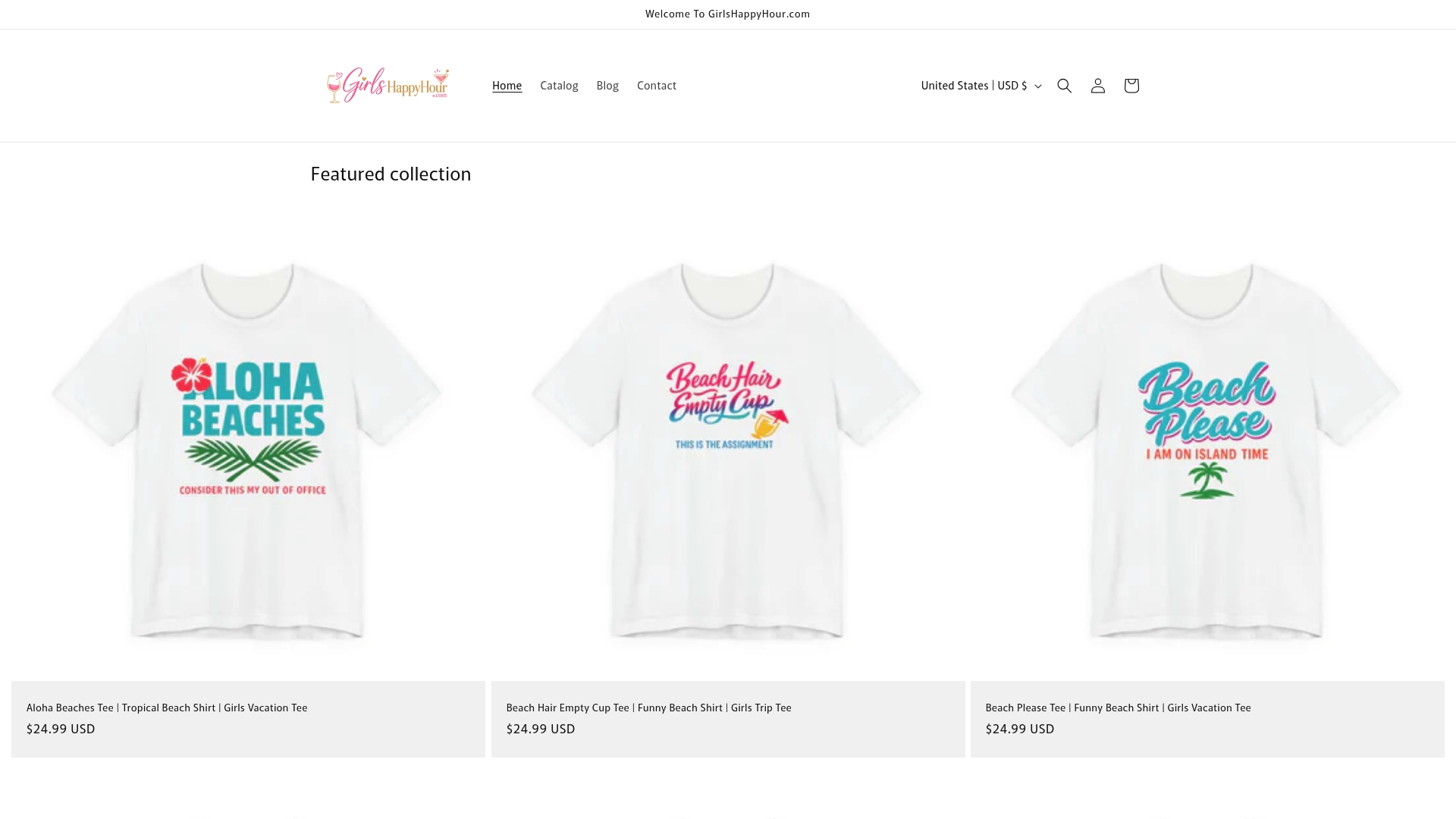
Girlshappyhour designs graphic tees built for exactly this kind of group coordination. The Drink Till He’s Pretty Tee and the Unsupervised & Over-Poured Tee give a group a shared statement piece without requiring anyone to buy a new dress. Pair them with different bottoms and each person keeps her own style while the group reads as unified. For wine nights, happy hours, and girls trips, a matching graphic tee is the lowest-effort, highest-impact coordination move available.
FAQ
What does coordinating outfits for a night out actually mean?
Outfit coordination means selecting complementary clothing across a group so individual looks connect visually without being identical. The goal is a unified aesthetic, not a matching uniform.
How do you coordinate outfits without looking like a costume?
Use the 60-30-10 color rule and agree on one shared element such as color, fabric, or accessory. Let each person choose her own silhouette to maintain individuality within the group look.
What is the most important factor in group outfit coordination?
Matching dress levels across the group is the single most important factor. Consistent formality, such as all smart casual or all cocktail, makes a group look coordinated even when colors and silhouettes differ.
How do you coordinate outfits for different venue types?
Match your silhouette and fabric choice to the venue’s dress code. Tailored trousers and midi dresses work as foundation pieces across most venue types, from dinner to rooftop bars.
What is the easiest way to coordinate outfits with friends?
Agree on a shared accessory tone, such as all gold jewelry or all black bags. This creates visual unity without requiring anyone to change their main outfit.