

How to Keep Black Shirts from Fading for Good
The fastest, most reliable way to keep black shirts from fading is to avoid heat and aggressive chemistry. Wash cold, inside out, with a dark-specific liquid detergent, on a short gentle cycle, and dry without sun or high heat. That single routine handles the majority of preventable color loss.
Quick-start checklist:
- Turn the shirt inside out before loading it into the machine.
- Set the washer to cold water and the shortest gentle or delicate cycle available.
- Use a liquid detergent formulated for darks, such as Woolite Darks, measured to the load size.
- Skip the dryer when possible; air-dry indoors away from windows.
- Check the garment care label first. It overrides every general rule.
Pro Tip: For a brand-new black shirt that bleeds dye, run it alone on a cold, short cycle with a color-catcher sheet such as Shout Color Catcher before wearing. This captures loose dye and reduces bleed onto other garments in future washes.
Key Takeaways
Cold water, a dark-specific liquid detergent, an inside-out garment, and a gentle cycle form the core routine that keeps black shirts dark through repeated washing.
| Point | Details |
|---|---|
| Avoid heat at every stage | Cold wash and low or no dryer heat are the two highest-impact changes you can make. |
| Turn inside out, every time | Protects exterior fibers and print surfaces from drum abrasion and friction. |
| Use a dark-specific detergent | Woolite Darks or The Laundress Darks; no brighteners, no bleach alternatives. |
| Wash less, spot-clean more | Fewer full wash cycles directly reduces cumulative dye loss over the shirt’s life. |
| First wash with a color catcher | Add a Shout Color Catcher sheet on the first wash of any new black garment. |
Table of Contents
- Why do black shirts fade in the first place?
- How to wash black shirts without losing color
- How should you dry black shirts to protect the color?
- How to remove stains from black shirts without stripping color
- Do vinegar or baking soda help stop black clothes from fading?
- How to restore faded black shirts: re-dyeing and color restorers
- Special care for printed and print-on-demand black shirts
- How often should you wash black shirts?
- What most black-shirt care advice gets wrong
- Sources
Why do black shirts fade in the first place?
Heat is the primary driver. High washing and drying temperatures pull dye from fabric fibers and rank as the leading cause of premature color loss in dark textiles. Hot water swells fibers and releases dye molecules that then rinse away. A hot dryer compounds the damage by repeating that process while also roughing up the fiber surface.
Friction is the second major factor. Drum agitation during a long or heavy cycle scrapes fibers against each other and against the drum wall. Over time, that abrasion creates a faint halo of fuzz on the fabric surface, which scatters light and makes the shirt look washed out even when the dye itself has not fully left the fiber.
Sunlight acts as a bleaching agent. Air-drying outside speeds fading because UV radiation breaks down dye molecules directly. A black shirt left on an outdoor line for several hours can show visible lightening within a few washes.
Detergent chemistry matters more than most people expect. Optical brighteners, bleach alternatives, and whitening agents are designed to make light-colored fabrics appear brighter. On black fabric, they work against you, stripping or masking the dark dye. Overdosing any detergent leaves residue on dark fabric that shows as a chalky, faded-looking film.
Hard water contributes too. Mineral deposits from high-calcium water bind to fabric and dull the surface color over time, which is why some households see faster fading than others using identical products.
How to wash black shirts without losing color
A consistent, step-by-step routine is what separates shirts that stay dark for years from ones that gray out after a season.
Step-by-step washing routine:
- Sort by color and weight. Keep black shirts with other darks. Separate heavy denim from lightweight tees. Mixing fabric weights increases abrasion on thinner fabrics.
- Turn every shirt inside out. Turning garments inside out protects the exterior fibers from friction and abrasion. Zip zippers and button buttons to prevent snagging.
- Use a mesh laundry bag for delicate or printed shirts. The bag reduces direct drum contact and cuts friction significantly.
- Set the machine to cold water. Cold preserves dye. Modern enzyme detergents activate effectively at typical cold-tap temperatures, so cleaning performance does not suffer.
- Select the shortest gentle or delicate cycle available. Shorter wash cycles, cold water, and correct detergent dosing reduce abrasion and dye loss over repeated washes.
- Measure detergent carefully. Do not pour concentrated detergent directly onto dark fabric. Add it to the dispenser drawer or dilute it in water first. Overdosing leaves residue that looks like fading.
- Choose a liquid detergent formulated for darks. Avoid detergents with brighteners or bleach alternatives; use mild liquid formulas labeled for darks instead. Two reliable options:
Detergent options for dark fabrics
Woolite Darks is formulated without optical brighteners and is marketed for protection across repeated washes. It works in both standard and high-efficiency (HE) machines. Check the label for the HE symbol if you have a front-loader.
The Laundress Darks Detergent is optimized for cold water and gentle cleaning of dark fabrics. It is a concentrated formula, so a smaller measured dose handles a full load.
For stain pre-treatment, use an enzyme-based spot cleaner applied to the stained area only. Blot, do not rub. Always test on an inconspicuous seam or hem first. Avoid oxygen bleach and heavy oxidizers on black fabric; they lighten dye along with the stain.
Pro Tip: On the first wash of any new black garment, add a color-catcher sheet to the load. It traps loose dye in the water before it can redeposit on other fabrics or cause uneven color on the shirt itself.
How should you dry black shirts to protect the color?
Air-drying indoors is the single most effective drying method for preserving black color. Hang shirts on a drying rack away from windows and direct sunlight. Sunlight bleaches dark fabrics, so even a partially sunny indoor spot near a south-facing window can cause visible fading over time.
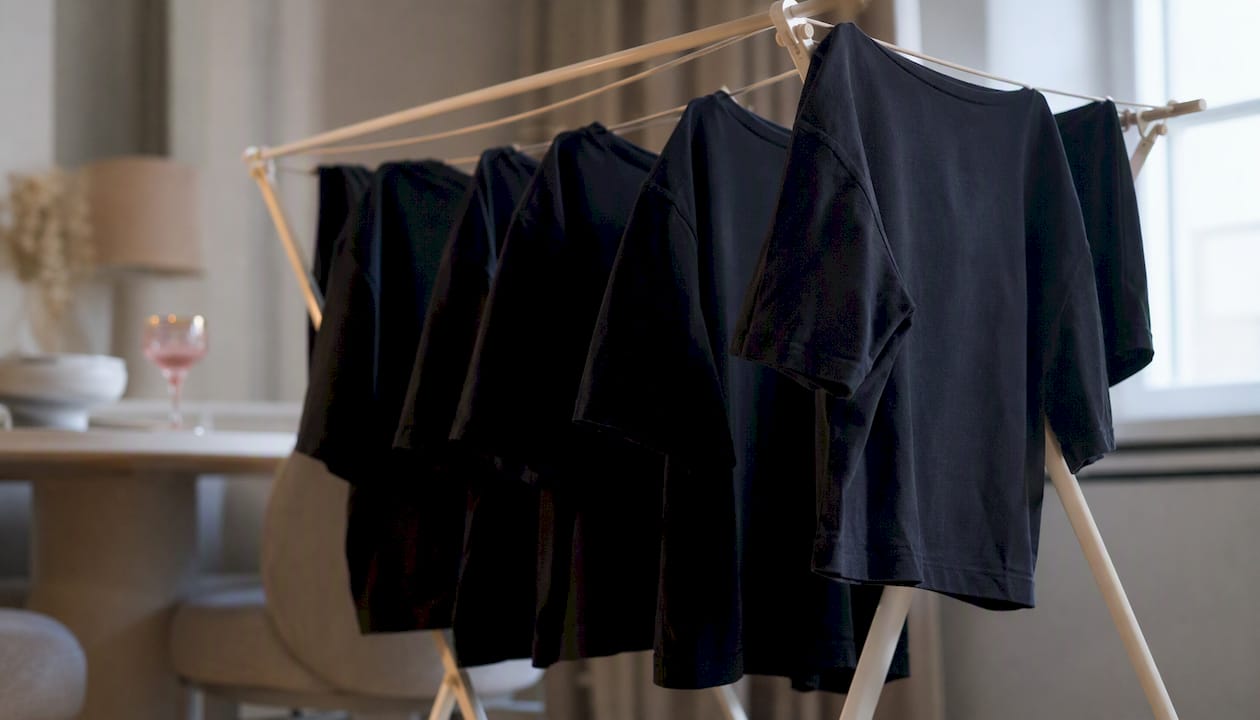
When the dryer is the only option, use the lowest heat setting or the tumble-without-heat (air-fluff) setting. Remove shirts while they are still slightly damp. Tumbling in the dryer roughens fiber surfaces and creates a halo of fuzz that makes black clothes appear faded; overdrying amplifies that effect.
Drying checklist:
- Air-dry indoors on a rack, away from direct sun and heat sources.
- If using a dryer, select the lowest heat or air-fluff cycle.
- Remove shirts while slightly damp and reshape them by hand.
- Never dry black shirts in direct sunlight, even briefly.
Pro Tip: For printed shirts, hang them inside out on the rack. This protects the print area from any ambient UV light and reduces the chance of the design sticking to the rack surface while damp.
How to remove stains from black shirts without stripping color
Stain removal on black fabric requires restraint. Aggressive chemistry that clears a stain fast often takes dye with it.
Stepwise stain treatment:
- Blot immediately. Use a clean cloth to lift as much of the stain as possible before it sets. Do not rub.
- Test first. Apply a small amount of your chosen cleaner to an inside seam or hem. Wait two minutes and check for color change.
- Treat with a mild enzyme solution. Enzyme cleaners handle oily and protein-based stains effectively at cold temperatures. Apply, let sit for five minutes, then rinse cold.
- Rinse thoroughly. Residual cleaner left on black fabric can cause a visible light patch after drying.
- Do not apply heat until the stain is fully gone. Heat sets stains permanently.
- Repeat if needed. A second gentle treatment is safer than one aggressive one.
Avoid oxygen bleach products and heavy oxidizing stain removers on black fabric. They are effective on light fabrics but will visibly lighten dark dye. If a stain does not respond to two rounds of enzyme treatment, a full cold wash with a dark-specific detergent is the next step before considering anything stronger.
Pro Tip: Over-agitating a stained area, even with a soft brush, weakens fibers and creates a lighter patch that looks like a bleach spot. Blot and soak; do not scrub.
Do vinegar or baking soda help stop black clothes from fading?
Both are popular home remedies. Neither is a reliable color-preservation solution on its own, and each carries a specific risk for dark fabrics.
Vinegar: White vinegar’s mild acidity can help remove detergent residue from fabric and may help set some natural dyes during an initial wash. Adding half a cup to the rinse cycle occasionally is unlikely to cause harm. However, it does not lock dye into fibers in any meaningful way, and repeated use on synthetic or blended fabrics can affect fiber integrity over time.
Baking soda: Useful for odor control and as a mild abrasive for surface cleaning. Its alkalinity can interfere with the pH balance that some dark-specific detergents rely on, which may reduce their effectiveness if combined in the same wash. It offers no documented color-preservation benefit for black fabrics.
Safer alternatives that actually work:
- Color-catcher sheets (such as Shout Color Catcher) on the first one or two washes of a new dark garment.
- Dark-specific liquid detergents (Woolite Darks, The Laundress Darks) used at the correct dose.
- Cold water, every wash, without exception.
If you want to test vinegar’s effect on your specific garment, apply a diluted solution (one part vinegar, four parts water) to an inside seam, let it dry, and check for any color shift before using it in a full wash.
How to restore faded black shirts: re-dyeing and color restorers
Once a black shirt has faded significantly, standard washing cannot reverse the color loss. Restoration is possible in some cases, but the outcome depends on fabric type and the degree of fading.
When restoration is realistic:
- Light to moderate fading on natural fibers (cotton, linen, rayon) responds well to at-home dyeing.
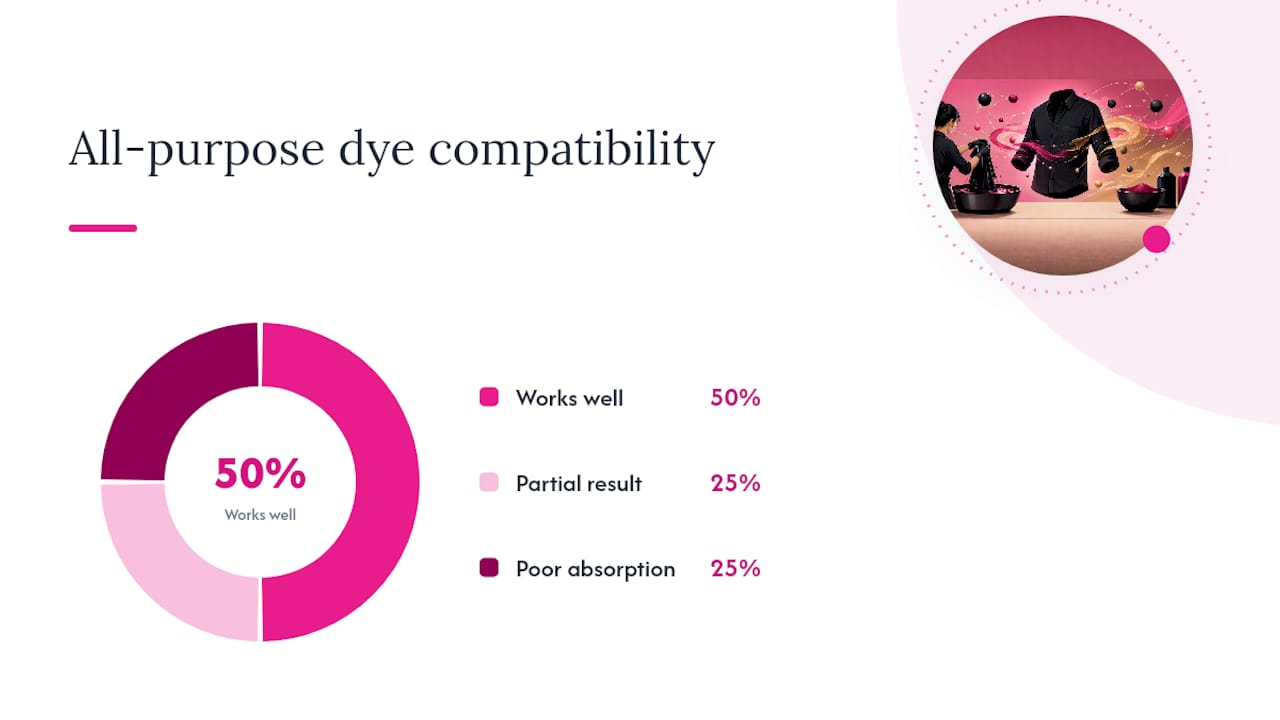
- Synthetic fabrics (polyester, nylon) do not absorb standard fiber-reactive or all-purpose dyes effectively. Rit makes a separate Rit DyeMore line formulated for synthetics.
- Shirts with large printed areas are poor candidates for full re-dyeing. Dye will coat the print and alter its appearance.
At-home re-dyeing with Rit:
- Test a small hidden area first to confirm the fabric accepts the dye.
- Follow Rit’s instructions for the specific dye type and fabric content.
- Use the stovetop or washing machine method depending on the fabric.
- Rinse thoroughly in cold water after dyeing and wash separately for the first two washes.
Pro Tip: If a shirt has a screen print or DTG design you want to preserve, mask the print area with plastic wrap secured with tape before applying dye to the surrounding fabric, as this is imperfect but reduces dye contact with the design.
Fabric compatibility at a glance:
| Fabric type | Standard Rit all-purpose dye | Rit DyeMore (synthetics) |
|---|---|---|
| cotton | Works well | Not needed |
| polyester | Poor absorption | Works well |
| Cotton/poly blend | Partial result | Use DyeMore for poly content |
| Rayon | Works well | Not needed |
Special care for printed and print-on-demand black shirts
Screen prints, heat transfers, and direct-to-garment (DTG) prints each behave differently under heat and agitation, but the care principles overlap significantly.
Do’s and don’ts for printed black shirts:
- Do turn the shirt inside out before every wash. This is the single most protective step for both the fabric color and the print.
- Do use a mesh laundry bag. It reduces drum contact on the print side even when the shirt is inside out.
- Do use cold water and a gentle cycle. Heat causes DTG inks to crack and heat-transfer adhesives to peel.
- Don’t iron directly over a print. Use a pressing cloth or iron on the reverse side.
- Don’t use a high dryer heat setting. Low heat or air-dry only.
- Don’t soak printed shirts in stain remover. Spot-treat only, away from the print area.
DTG prints are particularly sensitive to heat because the ink bonds to the fabric surface rather than being embedded in the fiber. Repeated high-heat drying causes the ink layer to crack and flake. The same applies to heat-transfer designs, where the adhesive layer softens and loses bond strength with each high-heat cycle.
Girlshappyhour’s print-on-demand quality guidance covers what to check in a tee before and after purchase. For readers who want to understand how event and souvenir shirts hold up over time, the souvenir shirt care overview covers practical longevity tips for occasion-specific tees.
How often should you wash black shirts?
Washing less frequently is one of the most underrated ways to slow fading. Every wash cycle removes a small amount of dye. The fewer full washes a shirt goes through, the longer it holds its color.
Practical frequency guidelines:
- Wash only when the shirt is visibly soiled or has absorbed odor. Light wear for a few hours does not require a full wash.
- Air the shirt out after wearing. Hang it in a ventilated space for an hour before returning it to the closet.
- Spot-clean small marks immediately rather than running a full wash cycle for a single stain.
- Overwashing accelerates dye loss; airing out between wears and spot cleaning reduces the need for full washes.
Storage tips:
- Fold black shirts rather than hanging them if closet space is limited. Hanging on wire hangers can distort shoulder seams and expose fabric to light.
- Store away from direct light. Even closet lighting left on for extended periods contributes to slow UV fading.
- Keep black shirts away from dryer sheets stored in the same drawer. Some dryer sheet chemicals transfer to fabric and affect dye over time.
Under poor care (hot water, high dryer heat, frequent washing), visible fading on a black cotton shirt can appear after relatively few washes. Under a consistent cold-wash, low-heat routine, the same shirt may hold its color for many more wash cycles.
What most black-shirt care advice gets wrong
The standard advice to “wash in cold water” is correct but incomplete. Cold water alone does not prevent fading if the detergent contains optical brighteners, the cycle runs too long, or the dryer runs too hot. The routine has to hold across every step, not just water temperature.
The second gap in most guides is the printed-shirt distinction. A plain black cotton tee and a DTG-printed black tee are not the same garment for laundry purposes. The ink layer on a DTG print is the first thing to degrade under heat and agitation, and once it cracks, the shirt looks worn regardless of how well the black fabric itself has held its color. Treating both shirt types identically is a common and avoidable mistake.
The third thing most people underestimate is washing frequency. Cutting full wash cycles in half, through spot cleaning and airing out, does more for long-term color retention than switching detergents. The best detergent in the world still removes a small amount of dye with every wash. Fewer washes means less cumulative loss.
The conventional advice also tends to skip re-dyeing as a realistic option. For a cotton shirt with moderate fading and no large print, Rit dye applied correctly can restore a near-original depth of color. It is not a last resort; it is a practical maintenance tool for garments worth keeping.
Sources
- This Is the No. 1 Mistake You’re Making with Your Black Clothes
- Keep dark clothes from fading | The American Cleaning Institute
- How to keep black & dark-colored clothes from fading
- How to Keep Your Black Clothes Looking Their Best - Consumer Reports
- How to Wash Black Clothes with Minimal Fading | Maytag