

Wine Night vs Wine Tasting Explained for Women
A wine night is a casual, unstructured social gathering centered on enjoying wine with friends, while a wine tasting is an intentional, sensory-focused event designed to evaluate and compare different wines with purpose. These two formats are often confused, but the wine night vs wine tasting explained distinction matters when you are planning a gathering and want the right energy in the room. One format invites you to pour freely and talk for hours. The other asks you to slow down, pay attention, and actually notice what is in your glass. Both are worth knowing, and both can be exactly what your friend group needs depending on the night.
What are the main differences between a wine night and a wine tasting?
A wine night and a structured wine tasting differ in four core ways: duration, format, group size, and the tools involved. Getting clear on these differences helps you plan the right event from the start.
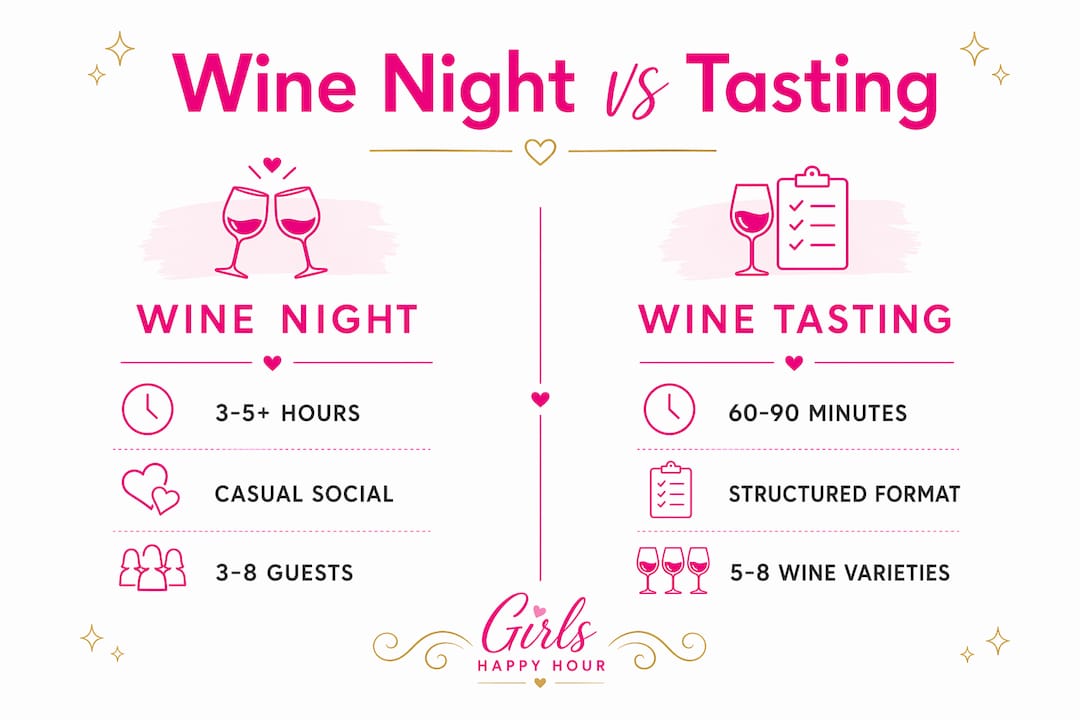
Duration and pacing are the most obvious contrast. Structured wine tastings typically last 60 to 90 minutes, while casual wine nights can stretch to 3 to 5 hours or more. That gap reflects a fundamental difference in purpose. A tasting is focused and time-boxed. A wine night is open-ended, built around conversation and connection rather than evaluation.
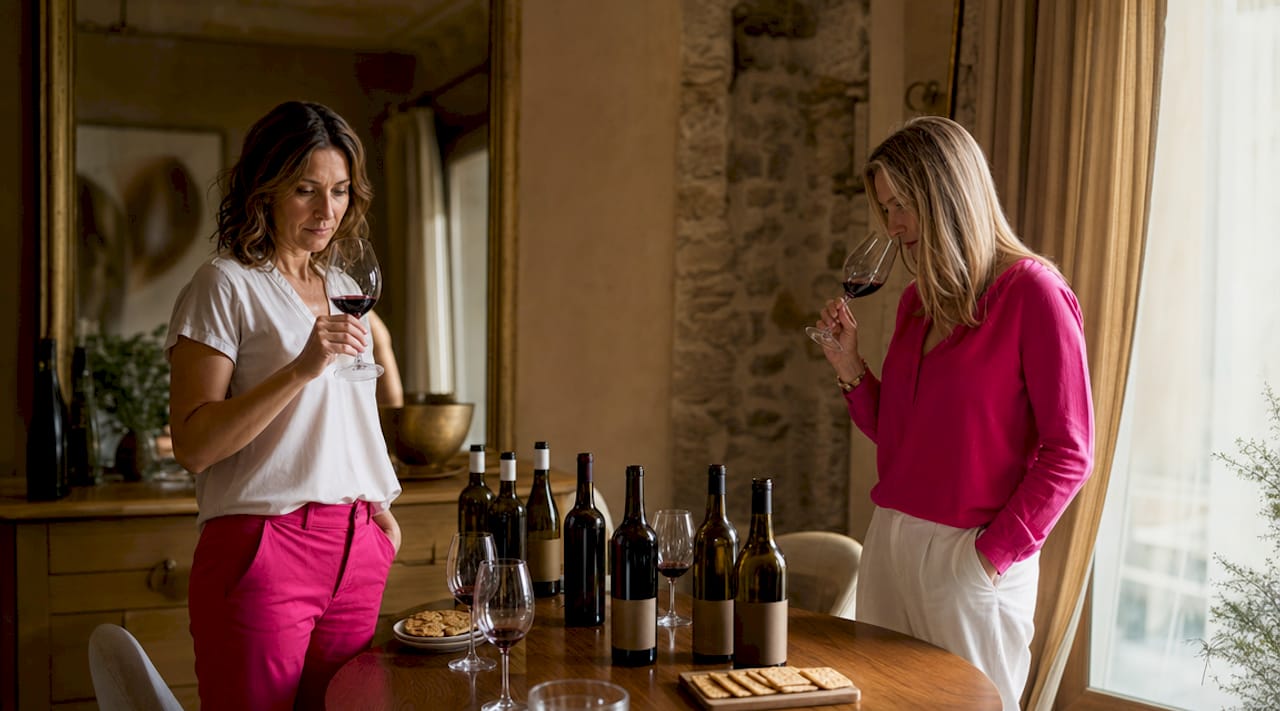
Format and structure also split these two events clearly. A wine night flows naturally, with no agenda beyond good company. A wine tasting follows a guided sequence, usually moving through wines in a deliberate order, with pauses for observation and discussion between each pour. One feels like a dinner party. The other feels like a class you actually want to attend.
Here is a direct comparison of both formats:
| Feature | Wine night | Wine tasting |
|---|---|---|
| Duration | 3 to 5+ hours | 60 to 90 minutes |
| Structure | Unstructured, social | Guided, sequential |
| Group size | 4 to 12 people | 3 to 8 people |
| Wine varieties | 2 to 4 bottles | 5 to 8 wines |
| Glassware | Any wine glass | Bowl-shaped, aroma-trapping glass |
| Palate cleansers | Optional | Standard practice |
Group size and wine selection follow different rules for each format. Groups of 3 to 8 people and 5 to 8 wine varieties work best for tastings, keeping the experience focused without overwhelming anyone. Wine nights accommodate larger groups because the goal is socializing, not sensory precision.
Glassware matters more than most people realize. The shape of the glass matters more than the price tag. A wider bowl that narrows at the top traps aromas and concentrates them toward your nose, which is exactly what you need for a tasting. For a casual wine night, any clean glass works fine. You can also explore a full guide to wine glasses if you want to match glass shape to wine style for either event.
Pro Tip: For a wine night, skip the fancy glassware stress. For a tasting, borrow or buy four to six tulip-shaped glasses. The shape does the work.
How to host a wine night that’s fun and effortless
A successful wine night runs on simplicity, variety, and a relaxed atmosphere that lets conversation take center stage. The goal is not to impress anyone with your wine knowledge. The goal is a great night.
Start with the right group size. Six to ten guests hits the sweet spot for a wine night. Fewer than four can feel quiet. More than twelve makes it hard to keep the energy cohesive. For wine selection, pick two to four bottles across different styles: one crisp white like Sauvignon Blanc, one light red like Pinot Noir, and one wildcard like a dry rosé or a sparkling option. This gives guests variety without turning the table into a wine shop display.
For food pairings, keep it approachable. A cheese board with three to four varieties, some crackers, grapes, and a handful of olives covers the basics of wine pairing for beginners without requiring a culinary degree. Avoid heavily spiced or acidic foods early in the night since they dull the palate.
Wine night activities make the difference between a forgettable evening and one people talk about for weeks. Consider these options:
- Blind label contest: Cover the bottles and have guests guess the grape or region. No wine knowledge required, just instinct and confidence.
- Wine personality quiz: Match each guest to a wine style based on their answers. Printable versions are easy to find online.
- Pairing challenge: Set out three snacks and three wines. Everyone votes on their favorite combination. Simple, interactive, and surprisingly revealing.
- Trivia round: Mix wine questions with pop culture questions so no one feels left out for not knowing their appellations.
Ambiance matters more than most hosts expect. Dim lighting, a playlist that fits the mood, and a table that is not overcrowded with bottles and glasses all signal to guests that this is a night to relax. Candles, a simple centerpiece, and a few scattered wine-themed touches set the tone without requiring a decorator.
Pro Tip: Label each bottle with a small card listing the grape and region. Guests learn something without feeling lectured, and it sparks natural conversation.
What to expect and how to prepare for a wine tasting at home
A wine tasting at home is defined by intentional sensory attention, not by expertise or the right answers. The distinction between drinking wine and tasting wine is entirely about focus. You are paying attention to what you experience rather than simply consuming.
The standard method used by sommeliers and casual enthusiasts alike is the four-step See, Swirl, Smell, Sip sequence. Here is how to apply it:
- See: Hold the glass against a white background and observe the color and clarity. Deeper color often signals more body or age.
- Swirl: Rotate the glass gently to release aromatic compounds from the wine’s surface. This step is not performative. It genuinely opens up the wine.
- Smell: Bring the glass to your nose before sipping. Up to 90% of perceived wine flavor comes from aroma, which means this step carries more weight than the actual sip. Take two short sniffs rather than one long inhale.
- Sip: Take a small amount, let it coat your mouth, and notice texture, acidity, sweetness, and finish. The finish is how long the flavor lingers after you swallow.
Sequence your wines carefully. The recommended order is lightest to heaviest, white before red, and dry before sweet. Tasting out of order makes subsequent wines taste flat or unbalanced because your palate has already been conditioned by a heavier wine. Start with a sparkling or light white, move through fuller whites, then progress to light reds and finish with bold reds or a dessert wine if you are including one.
Palate cleansers are not optional at a tasting. Plain water and plain crackers or unsalted bread reset your palate between pours. Flavored crackers, cheese, or anything acidic can skew your perception of the next wine.
Here is a simple at-home tasting sequence for six wines:
| Order | Wine style | Example |
|---|---|---|
| 1 | Sparkling or light white | Prosecco or Pinot Grigio |
| 2 | Medium white | Chardonnay |
| 3 | Light red | Pinot Noir |
| 4 | Medium red | Merlot or Grenache |
| 5 | Bold red | Cabernet Sauvignon |
| 6 | Sweet or dessert | Riesling or Port |
Wine tastings are designed to be approachable, not intimidating. Frame the event around shared curiosity. There are no wrong answers when you describe what you smell or taste. If someone says a Cabernet smells like pencil shavings and dark cherries, that is a perfectly valid observation.
Pro Tip: Print a simple tasting sheet with four columns: See, Smell, Taste, and Overall Score. Guests fill it in as they go. It keeps the group engaged and gives everyone something to reference at the end.
How do wine games make both events more enjoyable?
Games create what researchers call structured relaxation during wine events, reducing self-consciousness and encouraging social interaction without requiring anyone to perform or compete seriously. This dynamic works equally well at a casual wine night and a structured tasting.
The key is choosing games that match the setting and the progressive effects of the evening. Games that avoid high dexterity work best because fine motor skills decline after a few glasses. Observation, bluffing, and simple social formats keep energy high without risking spills or frustration.
Strong options for both formats include:
- Wine Bingo: Create cards with tasting notes, grape varieties, or wine regions. Call out descriptors as you taste. Works beautifully at a structured tasting.
- Blind tasting challenge: Cover bottles and have guests guess the grape or country of origin. No expertise needed. Pure instinct and group debate.
- Label design contest: Give each guest a blank label and colored markers. They design a label for the wine they liked most. Low pressure, creative, and memorable.
- Two truths and a wine: Each person shares two true statements about a wine and one false one. The group votes on which is the lie. Combines wine learning with classic social gameplay.
Games also serve a practical purpose at tastings. They give guests a reason to engage with the wine beyond just drinking it, which deepens appreciation without adding pressure. At a wine night, games shift the energy when conversation hits a lull and keep the group connected across a longer evening.
Key takeaways
A wine night prioritizes casual connection, while a wine tasting prioritizes sensory focus. Both formats deliver a great experience when matched to the right group and intention.
| Point | Details |
|---|---|
| Duration differs significantly | Wine nights run 3 to 5+ hours; tastings are designed to wrap in 60 to 90 minutes. |
| Sequence matters at tastings | Always move from lightest to heaviest wine to protect palate sensitivity throughout. |
| Aroma drives flavor | Up to 90% of wine flavor comes from smell, so swirling and sniffing are the most important steps. |
| Games work for both formats | Observation and bluffing games reduce pressure and increase engagement at any wine event. |
| Group size shapes the experience | Keep tastings to 3 to 8 guests; wine nights can accommodate larger, looser groups. |
Why I stopped overthinking which format to choose
The honest truth is that I spent too long treating wine nights and tastings as separate categories that required separate planning, separate guest lists, and separate levels of preparation. That thinking is wrong, and it made hosting harder than it needed to be.
What I have found actually works is starting with the group, not the format. If the friend group wants to catch up after a long month, a wine night is the right call. Open bottles, good snacks, no agenda. If someone in the group is curious about wine or you want a reason to try something new together, a tasting gives the evening a spine without making it feel like homework.
The most memorable events I have hosted were hybrids. We started with a short tasting of three wines using the See, Swirl, Smell, Sip method, then transitioned into a full wine night once everyone had a reference point for what they were drinking. That structure gave the evening texture. Guests who knew nothing about wine left feeling like they had learned something. Guests who knew a lot left feeling like they had actually relaxed.
My advice: do not wait until you feel qualified to host a tasting. Wine tasting is about shared curiosity, not expertise. Pick five bottles, print a tasting sheet, and let the conversation do the rest. The format is a tool, not a test.
— Stephen
Dress the part with Girlshappyhour wine tees
Whether you are hosting a laid-back wine night or a guided tasting at home, the right shirt sets the tone before the first bottle is opened. Girlshappyhour makes wine-themed tees built for exactly these moments.
The Girls Night Plans Optional Wine Required tee is one of the most popular picks for wine gatherings, and it works as a gift, a party favor, or just the shirt you wear when you are the one doing all the hosting. Girlshappyhour also carries options like the Wine a Little Laugh a Lot tee and the Rosé All Day Chaos All Night tee for when the tasting turns into a full night. Fast shipping, easy ordering, and shirts that actually say something worth wearing.
FAQ
What is the main difference between a wine night and a wine tasting?
A wine night is an unstructured social gathering focused on enjoying wine casually with friends, while a wine tasting is a guided, sensory-focused event designed to evaluate and compare wines in sequence. The key difference is intentionality: one is about connection, the other is about attention.
How many wines should you serve at a home wine tasting?
Five to eight wine varieties work best for a home tasting, keeping guests engaged without overwhelming their palates. Serve them in order from lightest to heaviest to protect palate sensitivity throughout the event.
Do you need expensive glassware for a wine tasting?
No. Glass shape matters more than price. A bowl-shaped glass that narrows at the top concentrates aromas effectively, which is the only feature that matters for tasting. Affordable tulip-shaped glasses from any kitchen store work well.
What games work best at a wine night or tasting?
Wine Bingo, blind tasting challenges, and label design contests all work well because they require observation and social interaction rather than fine motor skills. Games that avoid physical coordination keep the energy up safely as the evening progresses.
Can you combine a wine night and a wine tasting in one event?
Yes, and it often produces the best results. Start with a short structured tasting of three to four wines, then transition into a relaxed wine night once guests have a shared reference point for what they are drinking.
Recommended
- How to Host a Wine Night at Home: 2026 Guide – GirlsHappyHour.com
- Girls Night Plans Optional Wine Required Tee | Girls Trip Shirt | Wine – GirlsHappyHour.com
- Time to Wine Down Tee | Funny Wine Pun Shirt | Happy Hour Womens Tee – GirlsHappyHour.com
- Wine a Little Laugh a Lot Tee | Funny Wine Quote Shirt | Wine Lover Gi – GirlsHappyHour.com