

What Is an Apéritif? A Clear, Simple Guide
An apéritif is a light alcoholic drink served before a meal to stimulate the appetite. Per the Cambridge Dictionary, it is simply “an alcoholic drink usually drunk before a meal.” Common examples include a glass of Prosecco, a pour of dry vermouth, or an Aperol spritz. These drinks tend to be dry, low-to-moderate in alcohol, and served cold. They are not dessert drinks. They open the meal, not close it.
Key Takeaways
An apéritif is a dry, low-to-moderate ABV drink served before a meal to stimulate appetite through bitter or herbal compounds that trigger saliva and gastric juices.
| Point | Details |
|---|---|
| Core definition | An apéritif is served before a meal, is typically dry or bitter, and stimulates the appetite. |
| Why bitterness works | Bitter compounds trigger saliva and gastric juices, creating a physical hunger response. |
| Go-to bottles | Dry vermouth, Aperol or Campari, Prosecco, gin, and soda water cover most serves. |
| Apéritif vs. digestif | Apéritifs are dry and lower ABV (8–20%); digestifs are sweeter and higher ABV. |
| Serving tip | Pour small (3–4 oz for wine-based), serve cold, and pair with salty snacks like olives or nuts. |
Table of Contents
- What makes a drink qualify as an apéritif?
- Where the apéritif tradition comes from
- Common types of apéritifs and how they taste
- How to serve an apéritif and what to pair with it
- Common misconceptions about apéritifs
- A few bar staples that cover most apéritif needs
- How an apéritif fits a girls’ happy hour
- Sources
What makes a drink qualify as an apéritif?
The apéritif category is defined by timing and flavor, not by a single production method. A drink qualifies when it is served before eating and carries a dry, bitter, or herbal profile that prepares the palate rather than satisfying it.
Flavor profile. Dry and bitter flavors trigger saliva and gastric juice production, which creates a physical sensation of hunger. Sweet drinks do the opposite. That is why vermouth, Campari, and dry sherry work as apéritifs while cream liqueurs do not.
Alcohol strength. Most apéritifs fall in a moderate alcohol by volume range lower than stronger digestifs. That is lower than typical digestifs, which tend to have a higher alcohol content, and low enough that a small pour does not dull the appetite before the food arrives.
Serving format. Cold or chilled, almost always. Spritzes, neat over ice, or with a splash of soda water are the standard formats. Room-temperature or warm service is rare.
Quick markers to identify an apéritif:
- Served before the meal, not after
- Dry, bitter, or herbal taste (not sweet or creamy)
- ABV typically 8–20%
- Served cold, often with ice or sparkling water
- Small pour (3–4 oz or less)
Where the apéritif tradition comes from
The word traces directly to the Latin aperire, meaning “to open.” French and Italian cultures formalized the ritual into daily life, but the underlying idea is universal: ease into the meal with a light drink and good company.
In France, the apéro is a relaxed pre-dinner social moment. It is less about the specific drink and more about the pause before eating. Wine, pastis, or a simple kir (white wine with a splash of blackcurrant liqueur) are typical. Snacks are light: olives, chips, or a small slice of pâté.
Italy’s aperitivo carries a stronger bar-culture dimension. Milan’s Campari-and-soda tradition dates to the 19th century, and many Italian bars still offer free snacks with a purchased aperitivo drink during the early evening. The Aperol spritz became a global export of this culture.
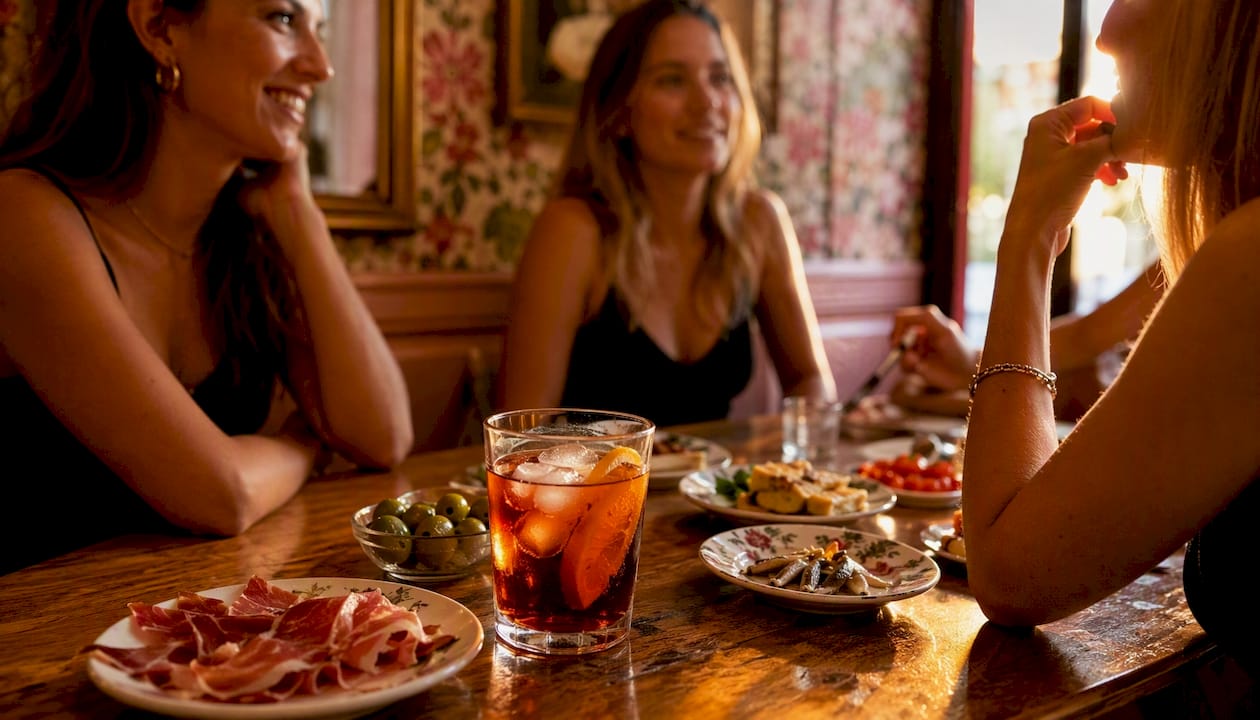
Spain has its own version: the vermut hour, typically on Sunday midday, built around a glass of Spanish vermouth served with anchovies, olives, or a small plate of jamón. The apéritif functions as a social bridge in all three cultures, comparable to what Americans call happy hour, with the goal being relaxation and appetite stimulation rather than intoxication.
Common types of apéritifs and how they taste
Eater’s guide to aperitifs groups the category by timing: any drink consumed before a meal can function as an apéritif, which means the category spans aromatized wines, bitter spirits, dry sherries, sparkling wines, and even nonalcoholic options.
Aromatized and fortified wines (vermouth, quinquinas). Vermouth is wine fortified with neutral spirit and flavored with botanicals, including wormwood (Artemisia) as a legally required defining botanical in EU-regulated production. Dry (white) vermouth is the standard apéritif style. Serve it chilled, neat or over ice, with an olive or lemon twist. Classic use: a dry martini.
Bitter aperitivo spirits (Aperol, Campari). These are spirit-based liqueurs with pronounced bitter and herbal notes. Both are most commonly served as spritzes with Prosecco and soda water.
Amontillado is slightly richer with a hazelnut character. Both are served cold in a small wine glass and pair well with salty snacks like almonds or jamón.
Gin. A botanical spirit that works well as an apéritif because of its herbal and bitter juniper profile. Served neat, with tonic, or as the base of a classic martini or Negroni.
Ouzo is the Greek equivalent, served the same way. Both are strongly aromatic and pair with seafood or salty mezze.
Sparkling wine (Prosecco). Light, slightly sweet, and low-effort. It is the most approachable option for guests unfamiliar with bitter profiles.
Nonalcoholic alternatives. Sparkling water with citrus, nonalcoholic bitters, or alcohol-free aperitivo spirits (such as Seedlip or Ghia) replicate the dry, botanical experience without alcohol.
| Category | Flavor profile | Typical ABV | How it’s served | Classic use |
|---|---|---|---|---|
| Dry vermouth | Dry, herbal, slightly bitter | Moderate ABV typical for fortified wine | Chilled, neat or over ice | Dry martini |
| Bitter aperitivo (Aperol/Campari) | Bitter, citrus, herbal | Moderate ABV range typical for bitter aperitivos | Spritz with Prosecco and soda | Aperol spritz, Negroni |
| Fino/amontillado sherry | Dry, nutty, saline | Moderate ABV typical for dry sherries | Chilled in a small wine glass | Served neat with olives |
| Gin | Herbal, juniper, botanical | Higher ABV typical for spirits | Neat, with tonic, or in a martini | Martini, Negroni |
| Anise spirits (pastis/ouzo) | Anise, licorice, aromatic | Higher ABV typical for spirits | Diluted with cold water | Served with mezze or seafood |
| Prosecco | Light, fruity, slightly sweet | Moderate ABV typical for sparkling wine | Chilled in a flute | Aperol spritz, served solo |
How to serve an apéritif and what to pair with it
Timing matters. Serve apéritifs 20–30 minutes before the meal, while guests are still arriving or settling in. Keep pours small: 3–4 oz for wine-based options, 1–2 oz for spirit-based ones. The goal is appetite stimulation, not satiation.
Glassware follows the drink. A coupe or martini glass for vermouth-based serves, a wine glass for sherry or Prosecco, a rocks glass for bitter aperitivos over ice. Temperature should be cold throughout: pre-chill glasses if possible.
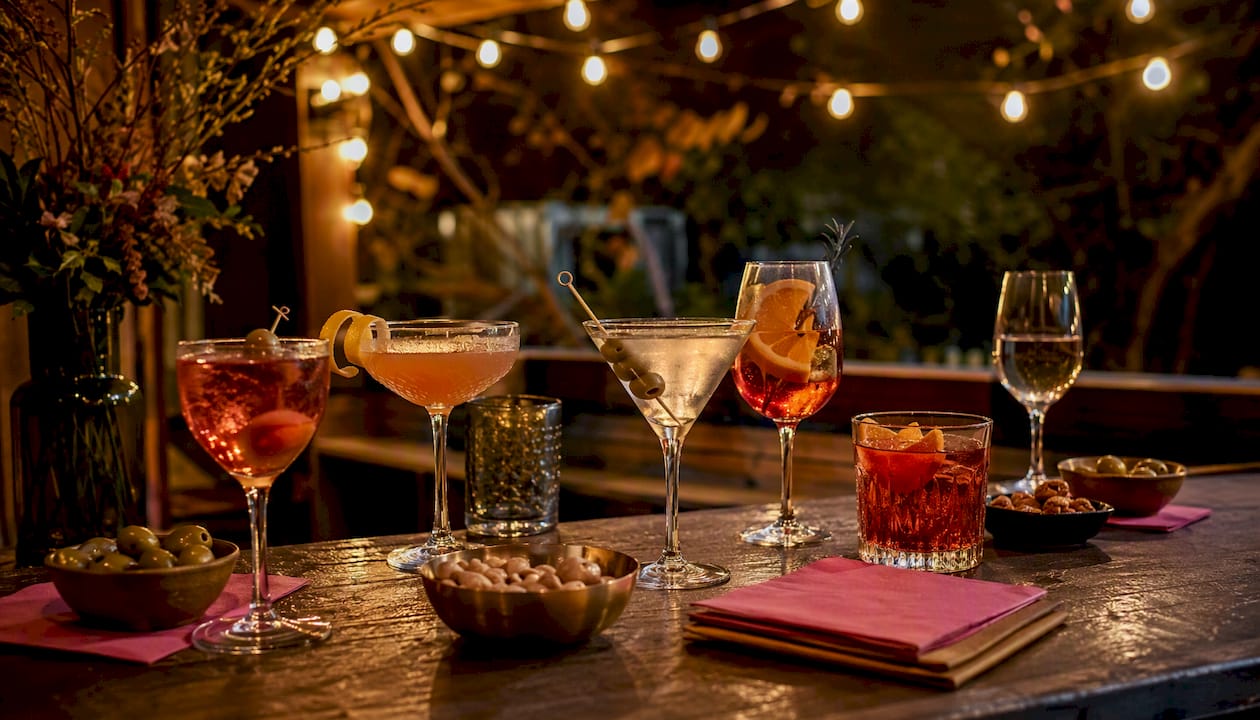
For snacks, salty and savory is the rule. Olives, roasted nuts, focaccia, and small crostini are the standard. They complement the dry/bitter drink without filling guests up. Avoid anything rich, creamy, or sweet at this stage.
Quick hosting checklist:
- Set out drinks 20 minutes before dinner
- Pour small (3–4 oz max for wine-based, 1–2 oz for spirits)
- Keep everything cold
- Offer one or two salty snacks, not a full spread
- Have soda water and ice available for mixing
Common misconceptions about apéritifs
-
“Vodka is a classic apéritif.” Not quite. Vodka’s neutral flavor profile lacks the herbal or bitter compounds that stimulate appetite. It can be served before a meal, but it does not function as an apéritif in the traditional sense. Gin, with its botanical juniper profile, is a much closer fit.
-
“Prosecco is too sweet to be an apéritif.” Prosecco is a standard apéritif and one of the most common spritz bases. Its light effervescence and relatively dry profile make it suitable before a meal, especially in a spritz format.
-
“Apéritif and digestif are the same thing.” They are not. An apéritif comes before the meal and is typically dry, bitter, or herbal with lower ABV. A digestif comes after the meal and is usually sweeter and higher in alcohol (brandy, amaro, port). The timing and flavor direction are opposite.
-
“Sweet liqueurs work as apéritifs.” Cream liqueurs and dessert-style spirits suppress appetite rather than stimulate it. They belong at the end of a meal, not the beginning.
A few bar staples that cover most apéritif needs
You do not need a full liqueur collection. A small set of versatile bottles covers almost every classic apéritif serve:
- Dry vermouth (refrigerate after opening; use within 2–3 weeks)
- Aperol or Campari (one bitter aperitivo is enough to start)
- Prosecco (doubles as a standalone drink and a spritz base)
- Gin (covers martinis and tonic serves)
- Soda water (essential mixer for spritzes and lengthening spirits)
Buy small bottles of vermouth if you do not use it often. Vermouth is wine-based and oxidizes after opening, so refrigeration is not optional. A flat, oxidized vermouth ruins a martini.
Pro Tip: For a simple spritz formula: 3 oz Prosecco + 2 oz Aperol + 1 oz soda water over ice. That ratio is the standard Aperol spritz and works as a crowd-pleasing apéritif for groups of any size. Keep portions to one drink before dinner to avoid dulling the appetite, and note that even lower-ABV drinks contribute to alcohol intake, so small pours matter.
How an apéritif fits a girls’ happy hour
The apéritif ritual translates naturally to a casual girls’ gathering. It is low-pressure, social, and easy to execute at home. A bottle of Prosecco, a bitter aperitivo, and a bowl of olives is all you need to set the tone before dinner or a night out.
Small pours and easy snacks keep energy up without anyone feeling full before the fun starts. If you are hosting, a wine tasting game pairs well with an apéritif spread. For the full event-planning picture, the girls’ night out guide covers everything from timing to dress code.
And if you want to make the occasion feel like an occasion, a cocktail-themed tee from Girlshappyhour adds a fun, low-effort touch that fits the mood.
Sources
The following sources informed this article and are worth bookmarking for further reading.
- Aperitif | Britannica
- What Is an Aperitif? | The Spruce Eats
- The Ultimate Guide to Buying Aperitifs | Eater
- aperitif definition | Cambridge Dictionary