

Why Wine over Cocktails Explained for Social Women
Wine is defined as the lower-risk, slower-paced drink choice for social gatherings, and the reasons why wine beats cocktails go well beyond personal taste. For women ages 25–40 planning girls’ nights, happy hours, or bachelorette weekends, the case for wine over cocktails is grounded in health research, sensory science, and social ritual. A 2026 U.K. study tracking more than 340,000 adults found that moderate wine consumption carries a 21% lower cardiovascular death risk compared to spirits and beer. That single finding reframes the cocktail-versus-wine debate entirely. Girlshappyhour covers the full picture here, from calorie counts to palate science to the social cues that make wine the natural anchor of a great night out.
Why wine over cocktails explained: the health profile difference
Wine holds a measurably different health profile from cocktails, and the gap comes down to three factors: calories, sugar, and compounds called polyphenols.
Calories and sugar: the numbers that matter
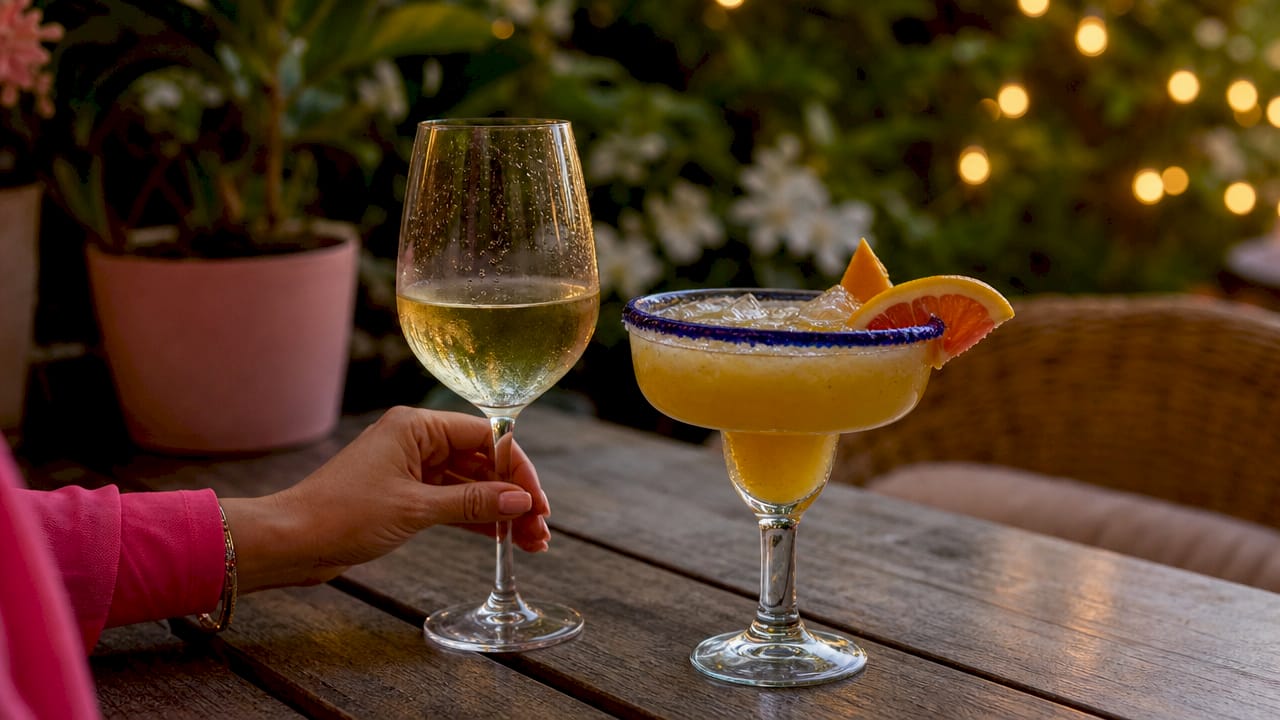
A standard 5-oz pour of dry wine carries roughly 120–130 calories. A margarita delivers 250–300 calories and 20–30 grams of sugar per glass. That difference adds up fast across a three-hour dinner party. Cocktails get their calorie load from mixers, syrups, and flavored liqueurs, not just the base spirit. Wine skips all of that.
Polyphenols: real benefit, realistic expectations
Red wine contains polyphenols, specifically resveratrol and flavonoids, which carry antioxidant properties. The honest caveat: effective doses of polyphenols require impractically high intake, so the direct benefit at normal consumption is modest. What polyphenols do confirm is that wine’s composition is structurally different from distilled spirits mixed with sugar. That difference matters even if it is not a cure-all.
The cardiovascular research in plain terms
The U.K. study that followed 340,000 adults over 13 years showed alcohol overall increases mortality risk. Within that finding, wine at moderate levels carried the lowest relative risk among all beverage types. One important nuance: wine drinkers often have healthier diets, more active social lives, and better exercise habits, which makes isolating wine’s direct effect difficult. The research points in wine’s favor, but moderation and lifestyle context are the real drivers.
Pro Tip: Order a dry red or dry white at your next event. Both stay under 130 calories per pour and give you the polyphenol benefit without the sugar spike of a flavored cocktail.
- Dry wine: 120–130 calories, minimal sugar
- Margarita: 250–300 calories, 20–30g sugar
- Spirits alone: lower calories, but cocktail mixers erase that advantage
- Polyphenols in red wine: real compounds, modest real-world effect
- Drinking pattern and moderation: the strongest predictor of health outcomes
How drinking rituals make wine the smarter social choice
The way wine gets served and shared at social events creates natural guardrails that cocktails simply do not offer.
Bottle sharing slows the pace
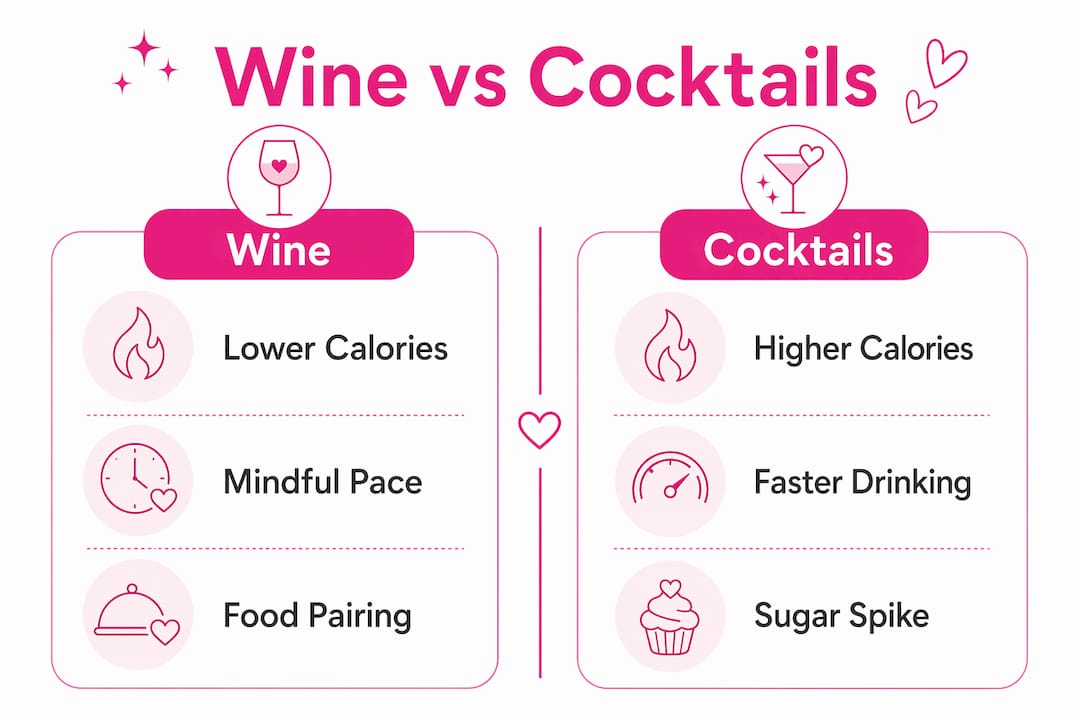
Wine arrives at the table in a bottle. Everyone sees how much is left. That visual cue alone changes how fast people drink. Bottle sharing and smaller pours create natural pacing that reduces intoxication spikes. Cocktails come one glass at a time, ordered individually, with no shared reference point for how much the group has consumed.
Food pairing ties wine to the meal
Wine’s deepest social advantage is its connection to food. Wine pairing rituals bind the drink to meals, which slows intake and reduces the risk of rapid intoxication. When you sip a Pinot Noir alongside a charcuterie board, you are naturally pacing yourself. Cocktails rarely anchor to food in the same way. They tend to be consumed before the meal or between courses, without the slowing effect of eating alongside.
The contrast with cocktail consumption patterns
Cocktails served in single glasses encourage faster drinking and more frequent rounds, which raises peak blood alcohol concentration faster than wine consumed over a meal. The drinking pattern, not just the beverage type, is the strongest predictor of health outcomes. Wine’s built-in rituals make the healthier pattern the default, not a deliberate act of restraint.
Here is the key insight worth remembering at your next event:
Choosing wine at a social gathering is not just a preference. It is a structural decision that shapes how fast you drink, how much you eat alongside it, and how you feel at the end of the night. The bottle on the table is a shared pacing tool. The cocktail menu is not.
- Open a bottle at the table rather than ordering individual drinks.
- Pour smaller amounts and let conversation fill the gaps between sips.
- Pair each glass with food, even just a bite of bread or cheese.
- Let the bottle’s visible level remind the group of collective consumption.
- Switch to water between glasses to maintain pace without losing the social rhythm.
For practical setup ideas, the wine night hosting guide at Girlshappyhour covers exactly how to structure the evening around these rituals.
Why starting with wine protects your palate all night
The order in which you drink matters more than most people realize. Starting with wine is not just tradition. It is sensory strategy.
What high-proof cocktails do to your taste buds
High-proof spirits numb the palate quickly. Once that happens, wine’s subtle aromas and layered flavors become nearly impossible to detect. A Burgundy that should taste of cherry and earth tastes thin and flat after two cocktails. The palate needs to be fresh to register wine’s complexity.
Starting with wine keeps the experience intact
Starting with wine preserves palate sensitivity, which allows you to appreciate flavor nuances throughout the entire event. Sommeliers and beverage professionals consistently recommend this sequence: wine first, then spirits or cocktails if desired. The logic is the same as warming up before a workout. You protect the instrument before you push it hard.
Pro Tip: At events with both wine and cocktails on offer, pour a glass of white wine first. It primes your palate without overwhelming it, so everything you drink afterward tastes better.
- Wine first: preserves taste bud sensitivity for the full evening
- Cocktails first: numbs the palate, making wine taste flat and disappointing
- High-proof spirits: the fastest route to palate fatigue
- Sparkling wine or dry white: the best opening choice for sensory preservation
- Food alongside wine: doubles the protective effect on palate sensitivity
Choosing the right glass also plays a role. The wine glass style guide at Girlshappyhour explains how glass shape affects aroma concentration and overall enjoyment.
Practical reasons to choose wine at your next gathering
The benefits of wine versus cocktails become most visible in real social settings. Here is what actually changes when you make wine the centerpiece of the evening.
Lower sugar supports mindful drinking
Wine’s minimal sugar content means you avoid the energy spike and crash that sugary cocktails trigger. That matters at a three-hour dinner or a late-night girls’ trip where you want to feel good the next morning. Mindful drinking is not about abstaining. It is about choosing drinks that work with your body rather than against it.
Wine slows the conversation down in the best way
Wine invites you to pause. You swirl, you smell, you sip, and then you talk. That rhythm naturally extends conversations and deepens connection. Cocktails, especially sweet or frozen ones, tend to be consumed quickly and replaced just as fast. The slower pace of wine creates the conditions for the kind of night you actually remember.
The ritual creates a more memorable occasion
Wine brings ceremony to any gathering. Opening a bottle, choosing the right pour, discussing what you taste: these small acts turn a regular night out into an event. That ritualistic quality is exactly what makes wine nights feel different from a standard bar night. The experience has texture and intention.
Wellness alignment without sacrifice
Choosing wine fits naturally into wellness-conscious lifestyles without requiring you to give up the social pleasure of drinking. The combination of lower calories, slower pace, food pairing, and sensory engagement makes wine the drink that aligns most closely with how women in their late 20s and 30s want to feel: present, in control, and genuinely enjoying themselves.
Key takeaways
Wine is the stronger social drink choice because its rituals, calorie profile, and palate-preserving qualities combine to create a better experience from the first pour to the last.
| Point | Details |
|---|---|
| Lower calorie load | A 5-oz pour of dry wine has 120–130 calories versus 250–300 for a typical margarita. |
| Cardiovascular risk advantage | A U.K. study of 340,000+ adults linked moderate wine consumption to a 21% lower cardiovascular death risk than spirits. |
| Built-in pacing cues | Bottle sharing and food pairing slow intake naturally, reducing intoxication spikes. |
| Palate protection | Starting with wine before cocktails preserves taste bud sensitivity for the full evening. |
| Social ritual value | Wine’s ceremony, from the pour to the pairing, creates more memorable and connected gatherings. |
Why wine always wins the night for me
I have watched the same pattern play out at dozens of events. The table that opens with cocktails is loud and fast for the first hour, then scattered and flat by hour two. The table that starts with a bottle of wine is still deep in conversation at midnight, with the second bottle barely half gone.
Wine forces a different relationship with time. You cannot rush a good Cabernet the way you can rush a vodka soda. The glass asks something of you. It asks you to slow down, pay attention, and actually taste what you are drinking. That is not a small thing at a social gathering. That is the whole point.
The food connection is what I find most underrated. When wine is paired with even a simple spread of cheese and olives, the entire evening changes character. People linger. They refill slowly. They talk more and drink less. That is the outcome every good host wants, and wine delivers it almost automatically.
For women planning wine nights, girls’ trips, or any gathering where the vibe matters as much as the drinks, wine is not just a safer choice. It is a more interesting one.
— Stephen
Wine nights deserve the right outfit
Good wine deserves good company and the right shirt to match the mood. Girlshappyhour makes wine-themed tees built for exactly these occasions: girls’ nights, wine tastings, bachelorette weekends, and any gathering where the bottle is the guest of honor.
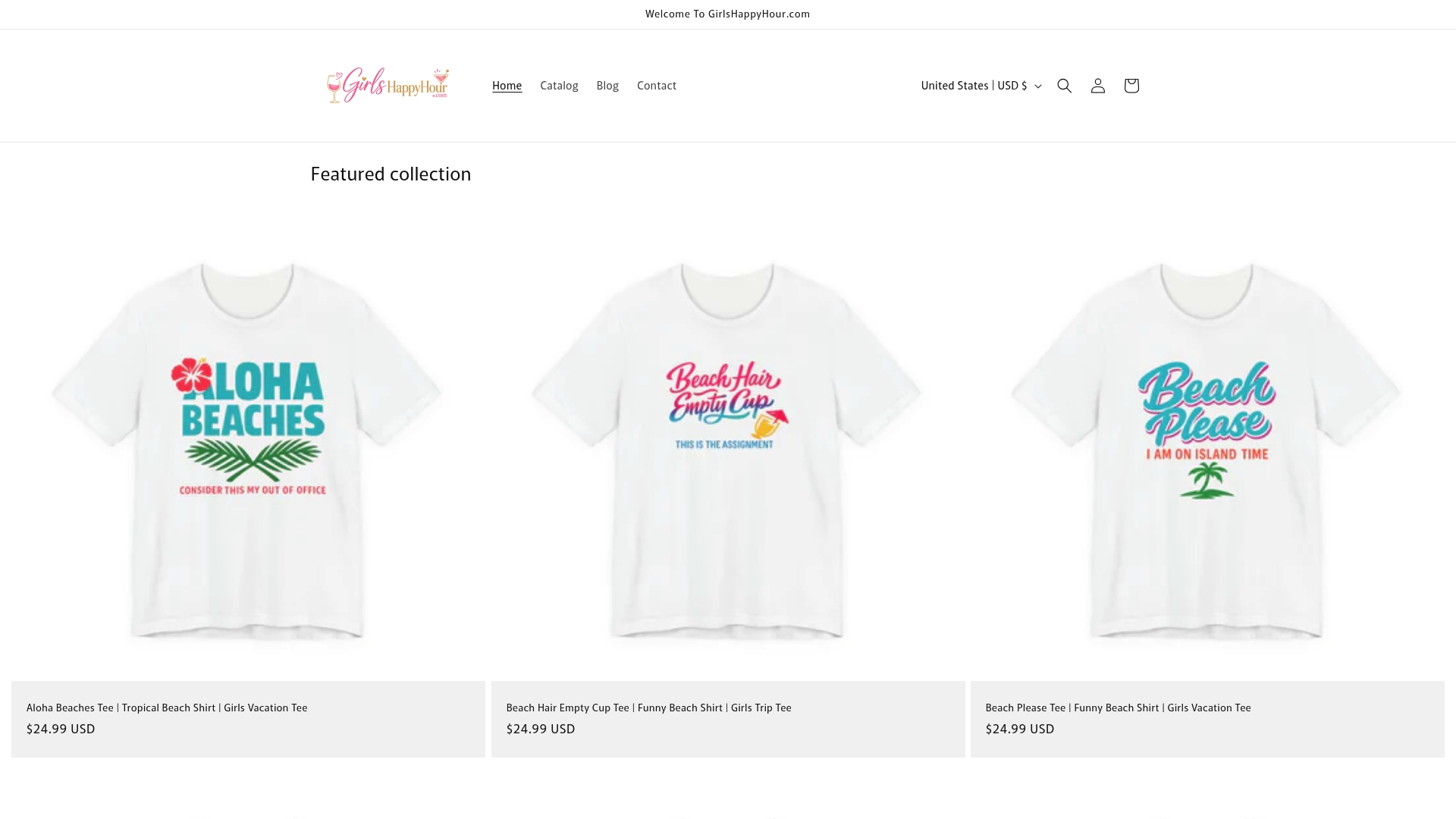
The Feral Girl Autumn Powered by Pinot Tee captures the wine lover’s spirit perfectly. It is the kind of shirt that starts a conversation before the first glass is poured. Browse the full collection at Girlshappyhour and find the tee that fits your next wine night, girls’ trip, or happy hour gathering.
FAQ
Is wine healthier than cocktails?
Wine carries a lower calorie count and a more favorable cardiovascular risk profile than most cocktails at moderate consumption levels. A 2026 U.K. study linked moderate wine intake to a 21% lower cardiovascular death risk compared to spirits.
How many calories does wine have compared to a cocktail?
A standard 5-oz pour of dry wine has 120–130 calories. A margarita typically delivers 250–300 calories and 20–30 grams of sugar, making wine the lower-calorie option in most comparisons.
Should you drink wine before or after cocktails?
Drink wine first. High-proof cocktails numb taste buds quickly, which makes wine taste flat and thin if consumed afterward. Starting with wine preserves palate sensitivity for the full evening.
Why does wine pair better with food than cocktails?
Wine’s flavor profile is built around acidity, tannins, and fruit compounds that complement food. That pairing tradition also slows drinking pace and reduces rapid intoxication, which cocktails consumed without food do not offer.
What makes wine a good choice for girls’ night?
Wine’s bottle-sharing format, slower pace, and food pairing rituals create natural conversation rhythms and moderate intake. Those qualities make it the drink most likely to keep a group connected and comfortable all night.