

The Role of Humor in Wine Gatherings That Work
Humor is the fastest social lubricant at any wine gathering, cutting through awkwardness and turning strangers into friends before the second pour. The role of humor in wine gatherings goes well beyond telling jokes. It functions as what social researchers call a “vulnerability shortcut,” a technique that lowers social defenses 2–3 times faster than standard icebreakers. Wine culture carries a reputation for intimidation, with its swirling rituals and technical vocabulary. Humor dismantles that reputation in real time, making every guest feel welcome regardless of what they know about tannins.
How does humor change the dynamic at wine tasting events?
The traditional formal wine tasting model intimidates guests. Humor and storytelling shift the focus from technical jargon to shared, enjoyable experiences. That shift is not cosmetic. When guests laugh, dopamine releases, trust builds, and the social temperature of the room rises noticeably.
Funny wine introductions work better than rehearsed scripts. A host who describes a Cabernet Sauvignon as “tasting like your ex’s apology, bold upfront and hollow at the finish” gets more engagement than one who recites a tasting note. The joke invites participation. The tasting note closes it down.
“Guests remember how they felt far more than the technical details of what they drank. Storytelling combined with humor creates emotional connection and lasting memories at wine events.”
Humor at wine events also changes the power dynamic. When the host laughs at themselves, guests stop performing expertise and start having fun. That shift is the whole point. The goal of a great wine gathering is not education. It is connection.
Key effects humor produces at wine events:
- Reduces the pressure to “know wine” before arriving
- Gives shy guests a low-risk way to join the conversation
- Creates shared reference points that guests recall long after the event
- Makes funny wine tasting moments the highlight of the evening rather than the wine itself
What formats work best for humor-infused wine gatherings?
Two formats dominate the humor-at-wine-events space, and they serve different group sizes and goals.
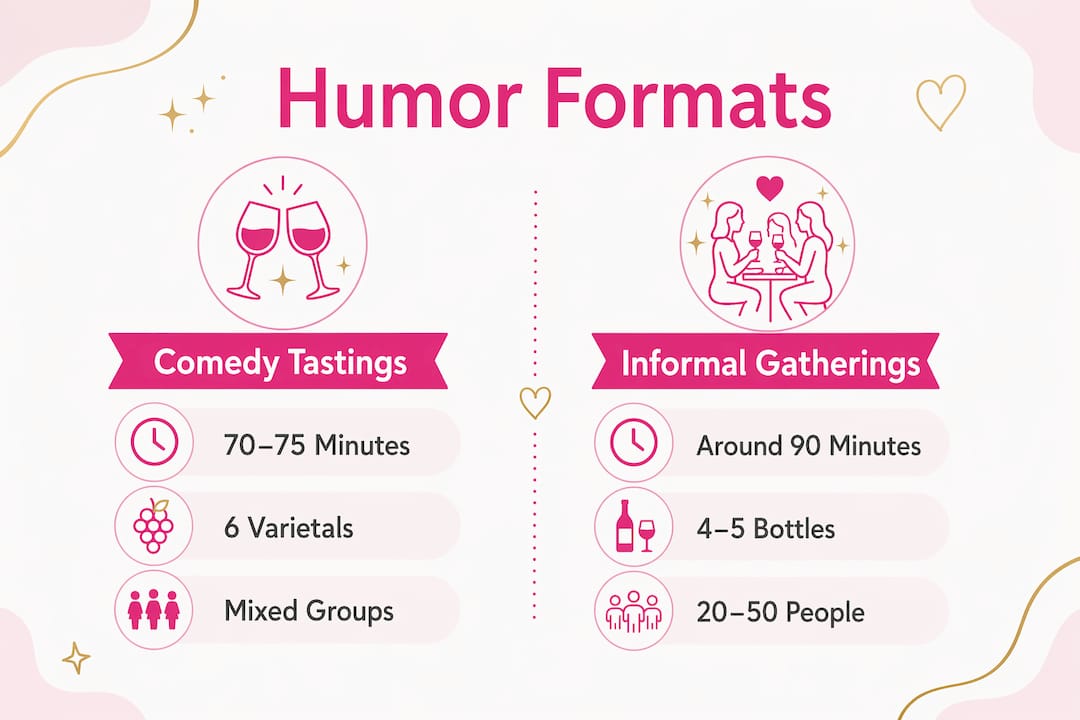
Structured comedy wine tastings combine stand-up comedy with guided tasting. These events typically run 70–75 minutes, featuring 6 wine varietals paired with live comedy sets. The format demystifies wine culture by making the comedian the guide rather than a sommelier. Guests taste, laugh, and taste again. The structure keeps energy high without requiring guests to perform knowledge they do not have.
Informal humor-led gatherings run closer to 90 minutes with 4–5 bottles and work best for groups of 20–50 people. These events rely on the host’s personality, funny games, and casual storytelling rather than a professional comedian. They are easier to organize and more flexible in tone.
| Format | Duration | Wine count | Best for |
|---|---|---|---|
| Comedy wine tasting | 70–75 minutes | 6 varietals | Mixed or unfamiliar groups |
| Informal humor gathering | ~90 minutes | 4–5 bottles | Friend groups, girls’ nights |
Both formats benefit from interactive stations and wine tasting games that invite participation without demanding it. Blind tasting with funny labels, “worst wine description” contests, and pairing challenges all work well. The key is keeping games optional so no one feels put on the spot.
Humor-friendly elements to build into either format:
- Funny printed menus or tasting cards with joke descriptions
- A “worst guess wins” blind tasting round
- A group storytelling prompt tied to each wine
- Humorous matching apparel that signals the tone before anyone speaks
Pro Tip: Print tasting cards with one absurd descriptor per wine alongside the real one. Ask guests to guess which is which. It takes two minutes to set up and generates conversation for the entire evening.
How can you practically incorporate humor into your own wine gathering?
The most reliable humor strategy at a wine gathering is hiring or appointing an engaging host who jokes naturally. An active, humorous bartender acts as a social catalyst, setting the tone and encouraging interaction more effectively than a silent server. The bar area becomes the natural social reference point, especially in the first 30 minutes when guests are still finding their footing.
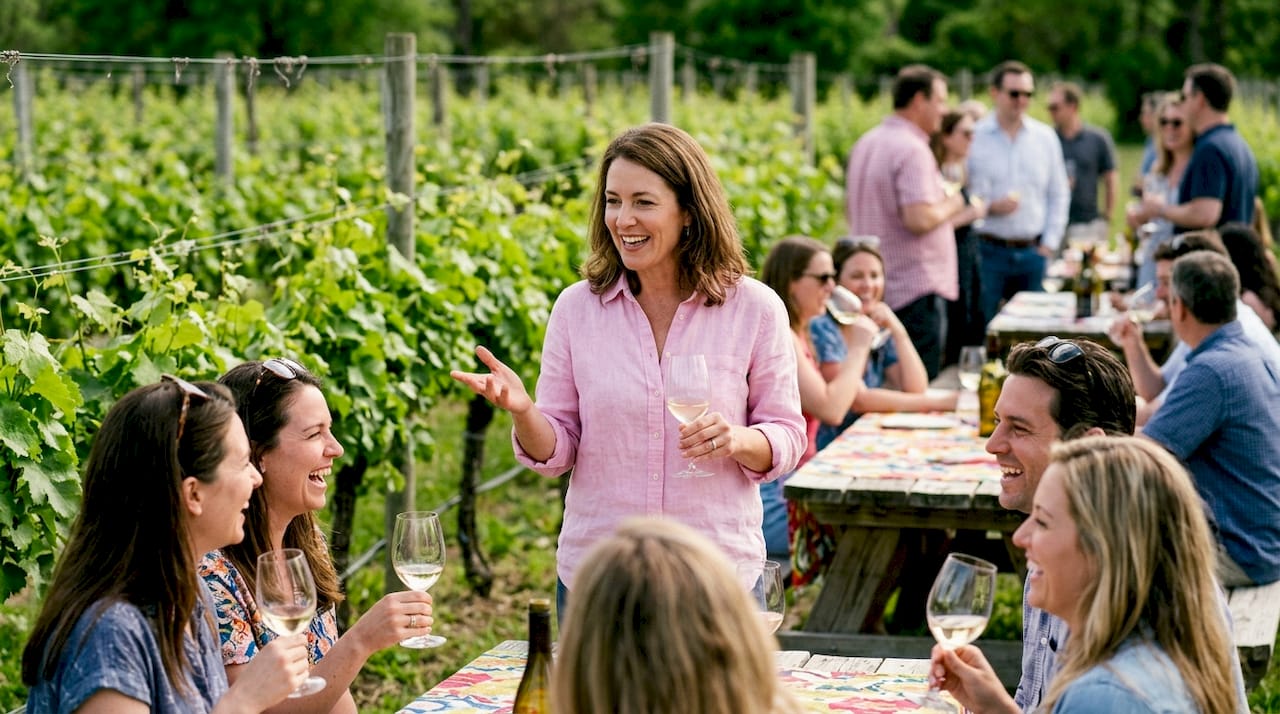
If a professional bartender is not in the budget, the host fills that role. The approach is the same: be the first to laugh, be the first to share a self-deprecating story, and make the first joke about the wine before anyone else feels pressure to perform.
Here are four practical strategies that work:
- Open with a funny wine anecdote. Tell a short, true story about a wine disaster, a mislabeled bottle, or a tasting gone wrong. It signals that perfection is not the goal.
- Run a low-pressure game early. Simple dice games and trivia balance strategy and chance, fostering laughter without forcing anyone to compete. Introduce the game as optional and watch participation climb naturally.
- Externalize the logistics. When the organizer handles all coordination and explicitly invites guests to just show up and play, social pressure drops. Guests relax and engage more when they are not managing anything.
- Use humor in your wine introductions. Give each bottle a nickname before reading the label. “This one smells like a rainy Tuesday” gets more laughs and more attention than a vintage year.
Pro Tip: Frame every game with casual, exploratory language. “We’re going to try something ridiculous” works better than “Now we’ll play a game.” The first invites. The second instructs.
The importance of laughter in gatherings shows up most clearly in the first 30 minutes. Set a playful tone before guests have time to settle into quiet politeness, and the rest of the evening follows naturally.
What are the common pitfalls when using humor at wine gatherings?
Forced humor is worse than no humor. A host who announces “Now we’re going to do something funny” has already killed the joke. Humor works when it feels accidental, even when it is planned.
The most common mistakes hosts make:
- High-pressure games that require guests to perform in front of the group before they are comfortable
- Humor that excludes. Jokes about wine snobbery land differently when a guest actually knows wine. Keep humor self-directed or aimed at the wine itself, never at guests.
- Ignoring the first 30 minutes. The tone set in the opening half-hour determines the energy of the entire event. A quiet, formal start is hard to recover from.
- Skipping storytelling. Humor without narrative feels thin. Pair every joke with a short story and the laugh lands harder and lasts longer.
- Treating humor as decoration. Humor is not a garnish. When creating joy at wine parties is the actual goal, humor becomes the structure, not the afterthought.
Balancing humor with low-pressure participation protects shy guests and keeps energy consistent across the full event. The best gatherings give every guest a way in without requiring anyone to perform.
Inclusive humor also matters for diverse groups. Wine gathering conversation starters that reference shared human experiences, travel mishaps, food disasters, or universally bad first dates, land across age groups and backgrounds. Niche references narrow the room.
Key Takeaways
Humor is the single most effective tool for turning a wine gathering from a tasting into a genuine social event.
| Point | Details |
|---|---|
| Humor as a social shortcut | Laughter lowers social defenses 2–3x faster than standard icebreakers. |
| First 30 minutes matter most | Set a playful tone early; a quiet formal start is hard to reverse. |
| Format shapes the humor style | Comedy tastings suit mixed groups; informal gatherings suit friend circles. |
| Low-pressure games win | Optional, easy-to-learn games drive higher participation and more laughter. |
| Storytelling amplifies humor | Pairing jokes with short personal stories creates lasting emotional memories. |
Why I think most wine hosts underestimate humor
Most hosts spend 80% of their prep time on the wine list and 0% on the social architecture of the evening. I have been to gatherings with extraordinary bottles and dead-quiet rooms. I have also been to events with grocery-store wine and guests who did not want to leave. The difference was always the host’s willingness to be a little ridiculous.
The research backs this up. Guests remember how they felt, not what they drank. That means a host who creates laughter has done more for the evening than one who sources a perfect Burgundy. Relaxed atmosphere beats technical perfection every time.
The hosts I have seen do this best share one habit: they treat the gathering as a performance of warmth, not a demonstration of taste. They introduce wines with nicknames. They admit when they cannot pronounce a region. They laugh first. That permission to be imperfect is what guests actually need to relax and connect.
Humor also solves the wine knowledge gap without anyone having to acknowledge it. When the host jokes that “this one tastes like ambition and regret,” the guest who knows nothing about wine and the guest who has a WIPP certification both laugh equally. The joke levels the room in a way no amount of careful explanation can.
If you host wine gatherings and you are not using humor as a deliberate tool, you are leaving the best part of the evening on the table.
— Stephen
Wine-themed apparel that does the icebreaking for you
A funny shirt does the first joke before anyone opens their mouth. Girlshappyhour designs apparel built specifically for wine nights, girls’ trips, and the kind of gatherings where laughter is the whole point.
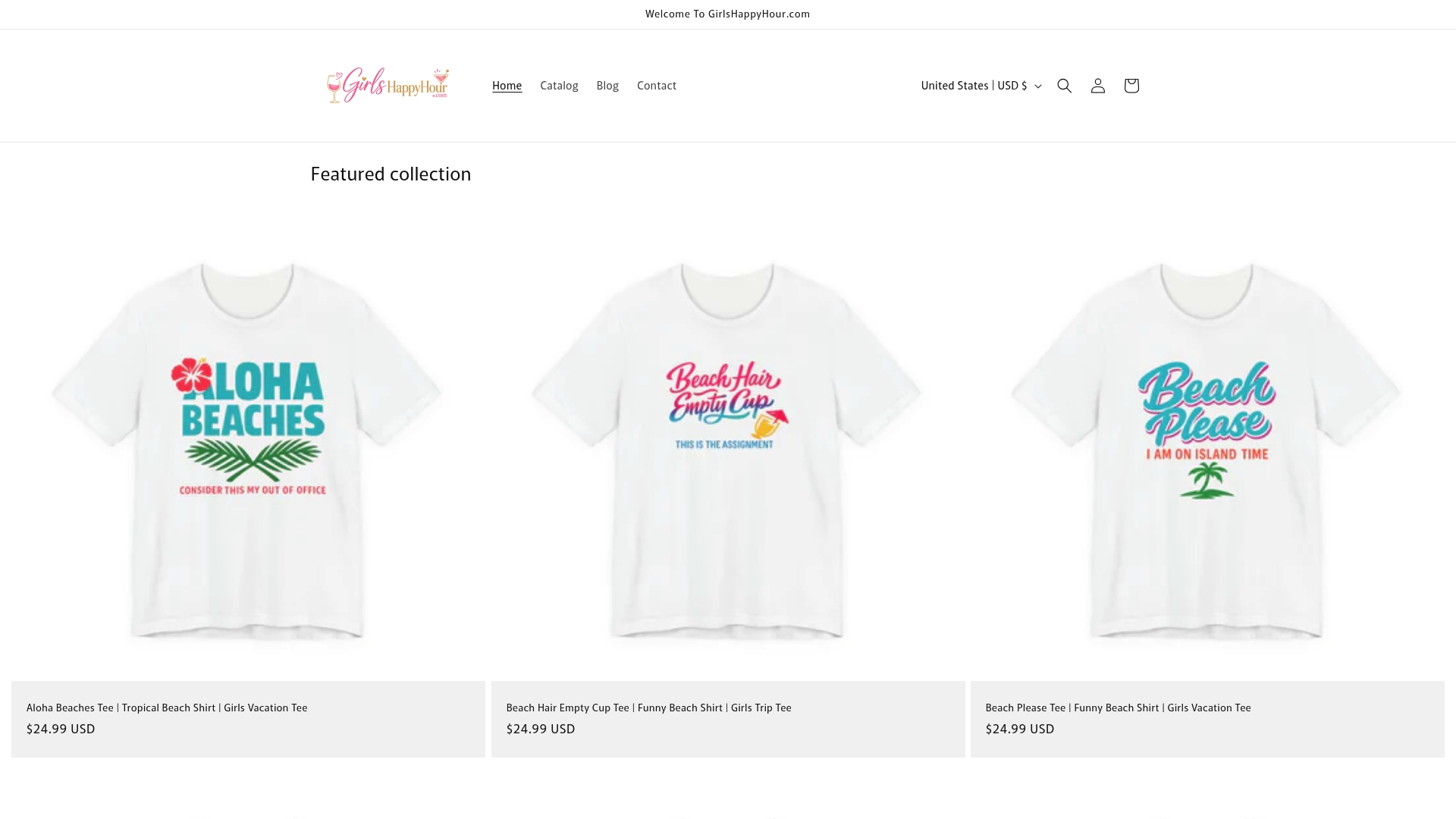
The Drink Till He’s Pretty Tee sparks a laugh the moment guests walk in. The Unsupervised & Over-Poured Tee sets the tone without the host saying a word. For groups who want matching energy, funny wine shirts signal the vibe before the first bottle opens. Girlshappyhour ships print-on-demand, so you can coordinate your group’s look without the bulk order headache.
FAQ
How does humor help at wine gatherings?
Humor lowers social defenses 2–3 times faster than standard icebreakers, making guests feel comfortable and connected earlier in the event. It shifts the focus from wine expertise to shared enjoyment, which benefits every guest regardless of their wine knowledge.
What is the best format for a humor-infused wine event?
Structured comedy wine tastings run 70–75 minutes with 6 varietals and work well for mixed or unfamiliar groups. Informal gatherings with 4–5 bottles over 90 minutes suit friend groups and girls’ nights where the host drives the humor.
How do you start a wine gathering with humor?
Open with a funny personal wine story or give each bottle a ridiculous nickname before the formal introduction. Setting a playful tone in the first 30 minutes determines the energy for the rest of the evening.
What games work best for creating laughter at wine parties?
Low-pressure games like blind tasting with absurd descriptors, wine trivia, and simple dice games encourage participation without forcing anyone to perform. Optional games consistently generate higher engagement than mandatory ones.
How do you keep humor inclusive for diverse guest groups?
Aim jokes at the wine itself or at universal human experiences rather than at guests or niche wine culture. Self-deprecating humor from the host gives everyone permission to relax without requiring shared background knowledge.