

Wine Tasting Party Setup Guide for Friend Groups
A wine tasting party is a structured social event where guests sample and evaluate a curated selection of wines in a specific order. Done right, it combines education, conversation, and genuine fun without requiring any formal wine knowledge. This wine tasting party setup guide covers every element you need: guest count, wine selection, themes, table setup, food pairing, and how to run the event from first pour to last sip. The supplies are simple. Identical stemmed glasses, tasting sheets, plain crackers, and a dump bucket are the core tools of any well-run tasting.
What does a good wine tasting party setup guide cover?
The best wine tasting events start with a clear plan for two numbers: how many guests and how many bottles. The ideal group size is 8–12 people. That range keeps conversation lively and manageable without requiring a professional-level wine inventory.
Plan on 4–6 bottles for that group. A standard 750ml bottle yields roughly 10–12 pours at the 2–3 oz tasting size, so 5 bottles comfortably covers a group of 10 with room to revisit favorites. Running short on wine mid-event is the most avoidable hosting mistake.
Pour sizes matter more than most first-time hosts realize. Pouring 60–75 ml per glass leaves enough headspace in the glass for the wine to breathe and concentrate its aromas. That small detail changes how guests experience each wine.
- Keep pours at 2–2.5 oz per wine
- Plan 4–6 wines total for a 2-hour event
- Buy one extra bottle of any wine you expect to be popular
- Set out a dump bucket so guests can discard excess without pressure
Pro Tip: Buy your wines a day or two early and store reds at room temperature and whites in the fridge. Pulling whites out 20 minutes before serving gets them to the right temperature without any guesswork.
How do you choose a theme for a wine tasting party?
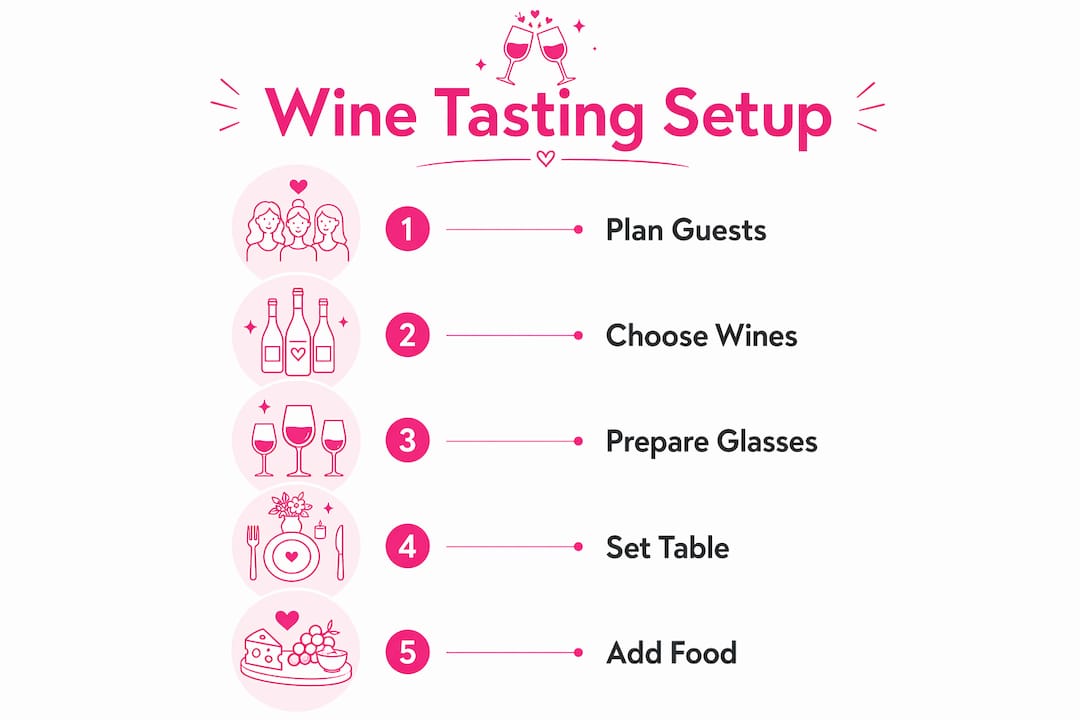
A theme is the single best tool for reducing host stress. Themes like “One Grape, Three Regions” or “Light to Bold Reds” create a natural story arc that guides your wine selection and gives guests a framework for discussion. Without a theme, a tasting can feel random and hard to follow.
Popular theme formats include:
- Single grape variety across regions: Compare a Pinot Noir from Oregon, Burgundy, and New Zealand
- Regional focus: All wines from Tuscany, Napa Valley, or Marlborough
- Stylistic progression: Start with a crisp Sauvignon Blanc and finish with a bold Cabernet Sauvignon
- Blind tasting: Cover all labels and let guests guess the grape, region, or price point
Blind tastings deserve special attention. Removing label bias levels the playing field completely. Guests who claim to only drink expensive wine often pick the $15 bottle as their favorite. That moment of discovery is what makes a tasting memorable.
Sourcing wines for a theme is straightforward. Most wine shops will help you build a themed flight if you explain your concept. Total Wine, BevMo, and local wine shops all carry enough variety to support any of the themes above without requiring a specialty order.
How to set up the tasting table and glassware
The physical setup of your tasting space determines how smoothly the event runs. Identical ISO standard tulip-shaped glasses are the right choice for every guest. Different glass shapes change how wine smells and tastes, which makes honest comparison impossible.
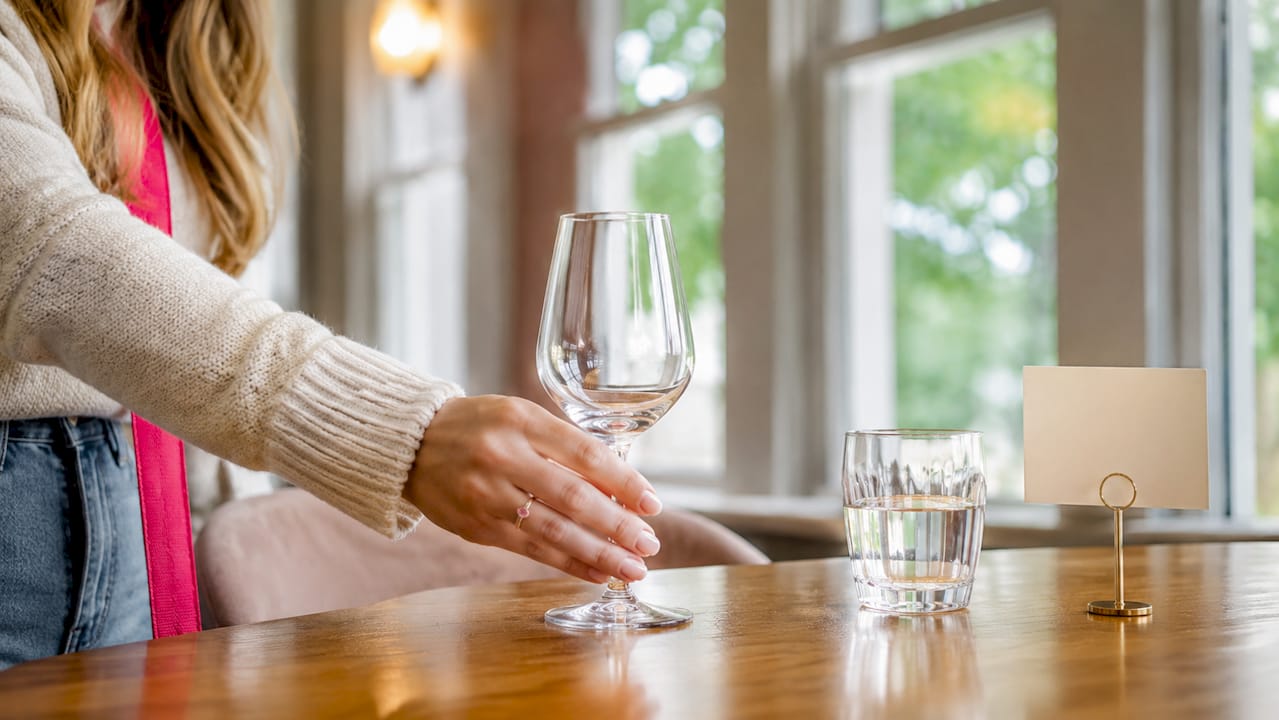
Two glasses per guest is the practical minimum for a home tasting. One holds the current wine and the second allows side-by-side comparison or a quick rinse between contrasting styles. More than two glasses per person creates clutter and confusion.
Here is a quick comparison of setup choices and their impact:
| Setup Element | Recommended Option | Why It Matters |
|---|---|---|
| Glassware | ISO standard stemmed tulip | Consistent aroma and flavor perception |
| Table surface | White tablecloth or white paper | Accurate color evaluation of each wine |
| Palate cleanser | Plain unsalted crackers or bread | Resets the palate without flavor interference |
| Dump bucket | One per 3–4 guests | Allows moderation and keeps conversation sharp |
| Tasting sheets | One per guest with pen | Helps guests record impressions and compare notes |
Place a water pitcher at each end of the table. Hydration between wines reduces palate fatigue and keeps guests comfortable through a longer tasting. For wine night hosting at home, a white paper roll from a craft store works perfectly as a tablecloth and doubles as a place for guests to jot notes directly on the table.
Pro Tip: Label each glass position with a small numbered card or sticky note. When guests return from a break, they know exactly where their glasses are and which wine is which.
Check out this wine glass style guide if you want a deeper look at which glass shapes work best for specific wine styles.
How do you run a wine tasting event from start to finish?
Pacing is the most underrated skill in hosting a wine tasting. A 6-wine tasting should run 45–60 minutes, with 5–10 minutes per wine for observation and group discussion. That pace feels relaxed without losing momentum.
Follow this order for the wines:
- Sparkling wine
- Light white (Pinot Grigio, Albariño)
- Full white (Chardonnay, Viognier)
- Rosé
- Light red (Pinot Noir, Grenache)
- Full red (Cabernet Sauvignon, Syrah)
- Sweet wine (optional closer)
This classic sequence minimizes palate fatigue by moving from delicate to bold. Starting with a heavy red would overwhelm the senses and make lighter wines taste flat afterward.
Your role as host is guide, not lecturer. Open-ended questions like “What does this remind you of?” or “Does this smell like anything familiar?” get guests talking without making anyone feel tested. Avoid asking guests to identify specific flavor compounds or technical characteristics unless your group has a wine background.
Pro Tip: Reveal the wine’s name, region, and price after guests have tasted and discussed it. The reveal moment generates the most conversation of the entire event.
Allow at least 30 minutes of social time after the structured tasting ends. That window is when guests revisit their favorites, compare tasting notes, and have the most relaxed conversations of the night.
What food should you serve at a wine tasting party?
Food timing is the detail most hosts get wrong. Plain unsalted crackers or bread are the only foods that belong on the table during the tasting itself. Strong flavors, salty snacks, and rich cheeses interfere with sensory assessment and make wines taste different than they actually are.
During the tasting, keep food simple:
- Plain water crackers or baguette slices
- Mild, young cheeses like fresh mozzarella or mild gouda (small amounts only)
- Water for rinsing and hydrating
After the tasting ends, bring out the full spread. A charcuterie board with aged cheeses, cured meats, olives, and fruit pairs naturally with the wines guests just tasted. Soft cheeses like brie pair well with Chardonnay. Hard aged cheeses like Manchego complement bold reds. Prosciutto and salami work across almost every red wine style.
Timing the food this way serves two purposes. It keeps palates accurate during the tasting and gives guests a satisfying reward once the structured portion ends. The transition from tasting to social eating also signals a natural shift in the event’s energy.
Key takeaways
A successful wine tasting party requires the right guest count, a clear theme, proper glassware, controlled pacing, and food served at the right time.
| Point | Details |
|---|---|
| Guest count and wine quantity | Plan for 8–12 guests and 4–6 bottles with 2–2.5 oz pours per wine. |
| Theme selection | A clear theme like “One Grape, Three Regions” guides wine choice and keeps the event engaging. |
| Glassware setup | Use identical ISO standard stemmed glasses and provide two per guest for comparison. |
| Tasting order | Move from sparkling to sweet to minimize palate fatigue and maximize sensory clarity. |
| Food timing | Serve only plain crackers during tasting; save cheese and charcuterie for social time after. |
What I’ve learned from hosting wine tastings the hard way
The biggest mistake first-time hosts make is treating the tasting like a test. They worry about saying the wrong thing, picking the wrong wines, or not knowing enough. That anxiety transfers directly to guests. The best tastings I’ve attended felt more like a game than a class.
The second mistake is over-pouring. When guests feel obligated to finish every glass, the tasting loses its purpose after wine three. Dump buckets solve this completely. Put one on the table without apology and explain that spitting or dumping is normal practice at every professional tasting in the world. Guests relax immediately.
The detail that consistently creates the best moments is the blind reveal. Cover every bottle before guests arrive. Let people taste, guess, and argue. Then flip the bottles and show the labels. The gap between expectation and reality generates more genuine conversation than any guided discussion prompt ever could.
Keep the atmosphere casual. Play low background music, keep the lighting warm, and resist the urge to fill every silence with wine facts. The wines do the talking. Your job is to pour them in the right order and ask good questions. Everything else takes care of itself.
— Stephen
Dress the part: wine tasting shirts from Girlshappyhour
A wine tasting party is more fun when the group looks the part. Girlshappyhour makes wine-themed tees built exactly for nights like this. The Rosé All Day Chaos All Night Tee is a crowd favorite for wine nights and group tastings. The Girls Night Plans Optional Wine Required Tee works perfectly as a matching shirt for your group or as a party favor guests actually keep.
Matching shirts give a wine tasting party a cohesive look and make for great photos. Browse the full collection at Girlshappyhour for options that fit your group’s vibe, whether you’re going classy, funny, or somewhere in between.
FAQ
How many wines should you serve at a tasting party?
Serve 4–6 wines for a standard home tasting. That number gives guests enough variety for meaningful comparison without causing palate fatigue.
What is the correct pour size for a wine tasting?
Pour 60–75 ml per glass, which equals roughly 2–2.5 oz. This leaves headspace in the glass for aroma concentration and keeps total consumption at a manageable level.
Should you do a blind tasting or reveal the wines upfront?
A blind tasting removes label bias and creates the most engaging guest experience. Reveal the wine’s name, region, and price after discussion for maximum impact.
What is the best food to serve during a wine tasting?
Serve only plain unsalted crackers or bread during the tasting. Save cheese, charcuterie, and richer foods for the social time after the structured tasting ends.
How long should a wine tasting party last?
A 6-wine tasting runs 45–60 minutes at 5–10 minutes per wine. Add at least 30 minutes of social time after for a complete event of roughly 90 minutes to 2 hours.