

What Is a Wine Flight? Your Complete Tasting Guide
What is a wine flight, and why does it matter?
A wine flight is a set of several related wines served side by side in small pours for direct comparison. The format is not casual sipping. It is structured exploration, designed to isolate one variable at a time: grape variety, region, vintage, or producer.
The purpose is comparative education. Instead of finishing a full glass before moving to the next wine, you hold all samples at once and compare them directly. That side-by-side format is what makes flights so effective for building palate recognition.
Key facts about wine flights:
- Pour size: small servings per wine, enabling multiple samples without palate fatigue
- Flight size: typically a few wines, though formal settings can include more
- Organizing theme: grape variety, region, vintage, or producer
- Setting: wine bars, restaurants, winery tasting rooms, or at home
- Purpose: identify preferences and accelerate wine education in a single session
Wine flights are now standard in professional training programs such as WSET and the Court of Master Sommeliers, where focused comparison is the fastest path to sensory skill.
Common types of wine flights and how they are structured
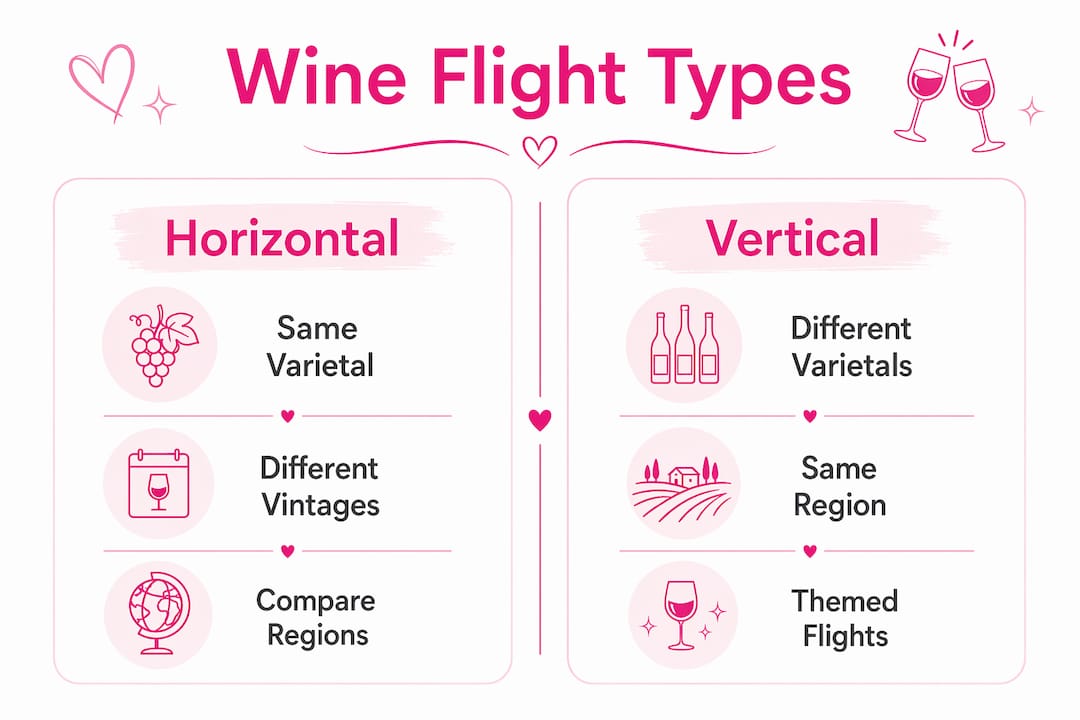
Not all flights are built the same way. The theme determines what you learn from the session. Flights group wines by grape, region, vintage, or producer to isolate variables and reveal differences that a single bottle never shows.
The main types:
- Horizontal flight: Same vintage, different producers. Reveals how terroir and winemaking style diverge across the same growing year.
- Vertical flight: Same producer, multiple vintages. Shows how a wine evolves with age and how climate shifts affect the final product.
- Varietal flight: Multiple wines made from different grape varieties. Ideal for learning how Pinot Noir differs from Cabernet Sauvignon in body, tannin, and aroma.
- Regional flight: Wines from one specific area, often different producers or grapes. Useful for understanding what a place tastes like.
- Themed flight: Creative groupings such as natural wines, orange wines, or wines under $20. More playful, less structured, and a good entry point for casual explorers.
Horizontal and vertical flights are the most educational because they hold most variables constant. Themed flights trade rigor for discovery, which suits social settings well.
How to taste wines in the right order during a flight
Sequence matters more than most people expect. Professional tasting guidelines advise moving from lightest to fullest-bodied, or driest to sweetest, so each wine does not overpower the ones that follow.
A practical tasting order:
- Sparkling before still: Bubbles clean the palate and set a neutral baseline.
- White before red: Whites are generally lighter and lower in tannin.
- Light-bodied before full-bodied: A heavy Cabernet Sauvignon before a Pinot Grigio will flatten the white entirely.
- Dry before sweet: Sweetness coats the palate and distorts perception of subsequent wines.
- Young before old: Aged wines carry more complexity; tasting them last lets you appreciate the contrast.
Pour sizes of 1.5–2 oz keep total alcohol intake manageable across a full flight. Smell each glass before tasting. Aroma accounts for the majority of what you perceive as flavor, so skipping that step costs you real information. Take one-line notes per glass while impressions are fresh, because sensory memory fades quickly once you leave the room.
Pro Tip: Smell all glasses before sipping any of them. First impressions of aroma are the most honest, and tasting one wine first changes how you smell the next.
Where to find wine flights and what they typically cost
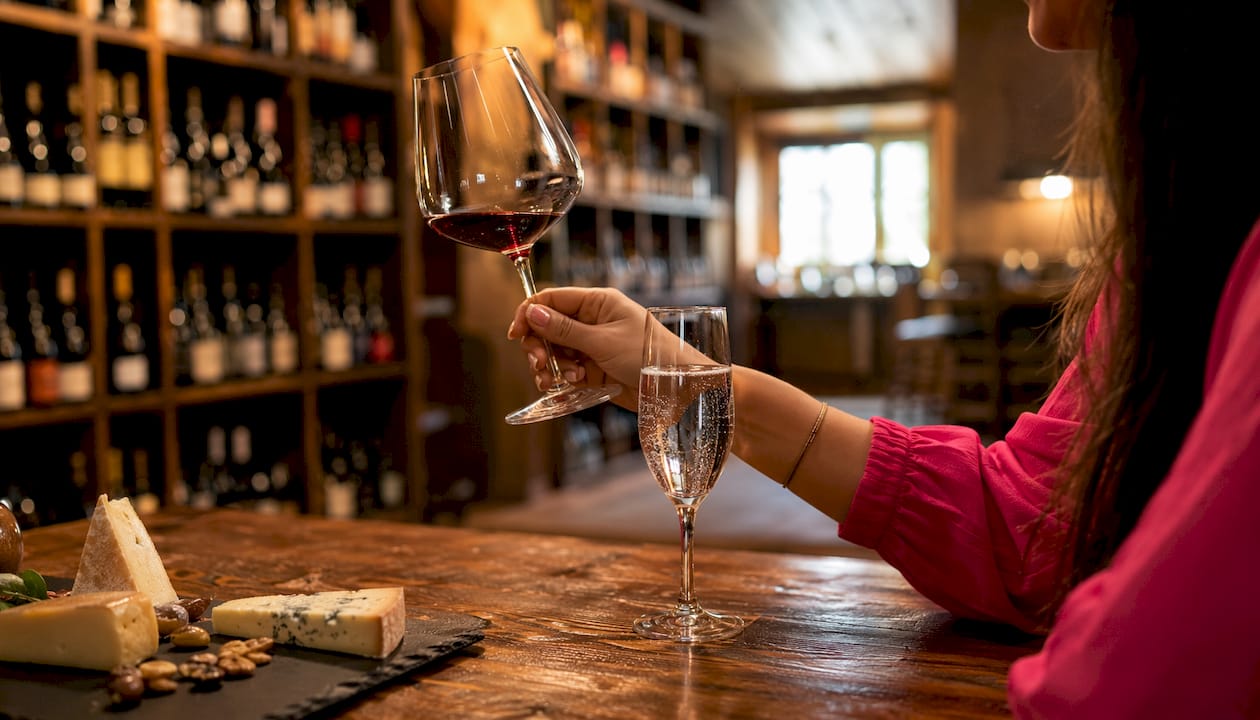
Standard wine flight costs range from $15 to $40 depending on the venue and the wines included. Winery tasting rooms often sit at the higher end of that range, especially when the flight includes reserve or library wines with guided commentary.
Where to experience wine flights:
- Wine bars and restaurants: Most offer flights as a menu item, usually 3–4 wines grouped by style or region. Good for casual exploration without a reservation.
- Winery tasting rooms: Often include educational context from staff, making them the best setting for learning about a specific producer or appellation.
- At home: Select 3–4 bottles around a single theme, pour small amounts into identical glasses, and taste blind when possible. Home flights cost only what the bottles cost and are easy to organize for a group.
Light snacks between pours help reset the palate. Plain crackers, sliced baguette, or sparkling water all work. Avoid strongly flavored foods mid-flight, since they alter how the next wine reads on the palate. For a full wine night hosting checklist, Girlshappyhour has a practical guide built specifically for group settings.
Where the term “wine flight” actually comes from
The word “flight” has carried the meaning of a group of things moving together for several centuries in English. Think of a flight of birds or a flight of stairs. Both describe a collection of similar objects arranged in sequence.
Key facts on the term’s origin:
- The Oxford English Dictionary dates its use as a food and drink term to the late 1970s, with the earliest documented example appearing in the New York Times on March 29, 1978.
- That original usage described grouped tastings of German late-harvest wines.
- The OED defines this sense as “a selection of small portions of a particular type of food or drink, especially wine, intended to be tasted together for the purpose of comparison.”
- Australians use the term “brackets” for the same format.
The word stuck because it captures the experience accurately. Wines in a flight move together through the tasting in a fixed sequence, just as birds move together through the air. Every flight is a tasting, but not every tasting is a flight. The flight format adds structure and direct comparison that a general tasting does not require.
Expert tips for getting more out of a wine flight
A four-wine flight done properly takes about 60 minutes. Rushing through it cuts the educational value significantly. Pace matters.
Practical tips for a better flight experience:
- Allow one hour for four wines. That time includes smelling, tasting, note-taking, and discussion. Cutting it short means skipping the reflection that builds memory.
- Write brief tasting notes. Notes are critical for retaining sensory impressions once you leave the tasting room. One line per glass is enough: color, dominant aroma, body, finish.
- Taste blind when possible. Blind tasting eliminates label bias and forces you to evaluate what is actually in the glass rather than what you expect from the producer or price point.
- Use palate cleansers. Sparkling water or plain crackers maintain sensory acuity between pours. Limit flights per day to avoid palate fatigue flattening your ability to distinguish wines.
- Share reactions with your group. Wine flights create natural conversation around preferences and reactions. That social dynamic is part of what makes the format work for groups. For ideas on making the tasting interactive, Girlshappyhour has a list of wine tasting game ideas built for girls’ nights.
Pro Tip: Hold your glass by the stem, not the bowl. Body heat from your hand warms the wine faster than you think, and temperature changes alter both aroma and taste.
How to evaluate wines in a flight using sensory techniques
Sensory evaluation follows a consistent four-step process used by trained tasters and casual drinkers alike. The steps are: look, smell, taste, and conclude.
Look. Tilt the glass against a white background. Color depth, hue, and clarity all carry information. A pale ruby suggests a lighter-bodied red; deep purple often signals higher tannin and extract. Whites that show gold rather than pale straw may have age or oak contact.
Smell. This is the most information-dense step. Swirl the glass to release volatile compounds, then nose it immediately. Identify primary aromas (fruit, floral, herbal), secondary aromas (yeast, bread, cream from fermentation), and tertiary aromas (vanilla, tobacco, leather from aging). In a flight, compare aromas across glasses before tasting any of them.
Taste. Take a small sip and let it coat the entire palate. Notice acidity (makes your mouth water), tannin (drying sensation on gums), body (weight and texture), and sweetness. Swirl the wine briefly in your mouth before swallowing or spitting. The finish, how long flavor persists after swallowing, is a key quality indicator.
Conclude. Rank the wines from favorite to least. Note which characteristics drove your preference: fruit-forward versus earthy, high acid versus soft, light body versus full. That ranking is the practical output of the flight. Over time, patterns in your rankings reveal your palate profile.
Temperature affects everything. Whites served too cold suppress aroma; reds served too warm turn flabby and alcoholic. Ideal serving temperatures are 45–50°F for whites and 60–65°F for reds.
How to pair food with a wine flight
Food pairing during a flight requires a lighter touch than pairing with a full dinner. The goal is to support the wine, not compete with it.
Between pours: Use neutral cleansers only. Plain water crackers, sliced baguette, or still or sparkling water reset the palate without adding flavor that carries into the next wine. Avoid anything with strong seasoning, garlic, or sweetness between pours.
Matching food to flight theme: If the flight is all Chardonnay, a small plate of mild cheeses or lightly buttered bread complements the wine’s texture without masking it. A red varietal flight pairs well with charcuterie, olives, or aged hard cheeses. Sparkling wine flights work with anything salty: chips, popcorn, or brined vegetables.
What to avoid: Spicy food raises the perception of alcohol in tannic reds. Very sweet desserts make dry wines taste sour and thin. Heavily dressed salads with vinegar distort acidity readings across the entire flight.
Pairing for a group setting: Keep shared snacks simple and varied. A board with plain crackers, two or three mild cheeses, and some fruit covers most flight themes without steering the palate in one direction. For specific snack pairing ideas organized by wine style, Girlshappyhour has a wine night snack guide built for group tastings.
Key Takeaways
A wine flight is a structured, side-by-side tasting of 3 to 6 wines in small pours, organized around a single theme for direct comparison and education.
| Point | Details |
|---|---|
| Flight size and pour | Traditionally 3–6 wines, each served in a 1.5 to 2 oz pour per wine. |
| Tasting order | Always move from lightest to fullest-bodied and driest to sweetest. |
| Cost range | Standard wine flight costs range from $15 to $40 depending on the venue and wines included. |
| Term origin | The Oxford English Dictionary traces “flight” as a food and drink term to the late 1970s, with the first printed use in the New York Times in March 1978. |
| Sensory method | Look, smell, taste, and conclude; smell all glasses before sipping any to preserve first impressions. |
Dress the part for your next wine night
A wine flight is more fun with the right crew and the right outfit. Girlshappyhour makes wine-themed tees built for exactly this kind of night. The Unsupervised & Over-Poured Tee says everything your palate notes cannot. Grab one before your next flight.