

Wine Night Hosting Checklist for Women Who Plan
A wine night hosting checklist is a structured plan covering every step from guest count to final pour, so nothing gets forgotten and the evening runs without stress. The best gatherings follow a clear sequence: theme, wine selection, setup, tasting order, food, and activities. A successful wine night requires at least one week of planning and a 2–3 hour event window. That timeline gives you space to source bottles, send invitations, and prep food without rushing. This guide walks through every item on that checklist so you can host with confidence.
1. What goes on your wine night hosting checklist first?
The checklist starts with two decisions: how many guests and what theme. Both choices shape every item that follows, from bottle count to table layout.
Guest count sets the tone. Groups of 6–12 guests hit the sweet spot for intimate conversation and manageable logistics. Fewer than six makes the tasting feel sparse. More than twelve turns coordination into a full-time job.
Theme is the organizing principle that makes wine selection simple and invitations memorable. Strong theme options include:
- Regional focus: All wines from one country or appellation, such as Burgundy or Napa Valley
- Varietal comparison: Three or four expressions of the same grape, like Pinot Noir from different regions
- Blind tasting: Bottles wrapped in foil, guests guess the grape or region
- Old World vs. New World: A side-by-side comparison of European and American styles
- Price range challenge: Bottles at three different price points, guests rank by value
A theme also sets guest expectations before they arrive. Your wine night invitations should name the theme, suggest a dress code if you want one, and tell guests whether to bring a bottle.
2. How many wines and bottles do you actually need?
Quantity planning is the most common place hosts go wrong. The math is straightforward once you know the format.
- For structured tastings: A standard tasting pour is 1.5–2 ounces. For five wines with six guests, plan roughly five bottles total.
- For casual wine nights: Plan one bottle per 2–3 people. A group of eight needs three to four bottles minimum.
- For variety: Offer 4–6 wines for a tasting format. Two to three bottles work for a relaxed evening.
- For balance: Build a flight that moves from light to full-bodied and dry to sweet. Mixing reds and whites keeps the palate engaged.
- For backup: Keep one extra bottle of the crowd favorite. Running out of a popular wine is the one avoidable disappointment.
Pro Tip: Pre-taste every bottle before guests arrive. Catching a corked or oxidized wine early saves you from serving something undrinkable mid-event.
3. Which setup essentials do you need for a smooth tasting?
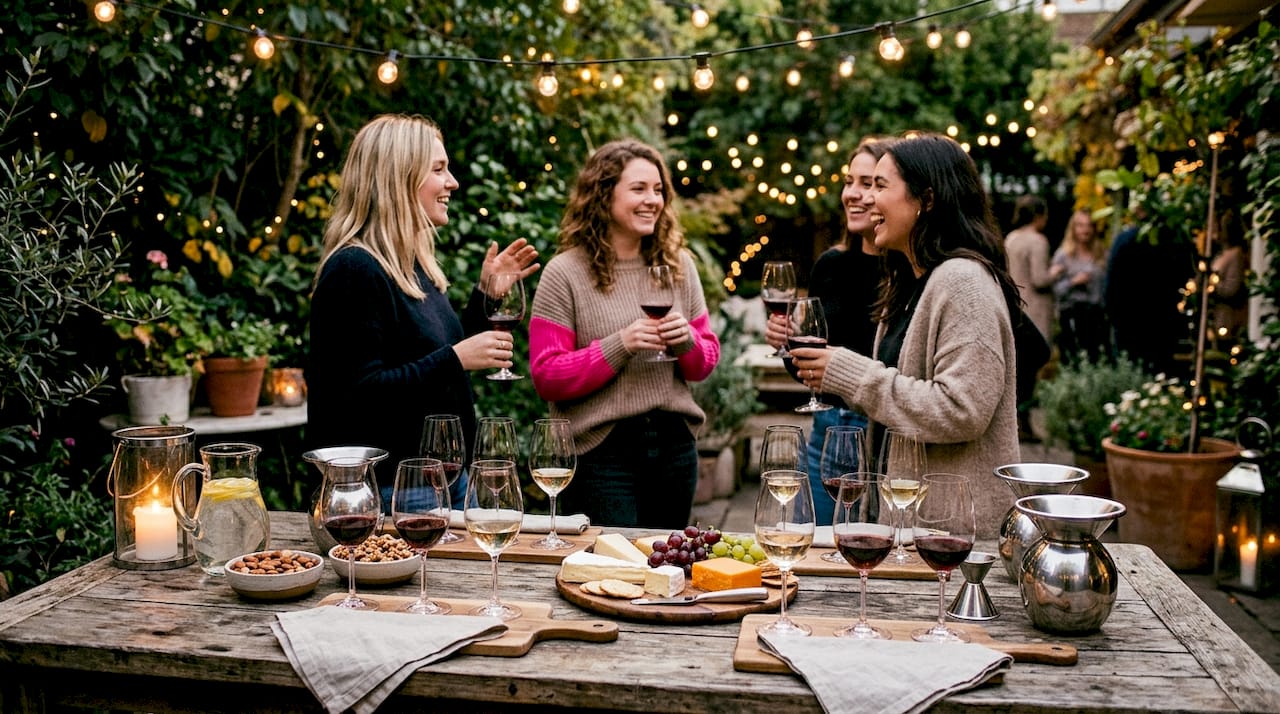
The right equipment makes tasting easier and the space look intentional. Expensive gear is not required. A focused list of essentials covers everything.
- Glasses: Use identical glasses for every guest. The ISO tasting glass shape works for all wine styles and keeps comparisons fair. Check the best glass styles for group settings before you buy or borrow.
- Dump bucket or spittoon: One per table section. Guests who want to spit or discard wine need a clean option.
- Water glasses: One per guest, filled and ready. Water resets the palate between pours.
- Palate cleansers: Plain crackers or sliced baguette. Neutral starch clears residual flavors without adding new ones.
- Tasting note cards: Pre-printed or handwritten cards with space for aroma, taste, and a score. A simple 1–10 scoring system on cards creates engagement and drives conversation without overwhelming guests.
- Pens or pencils: One per guest, placed at each setting.
- Table layout: Arrange seating so every guest can see the host and reach the dump bucket easily. A long table works better than a cluster of chairs.
Pro Tip: Dim overhead lights slightly and use candles or warm lamps. Harsh lighting makes wine evaluation harder and kills the mood.
The essential items for wine tastings are identical glasses, a spittoon, palate cleansers, water, and note cards. That list has not changed because it works.
4. What is the correct tasting order for your wine flight?
Tasting order is not a preference. It is a practical decision that protects your guests’ ability to taste accurately.
- Start with sparkling wines. Bubbles clean the palate and signal the start of the event.
- Move to light whites. Pinot Grigio and Sauvignon Blanc come before richer whites like Chardonnay.
- Serve full-bodied whites next. Oaked Chardonnay or Viognier belong here.
- Introduce light reds. Pinot Noir and Gamay transition the palate from white to red.
- Build to full-bodied reds. Cabernet Sauvignon, Syrah, and Malbec finish the savory section.
- End with dessert wines. Port, Sauternes, or late-harvest Riesling close the flight on a sweet note.
Serving lighter wines first preserves flavor sensitivity for every wine that follows. A heavy red served second ruins the perception of every lighter wine after it.
“The goal of tasting order is to protect the palate, not to impress guests with the most expensive bottle first. Start light, build slowly, and the last wine will taste as good as the first.”
Pace each wine over 5–8 minutes. That window gives guests time to smell, taste, score, and discuss before the next pour. Rushing kills the conversation that makes the night memorable.
5. How to choose food pairings and wine night games
Food and activities are what separate a wine tasting from a wine party. Both matter, and both require a clear plan.
Food strategy
Food during tasting should be simple palate cleansers. Plain crackers and water do the job. Save the cheese board and charcuterie for after the scored rounds are complete. Heavy flavors during tasting mask wine characteristics and skew scores.
After tasting, the food can get interesting. Classic pairings that work every time:
| Wine | Food Pairing |
|---|---|
| Chardonnay | Brie, butter crackers, roasted chicken |
| Sauvignon Blanc | Goat cheese, cucumber, light seafood |
| Pinot Noir | Gruyère, mushroom dishes, salmon |
| Cabernet Sauvignon | Aged cheddar, dark chocolate, beef |
| Rosé | Prosciutto, melon, soft cheeses |
Game ideas for wine night
Games keep energy up and give guests a reason to pay attention. The best wine tasting game ideas are simple enough to explain in one sentence.
- Blind tasting reveal: Guests guess the grape or region before the label is shown. Using letter codes instead of numbers reduces subconscious ranking bias and keeps feedback honest.
- Scorecard competition: Tally scores at the end and crown the guest whose picks matched the group’s top-rated wine.
- Sommelier challenge: Each guest describes one wine without using color words. Forces creative vocabulary and gets everyone laughing.
- Price is right: Guests guess the retail price of each bottle. The closest guess wins a small prize.
Background music should be low enough to talk over. A playlist of 30–40 songs at a consistent volume works better than silence or anything with lyrics that demand attention.
Key takeaways
A complete wine night hosting checklist covers guest count, theme, bottle quantity, setup essentials, tasting order, food timing, and at least one group activity.
| Point | Details |
|---|---|
| Plan one week ahead | Send invites, confirm theme, and source bottles at least seven days before the event. |
| Match bottles to group size | Use 1.5–2 oz pours for tastings; plan one bottle per 2–3 guests for casual nights. |
| Taste bottles before guests arrive | Check every bottle for flaws before the event to avoid serving corked wine. |
| Serve wines light to heavy | Start with sparkling or light whites and build to full-bodied reds and dessert wines. |
| Keep tasting food neutral | Serve plain crackers and water during scored rounds; save cheese boards for after. |
What I’ve learned from hosting wine nights that actually work
The most common mistake hosts make is treating a wine night like a sommelier exam. Guests do not want a lecture. They want a glass in hand and a reason to talk.
The simple structured format beats the elaborate one every time. A theme, a scorecard, and a blind reveal give the evening shape without turning it into homework. I have seen beautifully curated flights fall flat because the host spent more time explaining tannin structure than listening to the room.
The checklist matters most in the week before the event, not during it. Once guests arrive, your job shifts from planner to host. That means putting down the clipboard and picking up a glass.
The best wine nights I have been part of had nothing to do with the wines. They happened because the group was comfortable, the format was loose enough to allow real conversation, and nobody felt judged for preferring the $12 bottle. Expensive gear is unnecessary. A focused list of essentials covers everything a home tasting needs.
Give yourself permission to get it slightly wrong. A corked bottle becomes a story. A mispronounced appellation becomes a running joke. Imperfection is what makes the night feel real.
— Stephen
Wine night shirts that match the vibe
A wine night is more fun when the group looks the part. Girlshappyhour makes print-on-demand tees built specifically for women’s social occasions, including wine nights, girls’ nights, and everything in between.
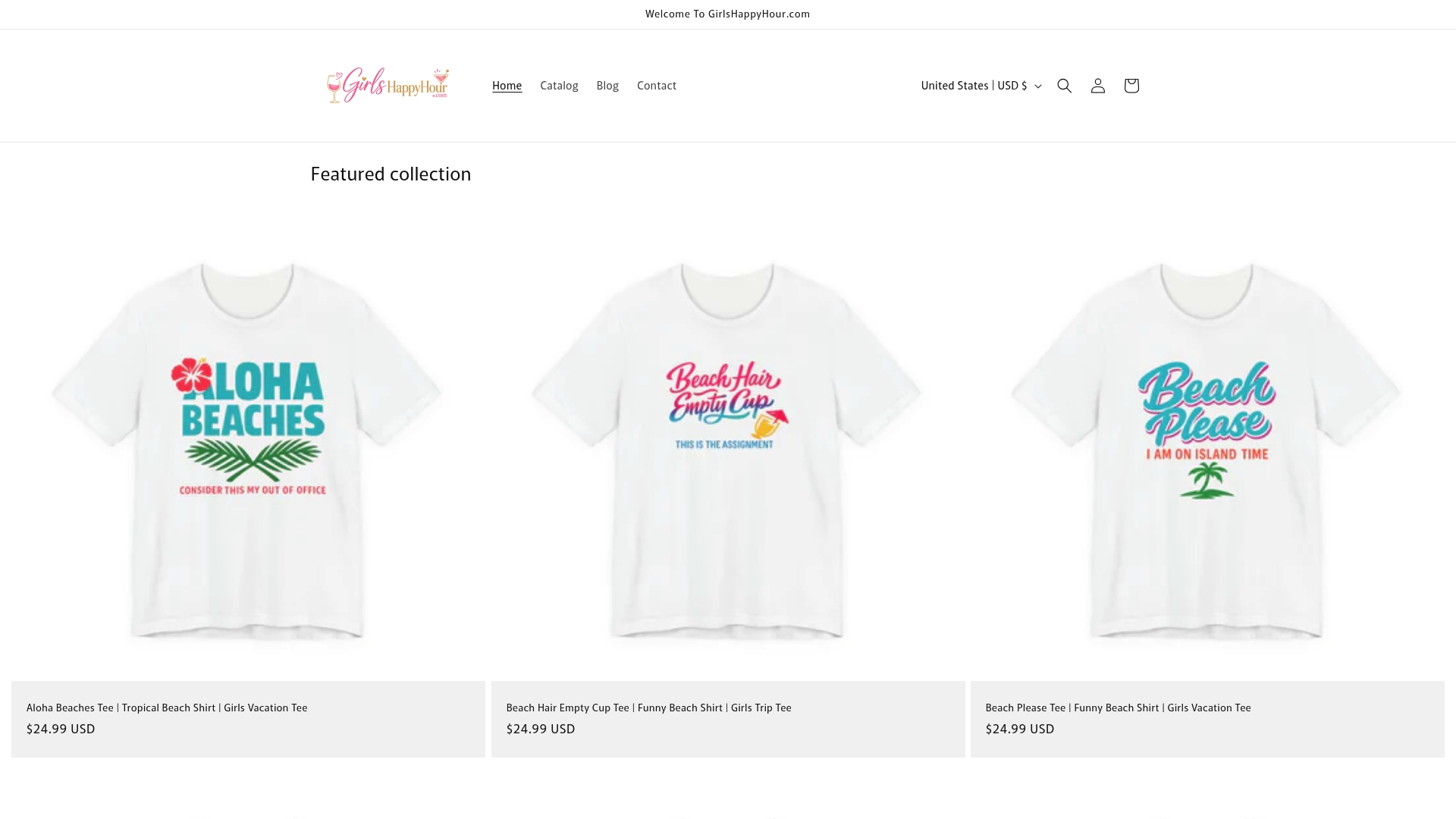
The Drink Till He’s Pretty Tee is a crowd favorite for wine nights and makes a great hostess gift. The Unsupervised & Over-Poured Tee is the one guests will want to borrow. Both are available at Girlshappyhour and ship ready to wear. Matching shirts turn a group photo into a keepsake, and they give the night a theme before the first bottle is opened. Browse the full collection at GirlsHappyHour.com for more options.
FAQ
How many bottles do I need for a wine tasting with 6 people?
Plan roughly five bottles for a five-wine tasting with six guests, using 1.5–2 ounce pours per wine. Keep one backup bottle of the most popular selection.
What is the best tasting order for a wine night?
Serve sparkling wines first, then light whites, full-bodied whites, light reds, full-bodied reds, and dessert wines last. This order protects palate sensitivity across the full flight.
What food should I serve during a wine tasting?
Serve plain crackers and water during scored tasting rounds. Save cheese boards, charcuterie, and rich foods for after the formal tasting is complete.
How do blind tastings work at a wine night?
Wrap bottles in foil or paper bags and label each with a letter instead of a number. Letter labels reduce ranking bias and encourage honest, uninfluenced feedback from guests.
How far in advance should I plan a wine night?
A successful wine night requires at least one week of planning. Use that time to set the theme, send invitations, source bottles, and prep any food or game materials.